THE ADVENTURE COLLECTIVE® · Independent discovery and booking for outdoor travel

Fly from Pokhara to Annapurna Base Camp in under an hour and spend 20–40 minutes standing amid some of the Himalaya’s most dramatic peaks. This helicopter tour packs high-alpine exposure, geology, and culture into a single morning—perfect for those who can’t trek but want to experience ABC.
Fly from Pokhara to Annapurna Base Camp in under an hour and spend 20–40 minutes standing amid some of the Himalaya’s most dramatic peaks. This helicopter tour packs high-alpine exposure, geology, and culture into a single morning—perfect for those who can’t trek but want to experience ABC.
You lift off from Pokhara with the city shrinking beneath a patchwork of rivers and rice terraces, and in less than an hour the air thins and the mountains swell into a ring of glaciers and corniced ridges. The helicopter settles onto the stone-strewn plateau of Annapurna Base Camp (4,130 m) and the massif’s faces feel close enough to touch—Machhapuchhre’s sharp prow and the hulking bulk of Annapurna I framing the horizon.
Verified experiences and guided adventures in the surrounding area.
Operated by North Nepal Treks · Pokhara, Gandaki Province
You lift off from Pokhara with the city shrinking beneath a patchwork of rivers and rice terraces, and in less than an hour the air thins and the mountains swell into a ring of glaciers and corniced ridges. The helicopter settles onto the stone-strewn plateau of Annapurna Base Camp (4,130 m) and the massif’s faces feel close enough to touch—Machhapuchhre’s sharp prow and the hulking bulk of Annapurna I framing the horizon.
This short flight folds history and geology into a compact experience. The Annapurna massif is a young, rising slice of the Himalaya carved by tectonic collision and glaciation; local Gurung and Magar communities have long regarded these peaks as sacred, and ACAP permits now manage visitor pressure in the sanctuary.
Culturally, Pokhara remains the gateway: tea shops hum with trekkers’ stories while porters and guides keep ancient mountain skills alive. Geologically, expect layered moraines, blue ice faces, and steep cirques that reveal the range’s rapid uplift and erosion.
Practical guidance: plan for early morning departures to avoid thermal turbulence and cloud build-up; you’ll typically have 20–40 minutes on the ground for photos and a brief walk. Wear warm layers and sturdy boots for uneven terrain, carry sun protection and your camera on a tether, and accept that altitude effects—shortness of breath, lightheadedness—can arrive quickly even during a brief landing. Flights are weather-dependent; operators cancel if visibility is poor.
This tour is ideal for travelers short on time or who want a high-alpine encounter without days of trekking—fast, intense, and vividly memorable.
Most itineraries run about 2–3 hours door-to-door, including hotel transfer, flight time, and ground time at base camp.
Short visits can still produce mild symptoms (headache, shortness of breath); operators screen health conditions and recommend disclosing heart or respiratory issues.
The tour is marketed as suitable for a wide range of ages, but people with serious cardiovascular conditions or those who cannot sit safely should not participate.
Operators typically offer a full refund if canceled at least 24 hours beforehand for poor weather; same-day cancellations for visibility are common and subject to refund or rebooking policies.
North Nepal Treks operates guided outdoor trips and adventures with an emphasis on safety, stewardship, and memorable experiences.

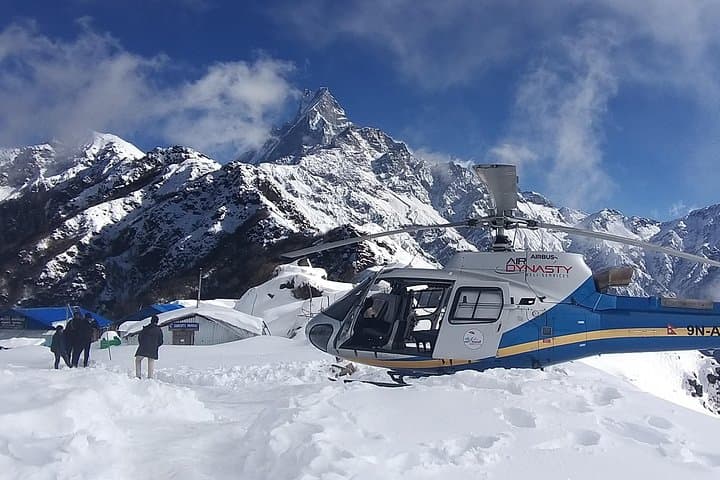
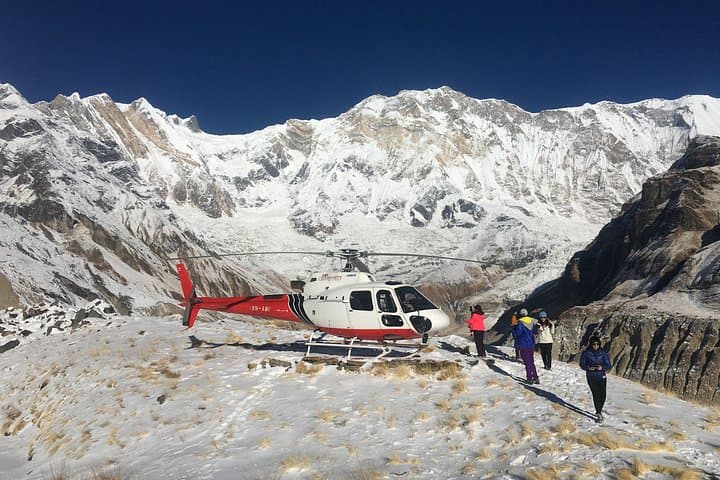
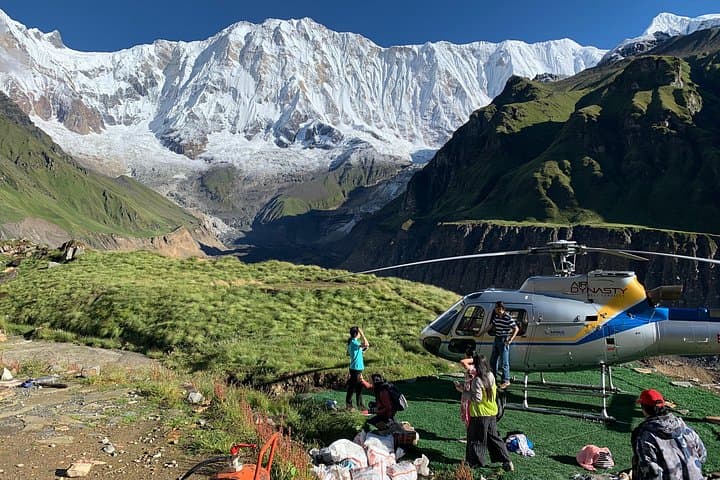
You lift off from Pokhara with the city shrinking beneath a patchwork of rivers and rice terraces, and in less than an hour the air thins and the mountains swell into a ring of glaciers and corniced ridges. The helicopter settles onto the stone-strewn plateau of Annapurna Base Camp (4,130 m) and the massif’s faces feel close enough to touch—Machhapuchhre’s sharp prow and the hulking bulk of Annapurna I framing the horizon.
You lift off from Pokhara with the city shrinking beneath a patchwork of rivers and rice terraces, and in less than an hour the air thins and the mountains swell into a ring of glaciers and corniced ridges. The helicopter settles onto the stone-strewn plateau of Annapurna Base Camp (4,130 m) and the massif’s faces feel close enough to touch—Machhapuchhre’s sharp prow and the hulking bulk of Annapurna I framing the horizon.
This short flight folds history and geology into a compact experience. The Annapurna massif is a young, rising slice of the Himalaya carved by tectonic collision and glaciation; local Gurung and Magar communities have long regarded these peaks as sacred, and ACAP permits now manage visitor pressure in the sanctuary.
Culturally, Pokhara remains the gateway: tea shops hum with trekkers’ stories while porters and guides keep ancient mountain skills alive. Geologically, expect layered moraines, blue ice faces, and steep cirques that reveal the range’s rapid uplift and erosion.
Practical guidance: plan for early morning departures to avoid thermal turbulence and cloud build-up; you’ll typically have 20–40 minutes on the ground for photos and a brief walk. Wear warm layers and sturdy boots for uneven terrain, carry sun protection and your camera on a tether, and accept that altitude effects—shortness of breath, lightheadedness—can arrive quickly even during a brief landing. Flights are weather-dependent; operators cancel if visibility is poor.
This tour is ideal for travelers short on time or who want a high-alpine encounter without days of trekking—fast, intense, and vividly memorable.