THE ADVENTURE COLLECTIVE® · Independent discovery and booking for outdoor travel

A classic 10-day trek into the Annapurna Sanctuary that delivers close-up views of Annapurna I and Machhapuchhre, village culture in Ghandruk and a mix of forested trails and alpine moraine. Ideal in spring and autumn for stable weather and clear summit panoramas.
A classic 10-day trek into the Annapurna Sanctuary that delivers close-up views of Annapurna I and Machhapuchhre, village culture in Ghandruk and a mix of forested trails and alpine moraine. Ideal in spring and autumn for stable weather and clear summit panoramas.
Morning light slices the terraced hills above Pokhara as trekkers step onto a trail that winds into the Annapurna Sanctuary — a bowl of high peaks that seems to hold the sky. The route climbs through rice terraces, rhododendron forest and stone stairlines, each turn opening another view of snow faces that both intimidate and invite.
Verified experiences and guided adventures in the surrounding area.
Operated by Trekking Organizer Company in Nepal · Pokhara, Gandaki Province
Morning light slices the terraced hills above Pokhara as trekkers step onto a trail that winds into the Annapurna Sanctuary — a bowl of high peaks that seems to hold the sky. The route climbs through rice terraces, rhododendron forest and stone stairlines, each turn opening another view of snow faces that both intimidate and invite.
The Annapurna Sanctuary has long been a spiritual and practical corridor for Gurung communities; villages like Ghandruk reflect that living culture with mani stones and teahouses where local hospitality is as steady as a mountain spring. Geologically, the sanctuary is a glacial amphitheater carved from uplifted limestone and granite, where waterfalls thread the cliffs and moraine fields mark the reach of ancient ice.
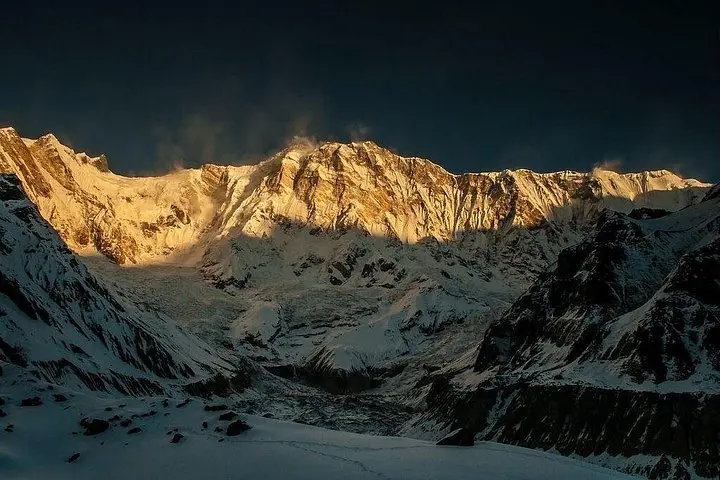
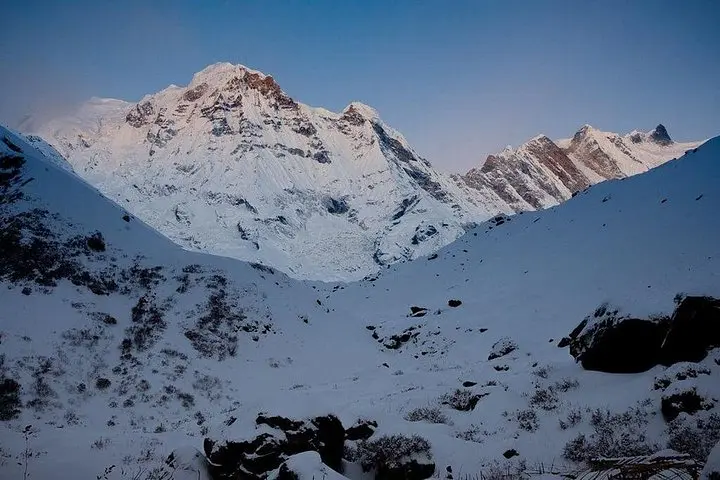
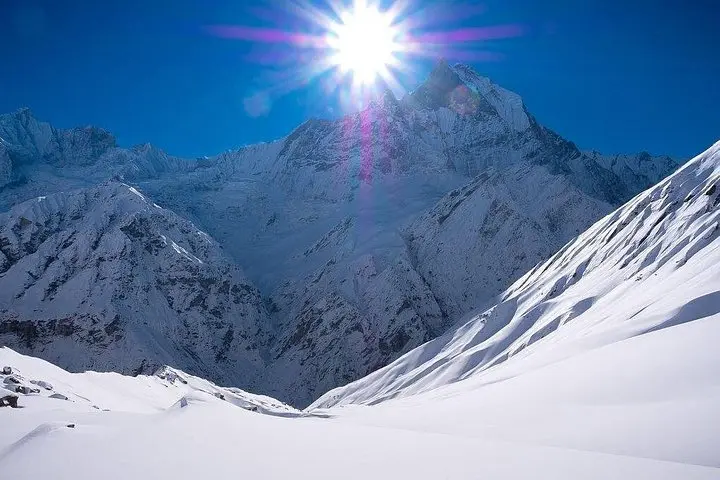
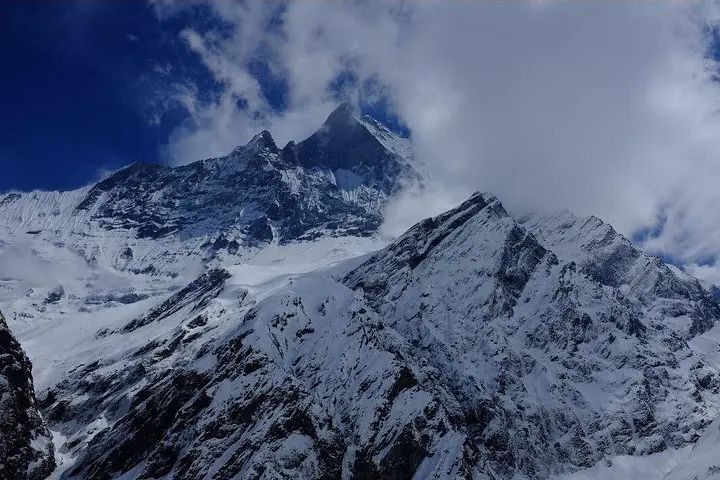
Expect days of steady uphill, 4–7 hours most days, gaining altitude gradually to protect against AMS. The trail alternates packed earth, rocky steps and short scree sections as vegetation thins and views expand to Annapurna I, Machhapuchhre and Hiunchuli.
Practical guidance: aim for the spring (March–May) or autumn (September–November) windows for stable skies and clear panoramas; carry layered insulation, a sleeping bag rated to at least -10°C, and a water treatment method. Allow time for short acclimatization days and listen to your body. Tea houses provide basic meals and shelter, but expect simple facilities above Bamboo; tipping guides and porters is customary. On approach and descent, the hot springs at Jhinu Danda offer a welcome soak and a moment to let the mountains register their presence on tired legs.
Yes; you need the Annapurna Conservation Area Permit (ACAP) and a TIMS card, which are typically arranged before or on arrival in Pokhara.
Spring (March–May) and autumn (September–November) offer the most stable weather and clear mountain views; winters are cold and monsoon months bring heavy rain and slippery trails.
Yes; basic tea house accommodation and three meals a day are available through most of the route, though facilities simplify above Bamboo and at base camp.
Altitude risk is real above 3,000 m—symptoms vary; gradual ascent, hydration, and awareness are key. If symptoms worsen, descend immediately and seek medical help.
Trekking Organizer Company in Nepal operates guided outdoor trips and adventures with an emphasis on safety, stewardship, and memorable experiences.
Morning light slices the terraced hills above Pokhara as trekkers step onto a trail that winds into the Annapurna Sanctuary — a bowl of high peaks that seems to hold the sky. The route climbs through rice terraces, rhododendron forest and stone stairlines, each turn opening another view of snow faces that both intimidate and invite.
Morning light slices the terraced hills above Pokhara as trekkers step onto a trail that winds into the Annapurna Sanctuary — a bowl of high peaks that seems to hold the sky. The route climbs through rice terraces, rhododendron forest and stone stairlines, each turn opening another view of snow faces that both intimidate and invite.
The Annapurna Sanctuary has long been a spiritual and practical corridor for Gurung communities; villages like Ghandruk reflect that living culture with mani stones and teahouses where local hospitality is as steady as a mountain spring. Geologically, the sanctuary is a glacial amphitheater carved from uplifted limestone and granite, where waterfalls thread the cliffs and moraine fields mark the reach of ancient ice.
Expect days of steady uphill, 4–7 hours most days, gaining altitude gradually to protect against AMS. The trail alternates packed earth, rocky steps and short scree sections as vegetation thins and views expand to Annapurna I, Machhapuchhre and Hiunchuli.
Practical guidance: aim for the spring (March–May) or autumn (September–November) windows for stable skies and clear panoramas; carry layered insulation, a sleeping bag rated to at least -10°C, and a water treatment method. Allow time for short acclimatization days and listen to your body. Tea houses provide basic meals and shelter, but expect simple facilities above Bamboo; tipping guides and porters is customary. On approach and descent, the hot springs at Jhinu Danda offer a welcome soak and a moment to let the mountains register their presence on tired legs.