THE ADVENTURE COLLECTIVE® · Independent discovery and booking for outdoor travel

Rise before dawn for Poon Hill sunrise views over Annapurna and Dhaulagiri, then walk through terraced fields and Gurung villages on a compact 4–5 day trek ideal for first-time high-country hikers.
Rise before dawn for Poon Hill sunrise views over Annapurna and Dhaulagiri, then walk through terraced fields and Gurung villages on a compact 4–5 day trek ideal for first-time high-country hikers.
Morning cold bites as headlamps bob on the switchback to Poon Hill. The ridge opens before you — a serrated skyline of Annapurna, Dhaulagiri and Machhapuchhre catching the first light — while prayer flags flap like small, colorful signals across the ridge.
Verified experiences and guided adventures in the surrounding area.
Operated by Mount Advenutre Holidays · Pokhara, Gandaki Province
Morning cold bites as headlamps bob on the switchback to Poon Hill. The ridge opens before you — a serrated skyline of Annapurna, Dhaulagiri and Machhapuchhre catching the first light — while prayer flags flap like small, colorful signals across the ridge.
This short trek follows age-old mule and porter routes through terraced fields and Gurung villages, passing rhododendron stands that explode in color each spring. Geologically, the Annapurna massif rises from the sub-Himalayan valleys, exposing folded sedimentary layers uplifted by the Indian and Eurasian plate collision. Culturally, the region is shaped by Gurung and Magar communities whose stone houses, stacked fields and tea-house hospitality define the route; nearby Mustang and Muktinath recall a Tibetan trading past.
Expect narrow footpaths, long stone staircases and teahouse nights where hot dal bhat is the day’s reliable fuel. The classic loop runs Pokhara–Ulleri–Ghorepani–Poon Hill–Tadapani–Ghandruk, four to five days of steady climbs with a sunrise summit at 3,210m. Weather shifts quickly: clear dawns give world-class visibility, while monsoon storms can turn trails slick.
Practical guidance: start early for the Poon Hill viewpoint to avoid crowds and wind, carry layered clothing for sub-zero mornings, and bring cash for teahouses and permit fees. Hydrate and pace uphill sections; the route is suitable for hikers in fair condition but includes sustained ascents and descents. A government-licensed guide is standard here and helpful for navigation, local insight and safety.
Yes—Annapurna Conservation Area Project (ACAP) permit and a TIMS card are required; these are typically arranged in Pokhara or by your operator.
It suits fit beginners who can manage sustained uphill walks of several hours; hiring a guide and taking rest breaks makes it accessible.
Guides are recommended for navigation, cultural insight and safety, and many operators provide licensed guides in the itinerary.
Late September to November and March to May generally offer the most reliable visibility and comfortable temperatures.
Mount Advenutre Holidays operates guided outdoor trips and adventures with an emphasis on safety, stewardship, and memorable experiences.
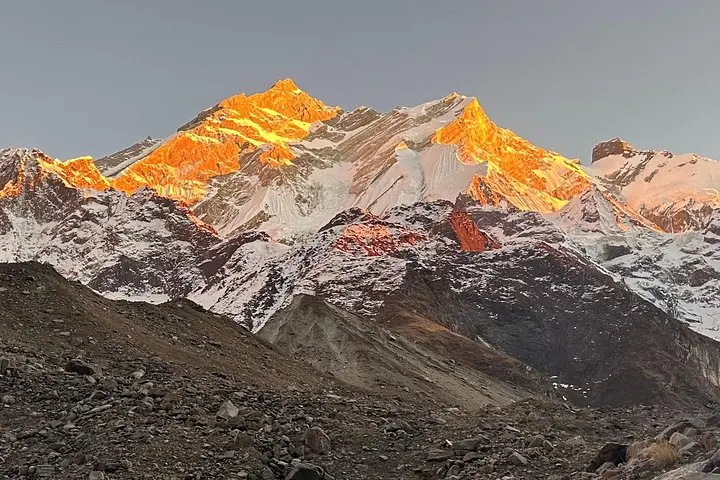
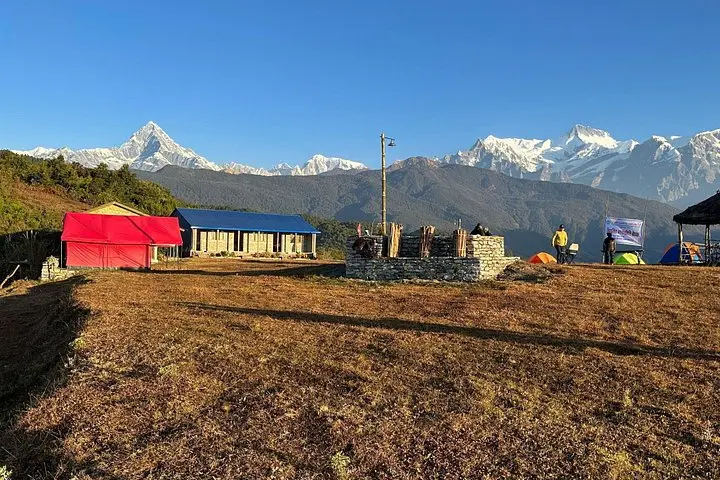
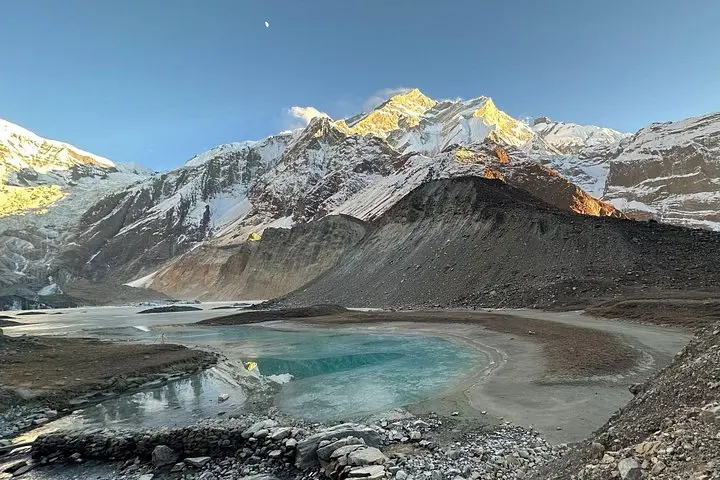
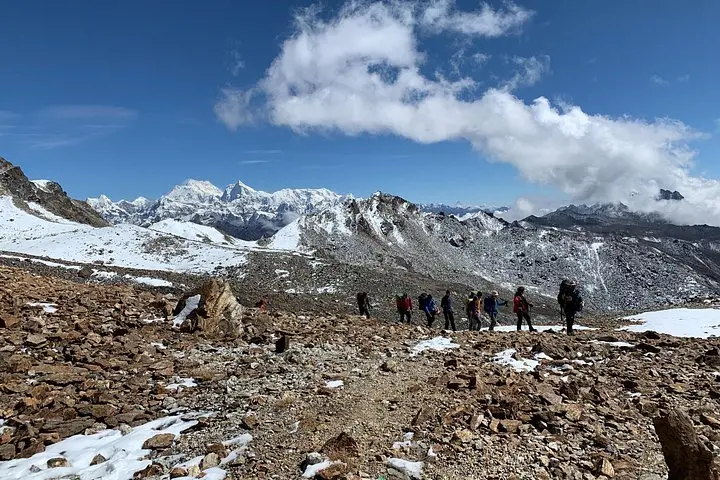
Morning cold bites as headlamps bob on the switchback to Poon Hill. The ridge opens before you — a serrated skyline of Annapurna, Dhaulagiri and Machhapuchhre catching the first light — while prayer flags flap like small, colorful signals across the ridge.
Morning cold bites as headlamps bob on the switchback to Poon Hill. The ridge opens before you — a serrated skyline of Annapurna, Dhaulagiri and Machhapuchhre catching the first light — while prayer flags flap like small, colorful signals across the ridge.
This short trek follows age-old mule and porter routes through terraced fields and Gurung villages, passing rhododendron stands that explode in color each spring. Geologically, the Annapurna massif rises from the sub-Himalayan valleys, exposing folded sedimentary layers uplifted by the Indian and Eurasian plate collision. Culturally, the region is shaped by Gurung and Magar communities whose stone houses, stacked fields and tea-house hospitality define the route; nearby Mustang and Muktinath recall a Tibetan trading past.
Expect narrow footpaths, long stone staircases and teahouse nights where hot dal bhat is the day’s reliable fuel. The classic loop runs Pokhara–Ulleri–Ghorepani–Poon Hill–Tadapani–Ghandruk, four to five days of steady climbs with a sunrise summit at 3,210m. Weather shifts quickly: clear dawns give world-class visibility, while monsoon storms can turn trails slick.
Practical guidance: start early for the Poon Hill viewpoint to avoid crowds and wind, carry layered clothing for sub-zero mornings, and bring cash for teahouses and permit fees. Hydrate and pace uphill sections; the route is suitable for hikers in fair condition but includes sustained ascents and descents. A government-licensed guide is standard here and helpful for navigation, local insight and safety.