THE ADVENTURE COLLECTIVE® · Independent discovery and booking for outdoor travel

Cycle the Amstel and the River Quarter on a private guided tour that pairs urban biking with WWII history. Quiet canals, targeted stops at memorials, and a deep dive into Anne Frank’s pre-war neighborhood make this a compact, reflective two-hour ride.
Cycle the Amstel and the River Quarter on a private guided tour that pairs urban biking with WWII history. Quiet canals, targeted stops at memorials, and a deep dive into Anne Frank’s pre-war neighborhood make this a compact, reflective two-hour ride.
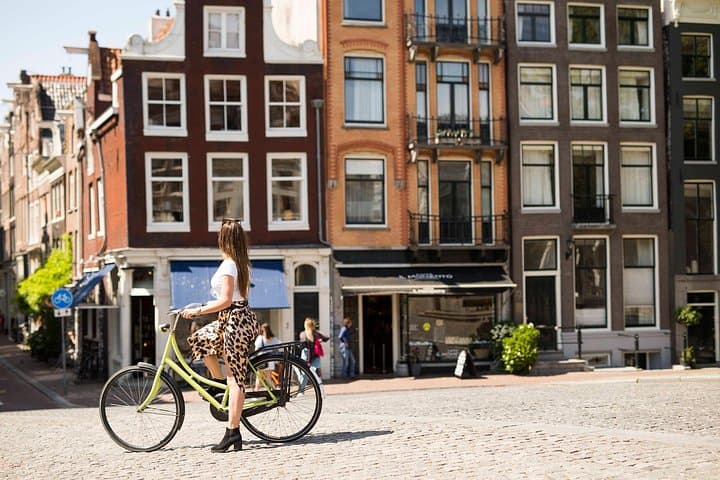
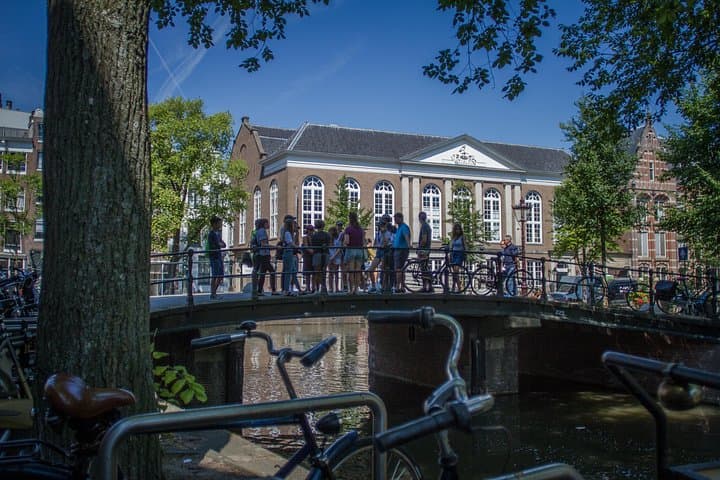
The tour begins on two wheels beside the slow-moving Amstel, orange umbrella held high as the guide leads a private group onto quieter canalside streets. Pedaling here feels deliberate: cobbled bridges click beneath tires, church bells punctuate stories, and the current of everyday Amsterdam—commuters, bikes, barges—frames a living history lesson.
Verified experiences and guided adventures in the surrounding area.
Operated by 360 Amsterdam Tours · Amsterdam, North Holland
The tour begins on two wheels beside the slow-moving Amstel, orange umbrella held high as the guide leads a private group onto quieter canalside streets. Pedaling here feels deliberate: cobbled bridges click beneath tires, church bells punctuate stories, and the current of everyday Amsterdam—commuters, bikes, barges—frames a living history lesson.
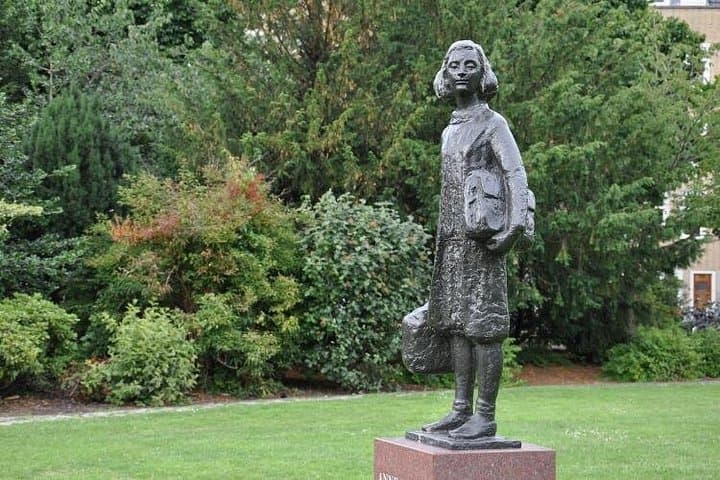
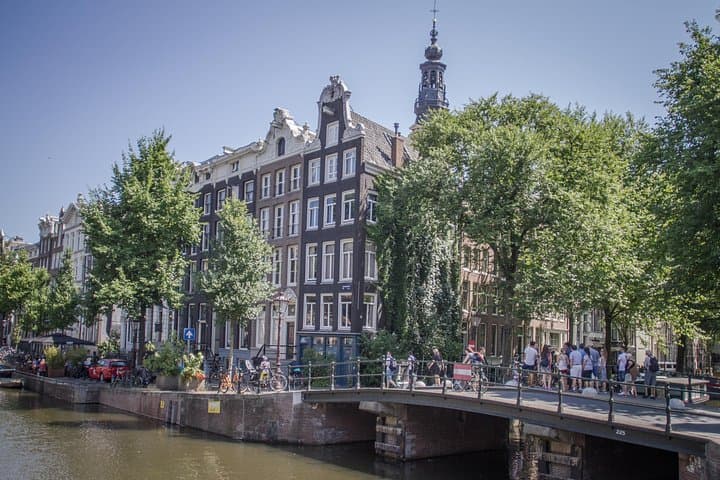
This route traces WWII memory through the River Quarter where Anne Frank lived before hiding. Guides pause at Holocaust memorials and at a serene square near her former school, arranging the fragments of a life into human-scale moments. Geologically, the city sits on peat and reclaimed land; canals were engineered for drainage and transport, shaping the compact, concentric waterways you’ll follow. Culturally the ride moves between Jewish heritage sites, 17th–19th century merchant housing, and modern Dutch bike etiquette—each turn a lesson in how place, politics, and people overlap.
Expect frequent stops for storytelling, a 4 km riverside stretch to the River District, and a slower return to the city center. The roads chosen avoid the busiest tourist channels, but urban cycling skills are essential: watch tram tracks, yield to pedestrians, and keep steady through narrow bridges.
Practical tips: bring a light waterproof layer, secure shoes, a small lock for quick breaks, and a charged phone for navigation. Tours run about two hours and are offered in multiple languages; bikes with 7 gears are provided. For travelers seeking an active, reflective way to experience Amsterdam’s wartime history, this private bike tour pairs motion with memory.
Yes—participants should be comfortable riding in urban traffic and shifting gears; the route avoids the busiest streets but requires steady control.
7-gear city bikes are provided; helmets are not always included so check with the operator or bring your own for added safety.
The guide meets near Staalmeestersbrug close to Rembrandtplein, holding an orange umbrella; arrive 10–15 minutes early to adjust bikes.
Children who can ride in traffic and taller teens are suitable; the tour is not recommended for people with significant spinal, cardiovascular, or pregnancy-related restrictions.
360 Amsterdam Tours operates guided outdoor trips and adventures with an emphasis on safety, stewardship, and memorable experiences.
The tour begins on two wheels beside the slow-moving Amstel, orange umbrella held high as the guide leads a private group onto quieter canalside streets. Pedaling here feels deliberate: cobbled bridges click beneath tires, church bells punctuate stories, and the current of everyday Amsterdam—commuters, bikes, barges—frames a living history lesson.
The tour begins on two wheels beside the slow-moving Amstel, orange umbrella held high as the guide leads a private group onto quieter canalside streets. Pedaling here feels deliberate: cobbled bridges click beneath tires, church bells punctuate stories, and the current of everyday Amsterdam—commuters, bikes, barges—frames a living history lesson.
This route traces WWII memory through the River Quarter where Anne Frank lived before hiding. Guides pause at Holocaust memorials and at a serene square near her former school, arranging the fragments of a life into human-scale moments. Geologically, the city sits on peat and reclaimed land; canals were engineered for drainage and transport, shaping the compact, concentric waterways you’ll follow. Culturally the ride moves between Jewish heritage sites, 17th–19th century merchant housing, and modern Dutch bike etiquette—each turn a lesson in how place, politics, and people overlap.
Expect frequent stops for storytelling, a 4 km riverside stretch to the River District, and a slower return to the city center. The roads chosen avoid the busiest tourist channels, but urban cycling skills are essential: watch tram tracks, yield to pedestrians, and keep steady through narrow bridges.
Practical tips: bring a light waterproof layer, secure shoes, a small lock for quick breaks, and a charged phone for navigation. Tours run about two hours and are offered in multiple languages; bikes with 7 gears are provided. For travelers seeking an active, reflective way to experience Amsterdam’s wartime history, this private bike tour pairs motion with memory.