THE ADVENTURE COLLECTIVE® · Independent discovery and booking for outdoor travel

Spend a day chasing waterfalls and history outside Antalya. This private tour from Belek hits Kurşunlu, Upper and Lower Düden and finishes with lunch and a stroll through Kaleiçi’s Old Town.
Spend a day chasing waterfalls and history outside Antalya. This private tour from Belek hits Kurşunlu, Upper and Lower Düden and finishes with lunch and a stroll through Kaleiçi’s Old Town.
The van eases out of Belek before the rhythms of the coast take over: citrus groves blur past, the Mediterranean opens like a cool promise, and your guide points to a ribbon of water cutting through limestone. By the time you arrive at Kurşunlu, the forest has taken on a voice — leaves whispering, streams daring you closer. Wooden walkways thread through moss and ferns, and pools reflect tiers of falling water that have been shaping this land for millennia.
Verified experiences and guided adventures in the surrounding area.
Operated by Vakare Travel Service · Antalya, Antalya
The van eases out of Belek before the rhythms of the coast take over: citrus groves blur past, the Mediterranean opens like a cool promise, and your guide points to a ribbon of water cutting through limestone. By the time you arrive at Kurşunlu, the forest has taken on a voice — leaves whispering, streams daring you closer. Wooden walkways thread through moss and ferns, and pools reflect tiers of falling water that have been shaping this land for millennia.
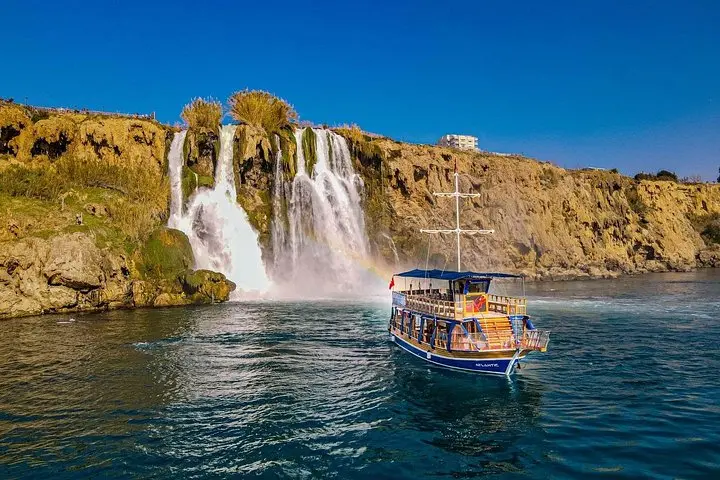
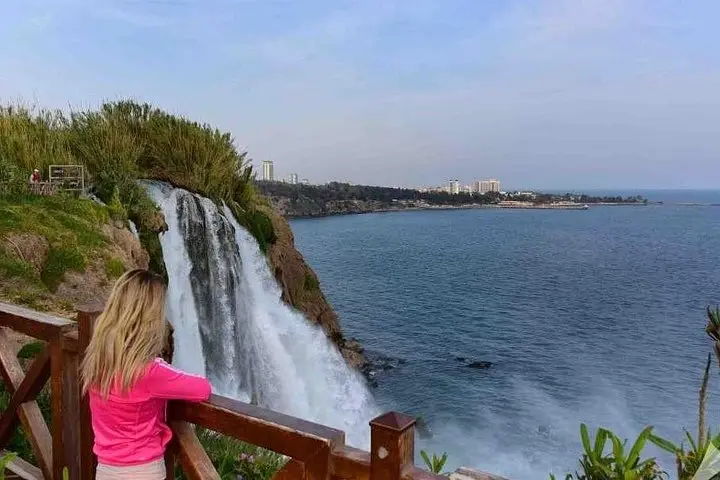
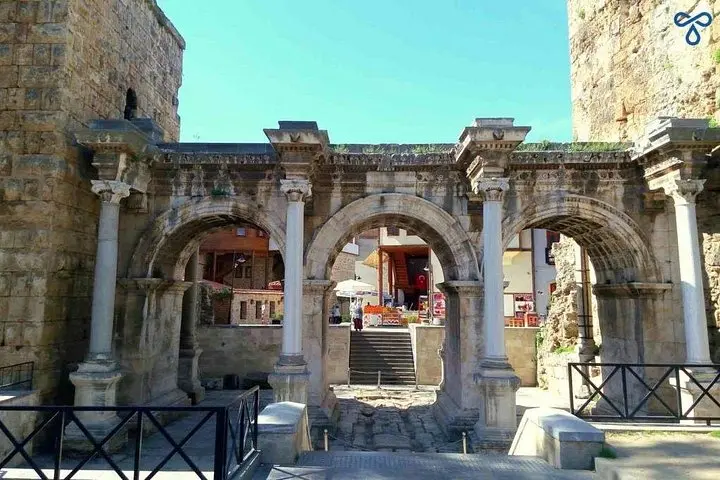
This is a tour that pairs geological theatre with human history. Antalya, founded as Attaleia in the Hellenistic era, became an Ottoman port and a crossroads for traders and travelers; Kaleiçi — the Old Town — still keeps the narrow lanes, carved stone doorways and the arc of Hadrian’s Gate. Geologically, the falls are born of karst limestone: underground springs and narrow canyons force water to drop suddenly, carving plunge pools and cavities that make each waterfall distinct. Düden’s lower falls theatrically tumble into the sea, while Upper Düden and Kurşunlu sit upstream in greener, more sheltered settings.
Culturally you’ll notice the pace change: the waterfalls draw locals to weekend picnics and tea kiosks; in Kaleiçi artisans sell handwoven textiles and brassware beside renovated Ottoman houses. Your guide will thread together stories — from Roman harbor maps to modern conservation efforts — so the day feels like a curated cross-section of Antalya’s natural and urban life.
Practical ground rules: the full private tour runs roughly 5–6 hours, with about 3–4 short walking segments totaling 1.5–3 km on mostly flat boardwalks and paved paths, and minimal elevation gain (under 150 m). Comfortable walking shoes with good grip are essential; many viewpoints include stairs and wet surfaces. Entrance fees for the waterfalls are included and lunch in Kaleiçi is provided with options for vegetarians. The trip is family-friendly — strollers can be used at Kurşunlu on main paths — but expect stairs at some viewpoints.
Timing matters: morning departures beat the crowds at the Lower Düden coastal overlook and capture the light on cascading sheets of water. Bring a light waterproof layer and a small towel if you plan to get close to spray zones, and carry reusable water: Antalya’s sun can climb fast, and hydration is non-negotiable.
For travelers aiming to balance nature and history without the logistics hassle, this private tour stitches together three of the region’s most photogenic waterfalls with a leisurely lunch and a stroll through Kaleiçi’s stone-walled lanes — all delivered by a licensed local guide and private transport.
Expect about 5 to 6 hours total, including travel, guided visits at each waterfall and time for lunch and exploring Kaleiçi.
Yes — waterfall entrance fees and one lunch in Kaleiçi are included; you can request vegetarian or dietary options when booking.
Yes — private pickup and drop-off are provided across the Antalya region; confirm your hotel and meeting point when booking.
Main paths at Kurşunlu are stroller-accessible, but some viewpoints and stairs — especially at Düden — may not be; infants should sit on laps if necessary.
Swimming is not permitted at the official viewing areas; the Lower Düden drops to the sea but access is controlled for safety.
Layers, closed-toe shoes with traction, sunscreen and a hat in summer; a light waterproof layer is useful near the falls year-round.
Vakare Travel Service operates guided outdoor trips and adventures with an emphasis on safety, stewardship, and memorable experiences.
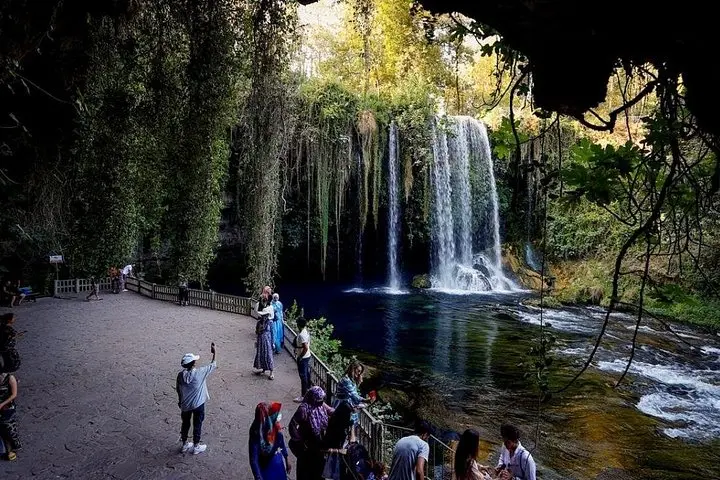
The van eases out of Belek before the rhythms of the coast take over: citrus groves blur past, the Mediterranean opens like a cool promise, and your guide points to a ribbon of water cutting through limestone. By the time you arrive at Kurşunlu, the forest has taken on a voice — leaves whispering, streams daring you closer. Wooden walkways thread through moss and ferns, and pools reflect tiers of falling water that have been shaping this land for millennia.
The van eases out of Belek before the rhythms of the coast take over: citrus groves blur past, the Mediterranean opens like a cool promise, and your guide points to a ribbon of water cutting through limestone. By the time you arrive at Kurşunlu, the forest has taken on a voice — leaves whispering, streams daring you closer. Wooden walkways thread through moss and ferns, and pools reflect tiers of falling water that have been shaping this land for millennia.
This is a tour that pairs geological theatre with human history. Antalya, founded as Attaleia in the Hellenistic era, became an Ottoman port and a crossroads for traders and travelers; Kaleiçi — the Old Town — still keeps the narrow lanes, carved stone doorways and the arc of Hadrian’s Gate. Geologically, the falls are born of karst limestone: underground springs and narrow canyons force water to drop suddenly, carving plunge pools and cavities that make each waterfall distinct. Düden’s lower falls theatrically tumble into the sea, while Upper Düden and Kurşunlu sit upstream in greener, more sheltered settings.
Culturally you’ll notice the pace change: the waterfalls draw locals to weekend picnics and tea kiosks; in Kaleiçi artisans sell handwoven textiles and brassware beside renovated Ottoman houses. Your guide will thread together stories — from Roman harbor maps to modern conservation efforts — so the day feels like a curated cross-section of Antalya’s natural and urban life.
Practical ground rules: the full private tour runs roughly 5–6 hours, with about 3–4 short walking segments totaling 1.5–3 km on mostly flat boardwalks and paved paths, and minimal elevation gain (under 150 m). Comfortable walking shoes with good grip are essential; many viewpoints include stairs and wet surfaces. Entrance fees for the waterfalls are included and lunch in Kaleiçi is provided with options for vegetarians. The trip is family-friendly — strollers can be used at Kurşunlu on main paths — but expect stairs at some viewpoints.
Timing matters: morning departures beat the crowds at the Lower Düden coastal overlook and capture the light on cascading sheets of water. Bring a light waterproof layer and a small towel if you plan to get close to spray zones, and carry reusable water: Antalya’s sun can climb fast, and hydration is non-negotiable.
For travelers aiming to balance nature and history without the logistics hassle, this private tour stitches together three of the region’s most photogenic waterfalls with a leisurely lunch and a stroll through Kaleiçi’s stone-walled lanes — all delivered by a licensed local guide and private transport.