THE ADVENTURE COLLECTIVE® · Independent discovery and booking for outdoor travel

A full-day guided run from Las Vegas to Horseshoe Bend and Antelope Canyon that packs dramatic viewpoints, Navajo-guided slot canyon passages, and golden-hour photography into a long but achievable day trip. Ideal for travelers who want big landscapes without overnight logistics.
A full-day guided run from Las Vegas to Horseshoe Bend and Antelope Canyon that packs dramatic viewpoints, Navajo-guided slot canyon passages, and golden-hour photography into a long but achievable day trip. Ideal for travelers who want big landscapes without overnight logistics.
Before dawn the tour bus pulls out of Las Vegas, brake lights blinking against a black ribbon of highway. The city dissolves into scrub and red rock; radio chatter is replaced by the hum of tires and an occasional runner’s breath. By mid-morning the coach rolls into St. George for breakfast—a practical pause in a town whose white-steepled history marks the edge of Mormon settlement and a launch point into Navajo territory.
Verified experiences and guided adventures in the surrounding area.
Operated by Empire Vacations · Page, Arizona
Before dawn the tour bus pulls out of Las Vegas, brake lights blinking against a black ribbon of highway. The city dissolves into scrub and red rock; radio chatter is replaced by the hum of tires and an occasional runner’s breath. By mid-morning the coach rolls into St. George for breakfast—a practical pause in a town whose white-steepled history marks the edge of Mormon settlement and a launch point into Navajo territory.
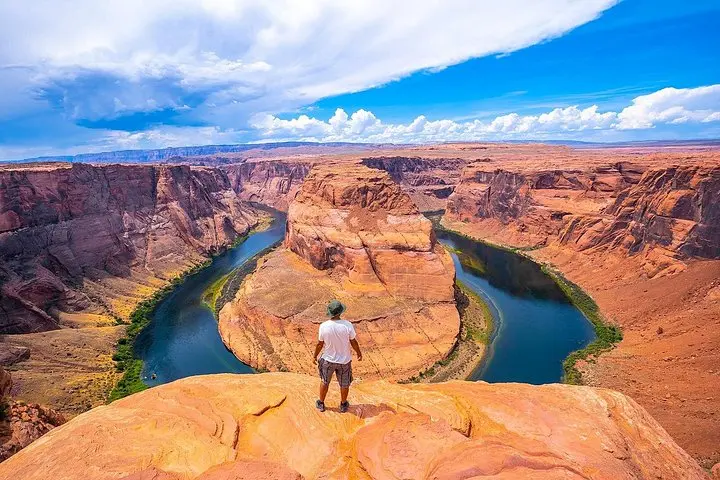
The first real stop is Horseshoe Bend. Step out onto the rim and the Colorado River dares you to register its scale: a jade loop cut a thousand feet below, edges of Navajo Sandstone leaning like pages of a slow, geological novel. The ledge is wind-swept and raw; photographers angle themselves low to match the curve of the river, while the canyon itself keeps its calm, eroding at a millimeter-per-century pace.
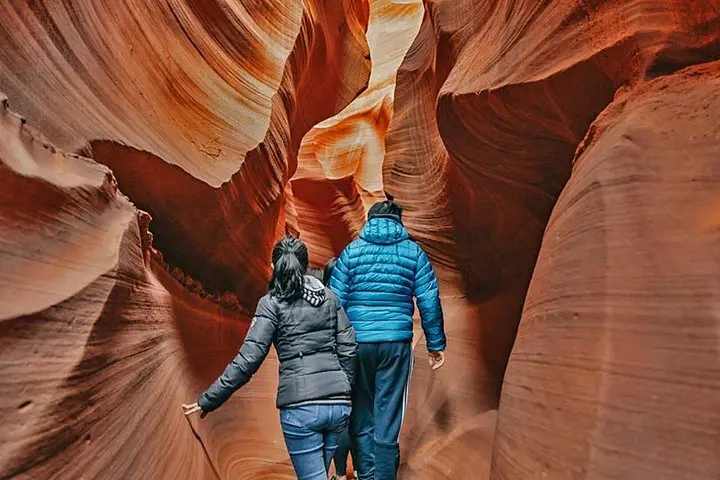
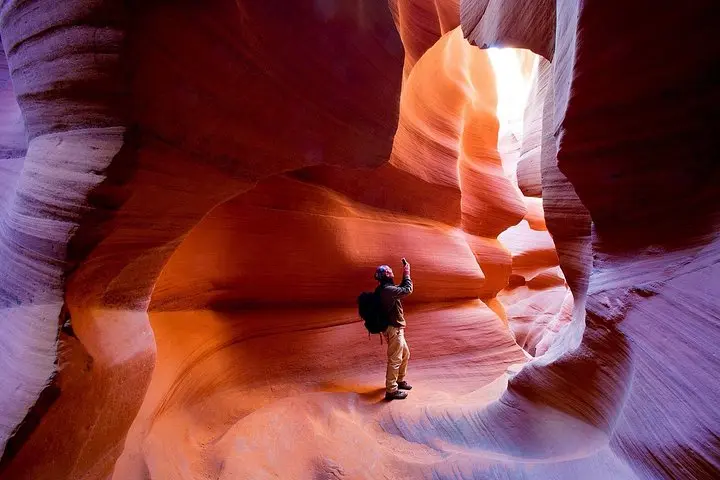
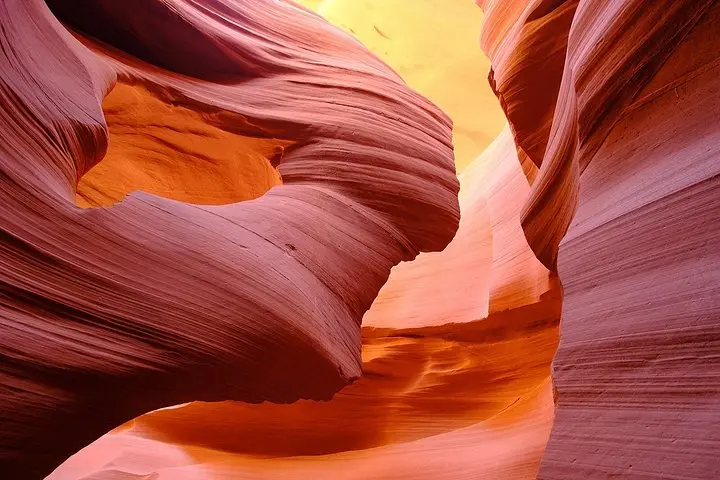
Later you move with a Navajo guide into Lower Antelope Canyon, where sunlight becomes a character—thin, theatrical shafts that thread the slot during the Golden Hour. The canyon’s walls are not static; they read like peeled layers of time, polished by flash floods and wind. A guide will point out cross-beds, ripple marks, and the quiet Navajo stories that explain why “the water runs through the rocks.” Those cultural notes anchor the visit: Antelope Canyon is on Navajo Nation land, and access is managed by local stewards whose permits and safety rules shape every visit.
Geology here is simple to read and hard to forget: soft Entrada Sandstone bent by uplift, then carved by water into sinuous corridors. Glen Canyon’s vast rim and distant dam punctuate the modern history—how the river was harnessed and how those decisions reshaped landscapes and communities.
Practicality threads the day. Expect a long round-trip—roughly 13–14 hours from Vegas with several vehicle hours each way. Walking is light but uneven: plan for about 1.5 miles (2.5 km) of on-foot exploration between viewpoints and the slots. Temperatures swing dramatically; canyon walls hold heat in summer and shade in winter. Respect Navajo rules: stay with your guide, keep to designated routes, and be ready for closures if weather turns.
This is a day that trades sleep for unforgettable frames: the river’s curve, the canyon’s ribs, and the human stories that bind them. For photographers and first-time visitors alike, it’s a compact crash course in Southwestern landscape, Navajo culture, and the kind of light that makes you rearrange your memory of color and scale.
The full-day tour runs roughly 13–14 hours (departing early morning and returning in the evening); exact return time varies with traffic and conditions.
The itinerary includes a guided visit to Lower Antelope Canyon, though operators may use Upper or Lower depending on weather and crowd control.
Reserved
Yes; photography is allowed with guidance from your Navajo guide. Tripods may be restricted during busy times—follow your guide’s instructions.
The tour is family-friendly but requires walking over uneven surfaces; it’s not recommended for those with serious mobility or cardiovascular issues.
Canyons may close during inclement weather for safety; refunds or rescheduling follow Navajo Nation and operator policies.
Empire Vacations operates guided outdoor trips and adventures with an emphasis on safety, stewardship, and memorable experiences.
Before dawn the tour bus pulls out of Las Vegas, brake lights blinking against a black ribbon of highway. The city dissolves into scrub and red rock; radio chatter is replaced by the hum of tires and an occasional runner’s breath. By mid-morning the coach rolls into St. George for breakfast—a practical pause in a town whose white-steepled history marks the edge of Mormon settlement and a launch point into Navajo territory.
Before dawn the tour bus pulls out of Las Vegas, brake lights blinking against a black ribbon of highway. The city dissolves into scrub and red rock; radio chatter is replaced by the hum of tires and an occasional runner’s breath. By mid-morning the coach rolls into St. George for breakfast—a practical pause in a town whose white-steepled history marks the edge of Mormon settlement and a launch point into Navajo territory.
The first real stop is Horseshoe Bend. Step out onto the rim and the Colorado River dares you to register its scale: a jade loop cut a thousand feet below, edges of Navajo Sandstone leaning like pages of a slow, geological novel. The ledge is wind-swept and raw; photographers angle themselves low to match the curve of the river, while the canyon itself keeps its calm, eroding at a millimeter-per-century pace.
Later you move with a Navajo guide into Lower Antelope Canyon, where sunlight becomes a character—thin, theatrical shafts that thread the slot during the Golden Hour. The canyon’s walls are not static; they read like peeled layers of time, polished by flash floods and wind. A guide will point out cross-beds, ripple marks, and the quiet Navajo stories that explain why “the water runs through the rocks.” Those cultural notes anchor the visit: Antelope Canyon is on Navajo Nation land, and access is managed by local stewards whose permits and safety rules shape every visit.
Geology here is simple to read and hard to forget: soft Entrada Sandstone bent by uplift, then carved by water into sinuous corridors. Glen Canyon’s vast rim and distant dam punctuate the modern history—how the river was harnessed and how those decisions reshaped landscapes and communities.
Practicality threads the day. Expect a long round-trip—roughly 13–14 hours from Vegas with several vehicle hours each way. Walking is light but uneven: plan for about 1.5 miles (2.5 km) of on-foot exploration between viewpoints and the slots. Temperatures swing dramatically; canyon walls hold heat in summer and shade in winter. Respect Navajo rules: stay with your guide, keep to designated routes, and be ready for closures if weather turns.
This is a day that trades sleep for unforgettable frames: the river’s curve, the canyon’s ribs, and the human stories that bind them. For photographers and first-time visitors alike, it’s a compact crash course in Southwestern landscape, Navajo culture, and the kind of light that makes you rearrange your memory of color and scale.