THE ADVENTURE COLLECTIVE® · Independent discovery and booking for outdoor travel

A full-day small-group run from Las Vegas that packs Antelope Canyon’s narrow light shafts, the sweeping overlook at Horseshoe Bend, Lake Powell’s blues and a Glen Canyon Dam stop into one long, unforgettable day. Expect 15 hours, Navajo-guided access, and plenty of photo opportunities.
A full-day small-group run from Las Vegas that packs Antelope Canyon’s narrow light shafts, the sweeping overlook at Horseshoe Bend, Lake Powell’s blues and a Glen Canyon Dam stop into one long, unforgettable day. Expect 15 hours, Navajo-guided access, and plenty of photo opportunities.
The van pulls off US-89 as the desert folds into a canyon country that looks as if someone took a paintbrush and dragged it across the earth. By midmorning the sun has burned the chill from Las Vegas and the light begins to catch the red walls—an invitation. On a long, full-day run from the Strip you’ll move from wide-open panoramas to the hush of a slot canyon, tracing the Colorado River’s influence from Glen Canyon Dam to the sinuous curve at Horseshoe Bend and the glass-blue pockets of Lake Powell.
Verified experiences and guided adventures in the surrounding area.
Operated by Top Canyon Tours · Page, Arizona
The van pulls off US-89 as the desert folds into a canyon country that looks as if someone took a paintbrush and dragged it across the earth. By midmorning the sun has burned the chill from Las Vegas and the light begins to catch the red walls—an invitation. On a long, full-day run from the Strip you’ll move from wide-open panoramas to the hush of a slot canyon, tracing the Colorado River’s influence from Glen Canyon Dam to the sinuous curve at Horseshoe Bend and the glass-blue pockets of Lake Powell.
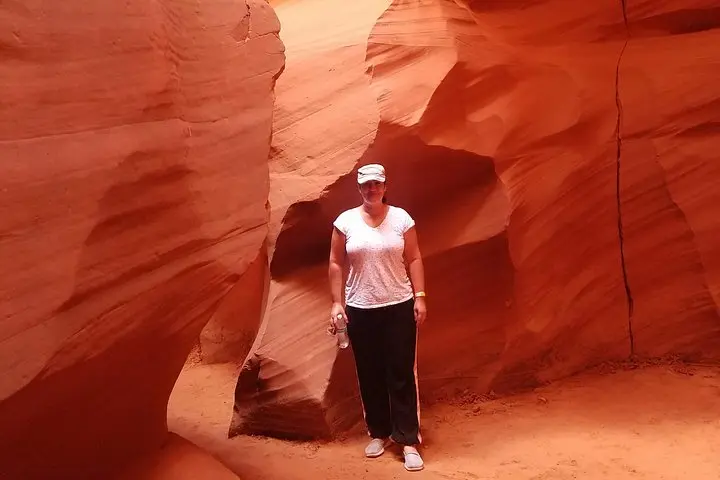
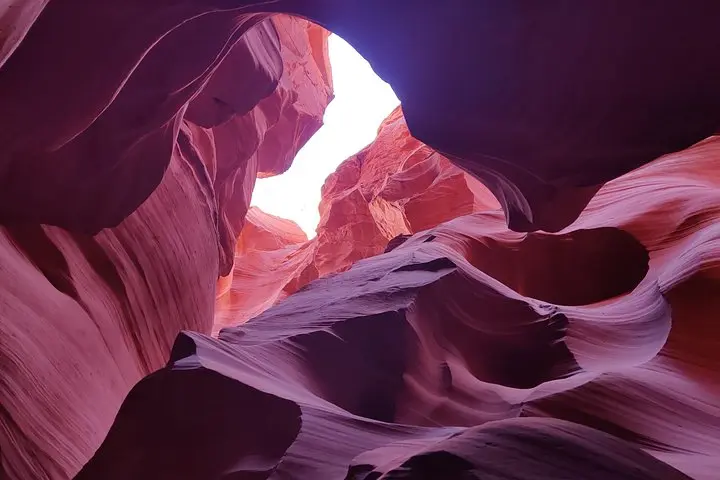
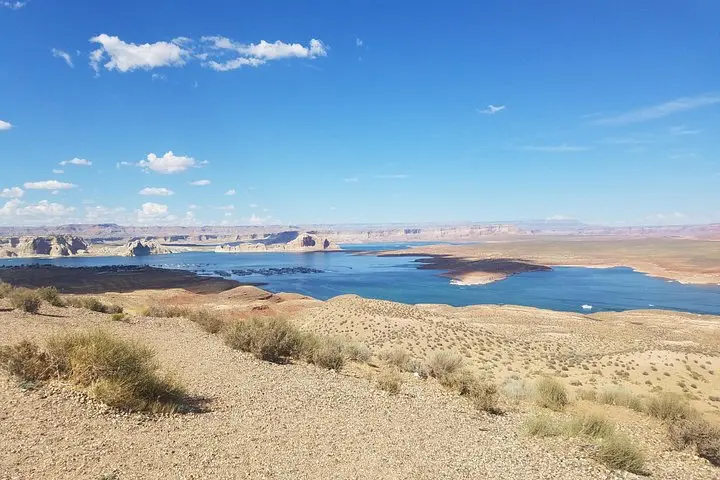
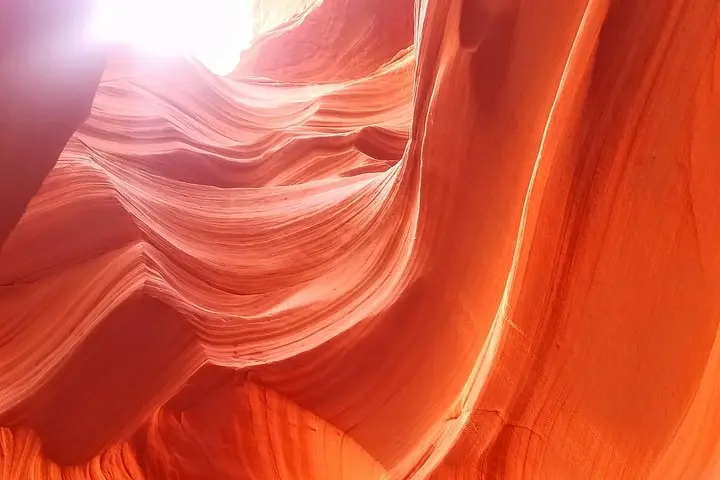
This route is a geology primer written in Navajo Sandstone: wind-set dunes compressed 190 million years ago and later carved by water. Antelope Canyon is a narrow incision where floodwaters once rushed like a barbed ribbon, polishing walls into liquid folds and creating the light shafts photographers chase in summer. Horseshoe Bend is where the Colorado River dared the rock to hold it back, looping in a dramatic horseshoe and revealing the river’s patient, erosive force. Glen Canyon Dam is the modern counterpoint—an engineering answer to the river’s reach that created Lake Powell’s startling aquamarine in a sea of ochre.
Culture and access are inseparable here. Antelope Canyon resides on Navajo Nation land and is only visited with licensed Navajo guides who offer not just safety but stories—about place names, seasonal floods, and the responsibility of visitors. The itinerary makes time for short hikes (Horseshoe Bend is roughly a 1.5-mile round-trip on packed sand), photo stops at overlooks, and a guided slot canyon walk that requires stepping, stooping and quiet reverence.
Practically, this is a long day: expect about 15 hours total (the operator lists a fixed 900-minute duration) with roughly 4½ hours driving each way from Las Vegas if traffic cooperates. Wear sturdy, closed-toe shoes for uneven surfaces and sand, pack at least 2–3 liters of water, sunscreen, and a hat. The canyon floor can be cool; the plateau can be brutally hot—layers work. Photography is a major draw, but note that tripods and long stays inside Antelope can be restricted depending on the group; confirm with your guide.
This tour balances spectacle with logistics: hotel pickup on the Strip, bottled water and lunch included, and the required Navajo Tribal fees noted in the itinerary. For first-time visitors who want a concentrated introduction to this part of the Southwest, it’s efficient and memorable—just be ready for a long, sensory-packed day of stone, water, and light.
No—Upper and Lower Antelope Canyons are on Navajo Nation land and require an authorized Navajo guide; this tour includes guided access.
Expect roughly 4–5 hours each way depending on traffic; the full itinerary is a long day of about 15 hours total.
Yes—operators will cancel for unsafe conditions like flash floods or severe storms; check the cancellation policy which allows full refunds if canceled 24 hours prior.
Tripod use varies—photography-specific tours may allow them; on shared group tours tripods are often restricted to avoid crowding, so confirm with the guide.
Families and active seniors can usually manage it, but participants should be able to walk short uneven distances and tolerate a long day; restrictions exist for recent back or heart problems.
Yes—the tour includes bottled water, snacks and lunch; bring additional water if you are prone to dehydration.
Top Canyon Tours operates guided outdoor trips and adventures with an emphasis on safety, stewardship, and memorable experiences.
The van pulls off US-89 as the desert folds into a canyon country that looks as if someone took a paintbrush and dragged it across the earth. By midmorning the sun has burned the chill from Las Vegas and the light begins to catch the red walls—an invitation. On a long, full-day run from the Strip you’ll move from wide-open panoramas to the hush of a slot canyon, tracing the Colorado River’s influence from Glen Canyon Dam to the sinuous curve at Horseshoe Bend and the glass-blue pockets of Lake Powell.
The van pulls off US-89 as the desert folds into a canyon country that looks as if someone took a paintbrush and dragged it across the earth. By midmorning the sun has burned the chill from Las Vegas and the light begins to catch the red walls—an invitation. On a long, full-day run from the Strip you’ll move from wide-open panoramas to the hush of a slot canyon, tracing the Colorado River’s influence from Glen Canyon Dam to the sinuous curve at Horseshoe Bend and the glass-blue pockets of Lake Powell.
This route is a geology primer written in Navajo Sandstone: wind-set dunes compressed 190 million years ago and later carved by water. Antelope Canyon is a narrow incision where floodwaters once rushed like a barbed ribbon, polishing walls into liquid folds and creating the light shafts photographers chase in summer. Horseshoe Bend is where the Colorado River dared the rock to hold it back, looping in a dramatic horseshoe and revealing the river’s patient, erosive force. Glen Canyon Dam is the modern counterpoint—an engineering answer to the river’s reach that created Lake Powell’s startling aquamarine in a sea of ochre.
Culture and access are inseparable here. Antelope Canyon resides on Navajo Nation land and is only visited with licensed Navajo guides who offer not just safety but stories—about place names, seasonal floods, and the responsibility of visitors. The itinerary makes time for short hikes (Horseshoe Bend is roughly a 1.5-mile round-trip on packed sand), photo stops at overlooks, and a guided slot canyon walk that requires stepping, stooping and quiet reverence.
Practically, this is a long day: expect about 15 hours total (the operator lists a fixed 900-minute duration) with roughly 4½ hours driving each way from Las Vegas if traffic cooperates. Wear sturdy, closed-toe shoes for uneven surfaces and sand, pack at least 2–3 liters of water, sunscreen, and a hat. The canyon floor can be cool; the plateau can be brutally hot—layers work. Photography is a major draw, but note that tripods and long stays inside Antelope can be restricted depending on the group; confirm with your guide.
This tour balances spectacle with logistics: hotel pickup on the Strip, bottled water and lunch included, and the required Navajo Tribal fees noted in the itinerary. For first-time visitors who want a concentrated introduction to this part of the Southwest, it’s efficient and memorable—just be ready for a long, sensory-packed day of stone, water, and light.