THE ADVENTURE COLLECTIVE® · Independent discovery and booking for outdoor travel

Swap Antigua’s plazas for farm tracks and volcano views on a half‑day mountain bike tour through the Antigua Valley. Visit weaving villages, a working macadamia farm, and colonial ruins while riding 15–25 km of gravel and local roads.
Swap Antigua’s plazas for farm tracks and volcano views on a half‑day mountain bike tour through the Antigua Valley. Visit weaving villages, a working macadamia farm, and colonial ruins while riding 15–25 km of gravel and local roads.
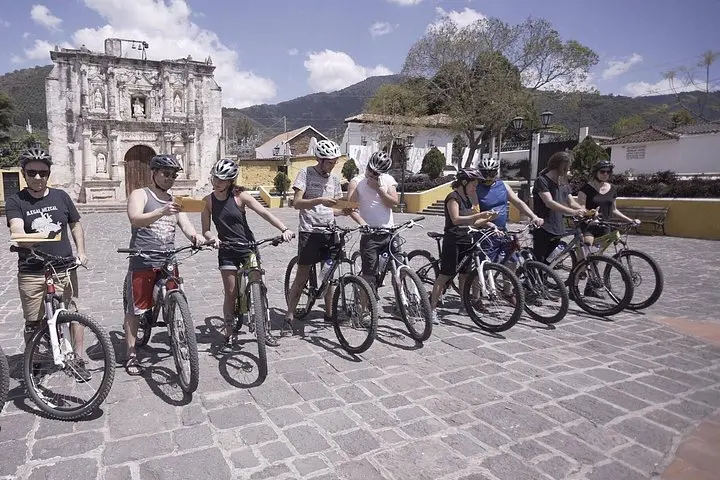
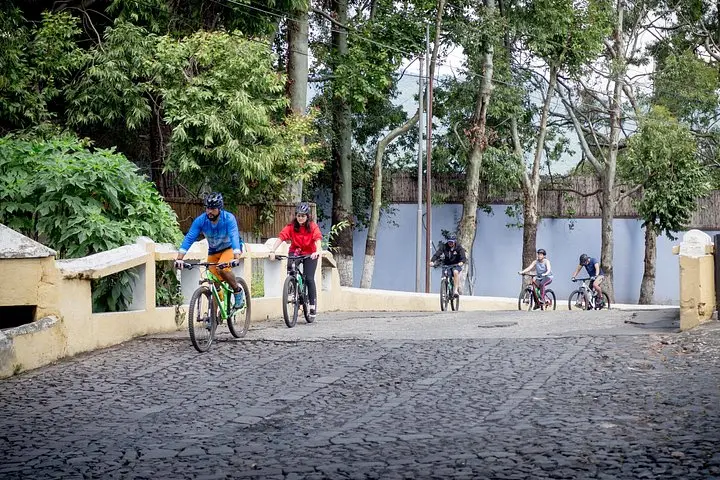
The ride starts on the edge of Antigua, tires crunching on sun-baked farm tracks while three volcanoes loom silent to the south and east.
Verified experiences and guided adventures in the surrounding area.
Operated by OLD TOWN OUTFITTERS · Antigua Guatemala, Sacatepéquez
The ride starts on the edge of Antigua, tires crunching on sun-baked farm tracks while three volcanoes loom silent to the south and east.
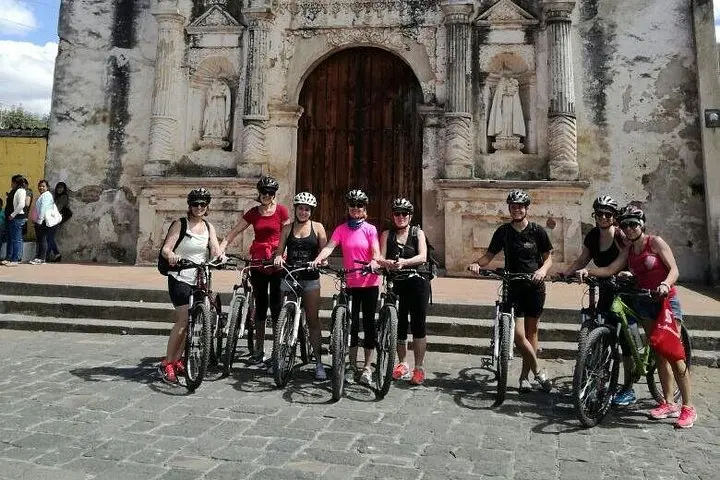
Riders leave cobblestone colonial streets for open valley lanes, passing a near-ruined hacienda that survived Antigua’s 1773 earthquake and fields where coffee and macadamias grow. The route threads through small villages—Santiago Zamora and San Antonio Aguas Calientes—where backstrap looms and bright textiles hang in doorways and women still practice centuries-old weaving techniques.
Geology is visible in volcanic ridgelines and ash-flecked soils; the valley’s fertile ground is a legacy of eruptions from Agua, Fuego and Acatenango. Cultural history clings to plazas and churches, while a working organic macadamia farm outside San Miguel Dueñas offers a tangible stop: orchard rows, a small restaurant and a chance to taste local produce.
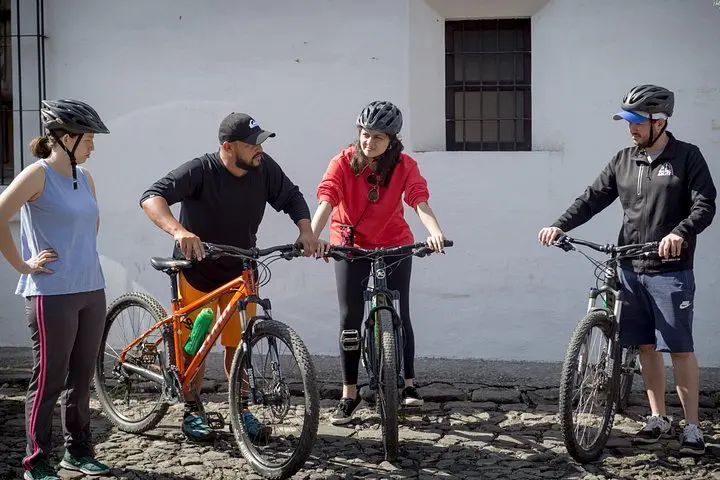
Expect a half‑day outing of rolling gravel, short paved sections and farm tracks—roughly 15–25 km with intermittent climbs (roughly 300–600 m elevation gain depending on route). Guides supply Kona mountain bikes, helmets and bottled water; pace is social but requires steady pedaling on uneven terrain.
Practical guidance: ride mid-morning to avoid heat and afternoon storms during the rainy season, bring a spare tube and adequate sun protection, and wear flat-soled or MTB shoes for confident control. Respect village life—ask before photographing looms—and leave no trace on agricultural tracks. This is a cultural ride with a physical edge: achievable for anyone with moderate fitness and basic mountain-biking experience.
You should have a moderate fitness level—comfortable cycling for 3–4 hours with some sustained climbs; the guide paces groups by ability.
Yes—Kona mountain bikes with Shimano components and helmets are included, plus a bike-mounted water bottle to keep.
Children can join if accompanied by an adult and able to handle mixed terrain; check the operator’s age guidelines when booking.
The tour runs in most conditions but heavy rain may make farm tracks unsafe; cancellation policy allows refunds if you cancel 24+ hours in advance.
OLD TOWN OUTFITTERS operates guided outdoor trips and adventures with an emphasis on safety, stewardship, and memorable experiences.
The ride starts on the edge of Antigua, tires crunching on sun-baked farm tracks while three volcanoes loom silent to the south and east.
The ride starts on the edge of Antigua, tires crunching on sun-baked farm tracks while three volcanoes loom silent to the south and east.
Riders leave cobblestone colonial streets for open valley lanes, passing a near-ruined hacienda that survived Antigua’s 1773 earthquake and fields where coffee and macadamias grow. The route threads through small villages—Santiago Zamora and San Antonio Aguas Calientes—where backstrap looms and bright textiles hang in doorways and women still practice centuries-old weaving techniques.
Geology is visible in volcanic ridgelines and ash-flecked soils; the valley’s fertile ground is a legacy of eruptions from Agua, Fuego and Acatenango. Cultural history clings to plazas and churches, while a working organic macadamia farm outside San Miguel Dueñas offers a tangible stop: orchard rows, a small restaurant and a chance to taste local produce.
Expect a half‑day outing of rolling gravel, short paved sections and farm tracks—roughly 15–25 km with intermittent climbs (roughly 300–600 m elevation gain depending on route). Guides supply Kona mountain bikes, helmets and bottled water; pace is social but requires steady pedaling on uneven terrain.
Practical guidance: ride mid-morning to avoid heat and afternoon storms during the rainy season, bring a spare tube and adequate sun protection, and wear flat-soled or MTB shoes for confident control. Respect village life—ask before photographing looms—and leave no trace on agricultural tracks. This is a cultural ride with a physical edge: achievable for anyone with moderate fitness and basic mountain-biking experience.