THE ADVENTURE COLLECTIVE® · Independent discovery and booking for outdoor travel

Walk among ancient stupas and the sacred Bodhi tree on a private six-hour pilgrimage through Anuradhapura’s Atamasthana. This guided tour mixes short walks, temple rituals and historical context for a practical, respectful visit.
Walk among ancient stupas and the sacred Bodhi tree on a private six-hour pilgrimage through Anuradhapura’s Atamasthana. This guided tour mixes short walks, temple rituals and historical context for a practical, respectful visit.
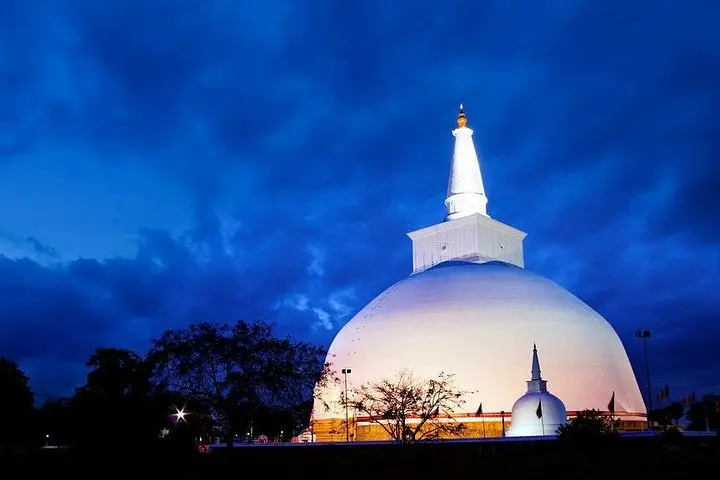
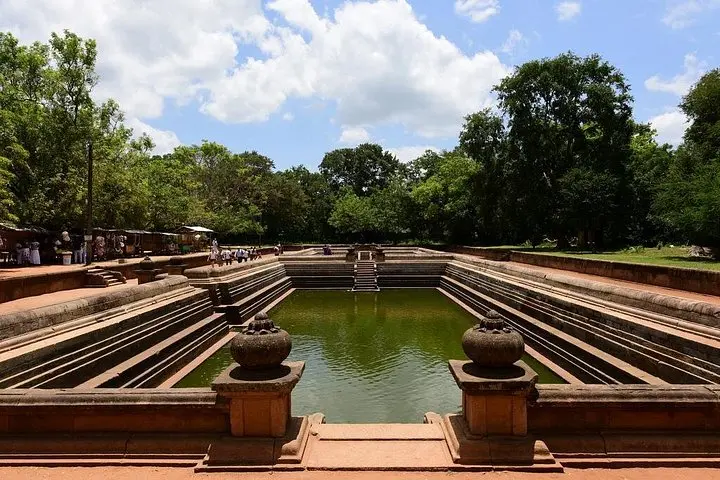
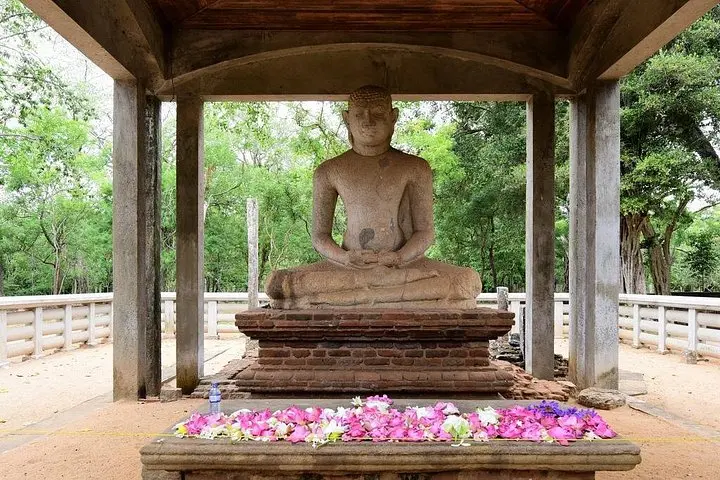
Morning light settles across low stone stupas and the broad leaves of sacred fig trees as a private vehicle pulls into the shadow of Jaya Sri Maha Bodhi. Visitors step out into a city that still breathes the pace of ancient rulers: brick platforms, weathered moonstones and the steady chant from a distant shrine. This six-hour pilgrimage threads the Atamasthana — the eight sacred sites centered on the Bodhi tree, Thuparamaya and Abhayagiriya — with shorter stops at Isurumuniya, the twin ponds (Kuttam Pokuna), the Samadhi statue and the famous Sandakada pahana (moonstone).
Verified experiences and guided adventures in the surrounding area.
Operated by Tuktukdude Leisure · Anuradhapura, North Central Province
Morning light settles across low stone stupas and the broad leaves of sacred fig trees as a private vehicle pulls into the shadow of Jaya Sri Maha Bodhi. Visitors step out into a city that still breathes the pace of ancient rulers: brick platforms, weathered moonstones and the steady chant from a distant shrine. This six-hour pilgrimage threads the Atamasthana — the eight sacred sites centered on the Bodhi tree, Thuparamaya and Abhayagiriya — with shorter stops at Isurumuniya, the twin ponds (Kuttam Pokuna), the Samadhi statue and the famous Sandakada pahana (moonstone).
Anuradhapura was a political and religious capital for centuries, its compacted clay foundations and brick stupas revealing sedimentary plain geology shaped by riverine deposits. Culture here is public and deliberate: offerings, barefoot respect and quiet circulation around shrines. The tour covers mostly flat terrain with short walks at each complex (typical loops of 200–800 m); expect uneven stone, carved steps and minimal elevation gain under 100 m across the day.
Practically: start early to avoid midday heat, wear clothing that covers shoulders and knees, and use a breathable hat and sunscreen. Bottled water is provided, but carry snacks if you prefer. Allow extra time for shoe removal at temples and for an optional add-on to Mihintale if you want hilltop vistas. The private, English-speaking guide and driver handle logistics and hotel pickup, leaving travelers to move from one storied ruin to the next with context and calm.
Entrance and conservation fees vary by site and are typically not included; confirm with the operator before booking.
The operator notes stroller access for short distances, but many temple compounds have steps and uneven surfaces—bring someone to lift a stroller if needed.
Cover shoulders and knees, remove shoes and hats inside shrines, and avoid revealing or tight clothing out of respect.
Yes—Mihintale and Nellikulama are optional add-ons; they require extra travel time and, for Mihintale, a climb to hilltop shrines if you choose that option.
Tuktukdude Leisure operates guided outdoor trips and adventures with an emphasis on safety, stewardship, and memorable experiences.
Morning light settles across low stone stupas and the broad leaves of sacred fig trees as a private vehicle pulls into the shadow of Jaya Sri Maha Bodhi. Visitors step out into a city that still breathes the pace of ancient rulers: brick platforms, weathered moonstones and the steady chant from a distant shrine. This six-hour pilgrimage threads the Atamasthana — the eight sacred sites centered on the Bodhi tree, Thuparamaya and Abhayagiriya — with shorter stops at Isurumuniya, the twin ponds (Kuttam Pokuna), the Samadhi statue and the famous Sandakada pahana (moonstone).
Morning light settles across low stone stupas and the broad leaves of sacred fig trees as a private vehicle pulls into the shadow of Jaya Sri Maha Bodhi. Visitors step out into a city that still breathes the pace of ancient rulers: brick platforms, weathered moonstones and the steady chant from a distant shrine. This six-hour pilgrimage threads the Atamasthana — the eight sacred sites centered on the Bodhi tree, Thuparamaya and Abhayagiriya — with shorter stops at Isurumuniya, the twin ponds (Kuttam Pokuna), the Samadhi statue and the famous Sandakada pahana (moonstone).
Anuradhapura was a political and religious capital for centuries, its compacted clay foundations and brick stupas revealing sedimentary plain geology shaped by riverine deposits. Culture here is public and deliberate: offerings, barefoot respect and quiet circulation around shrines. The tour covers mostly flat terrain with short walks at each complex (typical loops of 200–800 m); expect uneven stone, carved steps and minimal elevation gain under 100 m across the day.
Practically: start early to avoid midday heat, wear clothing that covers shoulders and knees, and use a breathable hat and sunscreen. Bottled water is provided, but carry snacks if you prefer. Allow extra time for shoe removal at temples and for an optional add-on to Mihintale if you want hilltop vistas. The private, English-speaking guide and driver handle logistics and hotel pickup, leaving travelers to move from one storied ruin to the next with context and calm.