THE ADVENTURE COLLECTIVE® · Independent discovery and booking for outdoor travel

Drive from Escondido up to Palomar Observatory, down through the sculpted desert of Borrego Springs and finish with Julian’s famous apple pies. This self-guided, app-driven loop covers 152 miles of varied scenery, easy stops, and local history across San Diego County.
Drive from Escondido up to Palomar Observatory, down through the sculpted desert of Borrego Springs and finish with Julian’s famous apple pies. This self-guided, app-driven loop covers 152 miles of varied scenery, easy stops, and local history across San Diego County.
You pull out of the Plaza Del Lago parking lot with a map on your phone, mountain road ahead and a desert horizon waiting like a page turn. The route climbs into the mixed oak and pine of Palomar Mountain, where East Grade Road opens into meadows and the Hale Telescope watches the sky. Later the land flattens into wind-sculpted desert, metal sculptures rising from tan washes and bighorn sheep pausing on a ridge as if posed for the drive-by gallery.
Verified experiences and guided adventures in the surrounding area.
Operated by Drives & Detours · Escondido, California
You pull out of the Plaza Del Lago parking lot with a map on your phone, mountain road ahead and a desert horizon waiting like a page turn. The route climbs into the mixed oak and pine of Palomar Mountain, where East Grade Road opens into meadows and the Hale Telescope watches the sky. Later the land flattens into wind-sculpted desert, metal sculptures rising from tan washes and bighorn sheep pausing on a ridge as if posed for the drive-by gallery.
This loop threads local history and geology: Spanish-era missions and Julian’s 19th-century gold-mining buildings speak to settlers and prospectors, while Palomar’s granite and uplifted valleys tell an older story of tectonics and erosion. Borrego’s sculptures are contemporary, made to contrast with an ancient, fragile ecosystem. Culture here is small-town — pie shops in Julian, gallery stops in Borrego Springs — and practical: the Palomar Observatory closes mid-afternoon, and visitor centers keep daylight hours.
Plan for a full day (about 4–6 hours driving time, 152 miles with stops). Download the Drives & Detours app and the tour in advance; cell coverage thins on mountain grades and across the desert. Bring 1–2 liters of water per person, sun protection for low desert stretches, and solid shoes if you step out for short walks or overlooks. Drive carefully on winding mountain roads and give wildlife room — bighorn sheep are quick to cross.
This route rewards slow travel: listen to the engine, choose a pie stop, and let the high desert sky reclaim your schedule.
No permits are required for the driving route itself; some attractions (e.g., museums) may charge admission — check individual sites before you go.
Most roads are two-lane paved backroads; large RVs can navigate but should avoid tight mountain switchbacks and check local road advisories.
Coverage is patchy on mountain grades and in the desert; download the tour and maps in advance and carry a paper map as backup.
Yes — bighorn sheep are commonly spotted near Borrego Springs and canyon areas; observe from a distance and don’t attempt to approach them.
Drives & Detours operates guided outdoor trips and adventures with an emphasis on safety, stewardship, and memorable experiences.
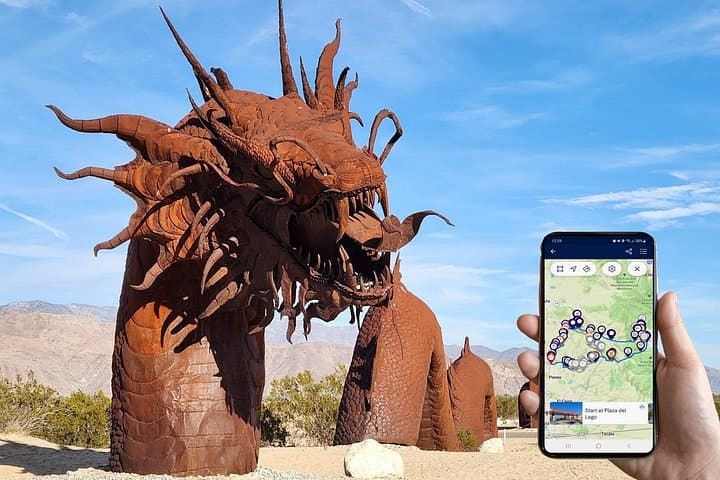

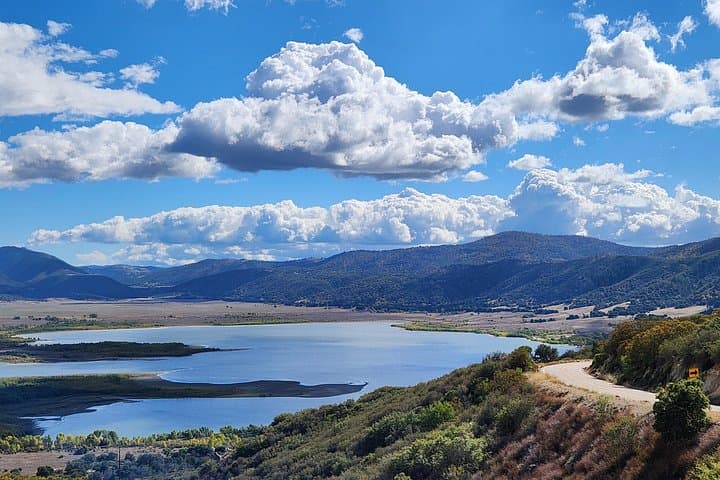
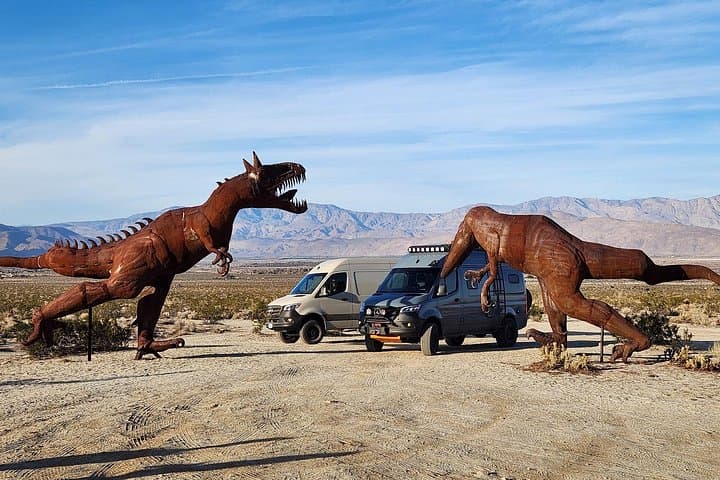
You pull out of the Plaza Del Lago parking lot with a map on your phone, mountain road ahead and a desert horizon waiting like a page turn. The route climbs into the mixed oak and pine of Palomar Mountain, where East Grade Road opens into meadows and the Hale Telescope watches the sky. Later the land flattens into wind-sculpted desert, metal sculptures rising from tan washes and bighorn sheep pausing on a ridge as if posed for the drive-by gallery.
You pull out of the Plaza Del Lago parking lot with a map on your phone, mountain road ahead and a desert horizon waiting like a page turn. The route climbs into the mixed oak and pine of Palomar Mountain, where East Grade Road opens into meadows and the Hale Telescope watches the sky. Later the land flattens into wind-sculpted desert, metal sculptures rising from tan washes and bighorn sheep pausing on a ridge as if posed for the drive-by gallery.
This loop threads local history and geology: Spanish-era missions and Julian’s 19th-century gold-mining buildings speak to settlers and prospectors, while Palomar’s granite and uplifted valleys tell an older story of tectonics and erosion. Borrego’s sculptures are contemporary, made to contrast with an ancient, fragile ecosystem. Culture here is small-town — pie shops in Julian, gallery stops in Borrego Springs — and practical: the Palomar Observatory closes mid-afternoon, and visitor centers keep daylight hours.
Plan for a full day (about 4–6 hours driving time, 152 miles with stops). Download the Drives & Detours app and the tour in advance; cell coverage thins on mountain grades and across the desert. Bring 1–2 liters of water per person, sun protection for low desert stretches, and solid shoes if you step out for short walks or overlooks. Drive carefully on winding mountain roads and give wildlife room — bighorn sheep are quick to cross.
This route rewards slow travel: listen to the engine, choose a pie stop, and let the high desert sky reclaim your schedule.