THE ADVENTURE COLLECTIVE® · Independent discovery and booking for outdoor travel

A 7–8 km river run from Pasanauri offers accessible whitewater that moves fast and is ideal for beginners and mixed groups. Expect a 90-minute outing with professional guides, local history, and a post-run feast of khinkali.
A 7–8 km river run from Pasanauri offers accessible whitewater that moves fast and is ideal for beginners and mixed groups. Expect a 90-minute outing with professional guides, local history, and a post-run feast of khinkali.
The first splash hits like a punctuation mark: cold Caucasus water slaps your forearms, the raft leans into the current and the river, narrow and fast, seems to have its own agenda. You clip in, listen to the instructor’s short, firm commands, and let the Aragvi do the rest. The run out of Pasanauri covers roughly 7–8 km of river cut through volcanic bedrock and beech-clad slopes; in a steady flow you’ll be moving for about an hour inside a 90-minute experience that includes gearing up and safety briefing.
Verified experiences and guided adventures in the surrounding area.
Operated by Individual Entrepreneur Vazha Gakharia · Pasanauri, Mtskheta-Mtianeti
The first splash hits like a punctuation mark: cold Caucasus water slaps your forearms, the raft leans into the current and the river, narrow and fast, seems to have its own agenda. You clip in, listen to the instructor’s short, firm commands, and let the Aragvi do the rest. The run out of Pasanauri covers roughly 7–8 km of river cut through volcanic bedrock and beech-clad slopes; in a steady flow you’ll be moving for about an hour inside a 90-minute experience that includes gearing up and safety briefing.
This isn’t modern sport rafting’s birthplace — locals call this craft jomardi, an old method for carrying goods and people along these channels — but since the 1980s the Aragvi has become a social pulse for Georgian outdoor life. Geologically, the river has carved tight bends through the Lesser Caucasus foothills; you’ll see smoother rounded boulders where past floods polished the rock and sharper outcrops where tributaries join. Culturally, Pasanauri is famous for khinkali, and it’s common to finish a run with a steaming plate of dumplings and strong tea at a roadside eatery.
The water personality shifts with the seasons. Spring melt turns the river lively, calling for firm paddling and attention. Summer lowers the flow and reveals gravel bars where wagtails and dippers hunt insects. Expect friendly instructors and straightforward sections that suit beginners as well as people who want a little adrenaline — rapids are typically Class I–III depending on snowmelt and recent rain.
Logistics are simple: meet at the launch point near Pasanauri where guides kit you out in helmets, lifejackets and wetsuits as needed. The company runs a private, small-group format; basic fitness and an ability to follow commands are all that’s required. Bring footwear that grips, a dry bag for phones, and sun protection for exposed floats between rapids. If you suffer heart conditions or are pregnant, this trip isn’t recommended.
Practical timing matters: aim for morning departures to avoid the hottest hours and to catch clearer flows. If you’re based in Tbilisi the drive is scenic and under two hours; many visitors combine the run with a day exploring Dusheti’s meadows or an evening of khinkali in Pasanauri. Guides emphasize environmental care — keep plastics off the riverbanks and pack out all trash. Rafting the Aragvi is at once accessible and tangible: the river challenges you just enough to wake your senses, then pushes you forward with an unmistakable Georgian invite to enjoy the rest of the day on land.
The on-water section is about 7–8 km and typically takes around one hour; the total experience, including briefing and gearing, is about 90 minutes.
No — trips are designed for beginners and mixed-ability groups with professional instruction provided.
Policies vary by operator, but most accept children who can sit and follow instructions; booking questions collect ages to confirm suitability.
This specific meeting format requires you to meet at the Pasanauri start point; transport options can be arranged separately but are not included by default.
Guides supply helmets, life jackets and paddles; wetsuits are available in cooler months if needed.
Yes — trips may be canceled for unsafe river levels or bad weather and are subject to the operator’s all-sales-final policy.
Individual Entrepreneur Vazha Gakharia operates guided outdoor trips and adventures with an emphasis on safety, stewardship, and memorable experiences.
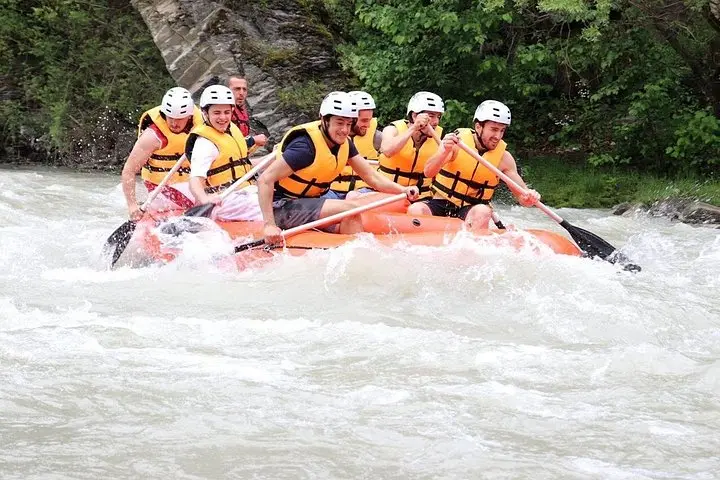
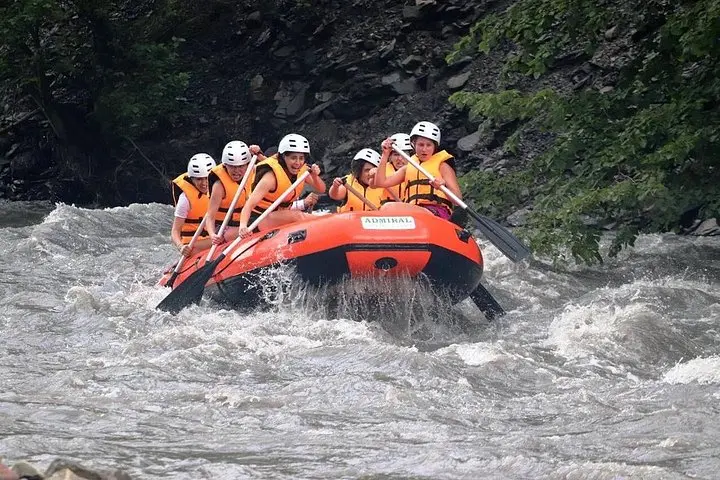
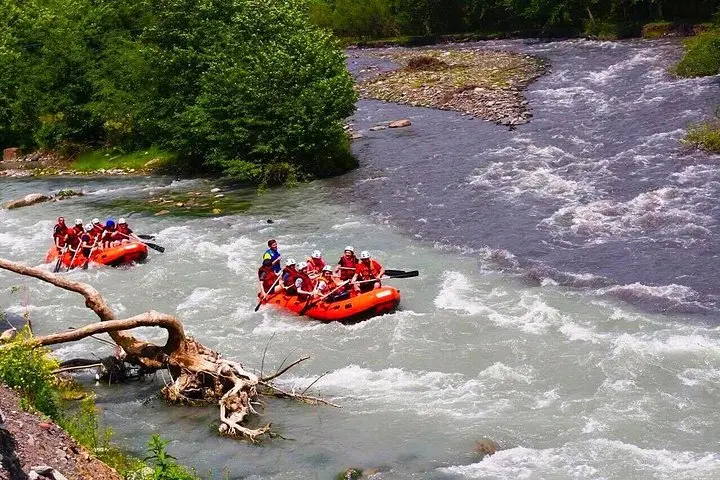
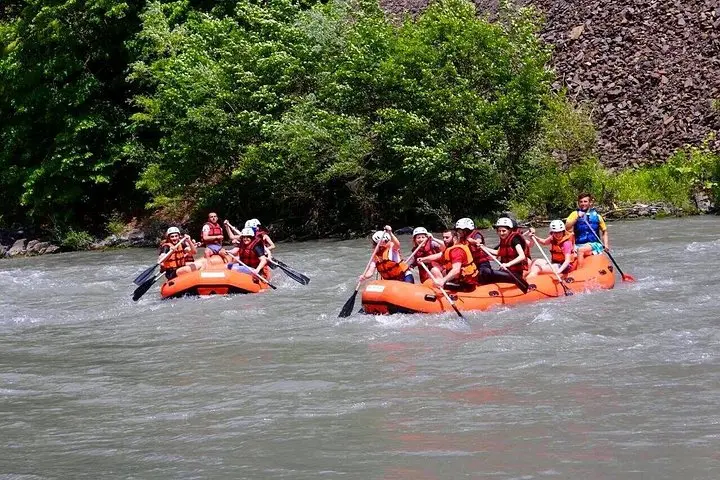
The first splash hits like a punctuation mark: cold Caucasus water slaps your forearms, the raft leans into the current and the river, narrow and fast, seems to have its own agenda. You clip in, listen to the instructor’s short, firm commands, and let the Aragvi do the rest. The run out of Pasanauri covers roughly 7–8 km of river cut through volcanic bedrock and beech-clad slopes; in a steady flow you’ll be moving for about an hour inside a 90-minute experience that includes gearing up and safety briefing.
The first splash hits like a punctuation mark: cold Caucasus water slaps your forearms, the raft leans into the current and the river, narrow and fast, seems to have its own agenda. You clip in, listen to the instructor’s short, firm commands, and let the Aragvi do the rest. The run out of Pasanauri covers roughly 7–8 km of river cut through volcanic bedrock and beech-clad slopes; in a steady flow you’ll be moving for about an hour inside a 90-minute experience that includes gearing up and safety briefing.
This isn’t modern sport rafting’s birthplace — locals call this craft jomardi, an old method for carrying goods and people along these channels — but since the 1980s the Aragvi has become a social pulse for Georgian outdoor life. Geologically, the river has carved tight bends through the Lesser Caucasus foothills; you’ll see smoother rounded boulders where past floods polished the rock and sharper outcrops where tributaries join. Culturally, Pasanauri is famous for khinkali, and it’s common to finish a run with a steaming plate of dumplings and strong tea at a roadside eatery.
The water personality shifts with the seasons. Spring melt turns the river lively, calling for firm paddling and attention. Summer lowers the flow and reveals gravel bars where wagtails and dippers hunt insects. Expect friendly instructors and straightforward sections that suit beginners as well as people who want a little adrenaline — rapids are typically Class I–III depending on snowmelt and recent rain.
Logistics are simple: meet at the launch point near Pasanauri where guides kit you out in helmets, lifejackets and wetsuits as needed. The company runs a private, small-group format; basic fitness and an ability to follow commands are all that’s required. Bring footwear that grips, a dry bag for phones, and sun protection for exposed floats between rapids. If you suffer heart conditions or are pregnant, this trip isn’t recommended.
Practical timing matters: aim for morning departures to avoid the hottest hours and to catch clearer flows. If you’re based in Tbilisi the drive is scenic and under two hours; many visitors combine the run with a day exploring Dusheti’s meadows or an evening of khinkali in Pasanauri. Guides emphasize environmental care — keep plastics off the riverbanks and pack out all trash. Rafting the Aragvi is at once accessible and tangible: the river challenges you just enough to wake your senses, then pushes you forward with an unmistakable Georgian invite to enjoy the rest of the day on land.