THE ADVENTURE COLLECTIVE® · Independent discovery and booking for outdoor travel

A two-day expedition from Nukus to the exposed shores of the Aral Sea and the canyons of the Ustyurt Plateau. Expect ship graveyards, yurt nights, short hikes on salt flats, and vivid lessons in recent environmental history.
A two-day expedition from Nukus to the exposed shores of the Aral Sea and the canyons of the Ustyurt Plateau. Expect ship graveyards, yurt nights, short hikes on salt flats, and vivid lessons in recent environmental history.
The first light hits the cracked hulls at Muynak before your convoy reaches the old shoreline — rusted ships silhouette like a stranded fleet against wind-scoured salt flats. The road from Nukus folds north through scrub and red clay; the Ustyurt Plateau rises in low cliffs and canyons that dare you to explore their folds. By evening, a yurt camp sits on the new edge of the Aral’s retreating waters, a small human hearth facing a wide, strange sea.
Verified experiences and guided adventures in the surrounding area.
Operated by Afrosiab travel Uzbekistan · Nukus, Karakalpakstan
The first light hits the cracked hulls at Muynak before your convoy reaches the old shoreline — rusted ships silhouette like a stranded fleet against wind-scoured salt flats. The road from Nukus folds north through scrub and red clay; the Ustyurt Plateau rises in low cliffs and canyons that dare you to explore their folds. By evening, a yurt camp sits on the new edge of the Aral’s retreating waters, a small human hearth facing a wide, strange sea.
This corridor holds recent history and deeper geology: Soviet-era irrigation redirected the rivers that fed the Aral, shrinking the sea and exposing seabed layered with sediment and salt. The Ustyurt’s gypsum and chalk outcrops reveal millions of years of uplift, while local Karakalpak villages preserve language and crafts shaped by desert life. Expect ship graveyards, Barsa-Kelmes island ruins, and the quiet of steppe skies interrupted by migratory flocks.
Practically, this is a two-day mix of overland driving and short hikes across uneven, salty terrain and loose sand. Vehicles provided are 4WD; nights are in traditional yurts with basic facilities. Bring sun protection, a good pair of walking shoes for canyon scrambles, and a refillable water supply. Travel light but prepare for temperature swings between wind-swept days and crisp nights. Respect local sites and the fragile reclaimed seabed — stick to tracks and avoid disturbing exposed sediments.
This trip suits travelers who want remote landscapes with cultural stops and simple comforts — an expedition that reads the recent past off a changing shoreline.
Most expeditions include pickup from Nukus and use 4WD vehicles; independent travel requires arranging reliable transport and local permits.
Yurts offer basic but comfortable bedding and meals; amenities are rustic and vary by camp — expect shared facilities and campfires.
There are localized restoration efforts (notably the Kok-Aral Dam on the North Aral), but the historic southern basin near Muynak remains largely altered and much of the original sea is gone.
Check Uzbekistan visa requirements for your nationality and consult healthcare guidance for routine vaccinations; no special immunizations are universally required for this trip beyond standard travel health advice.
Afrosiab travel Uzbekistan operates guided outdoor trips and adventures with an emphasis on safety, stewardship, and memorable experiences.
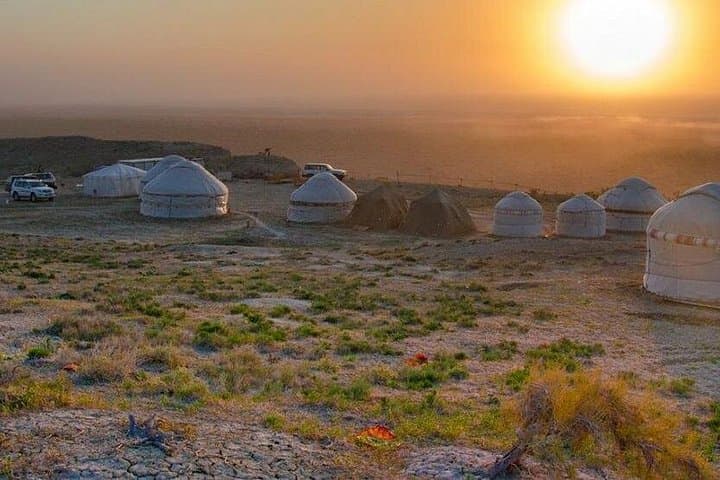


The first light hits the cracked hulls at Muynak before your convoy reaches the old shoreline — rusted ships silhouette like a stranded fleet against wind-scoured salt flats. The road from Nukus folds north through scrub and red clay; the Ustyurt Plateau rises in low cliffs and canyons that dare you to explore their folds. By evening, a yurt camp sits on the new edge of the Aral’s retreating waters, a small human hearth facing a wide, strange sea.
The first light hits the cracked hulls at Muynak before your convoy reaches the old shoreline — rusted ships silhouette like a stranded fleet against wind-scoured salt flats. The road from Nukus folds north through scrub and red clay; the Ustyurt Plateau rises in low cliffs and canyons that dare you to explore their folds. By evening, a yurt camp sits on the new edge of the Aral’s retreating waters, a small human hearth facing a wide, strange sea.
This corridor holds recent history and deeper geology: Soviet-era irrigation redirected the rivers that fed the Aral, shrinking the sea and exposing seabed layered with sediment and salt. The Ustyurt’s gypsum and chalk outcrops reveal millions of years of uplift, while local Karakalpak villages preserve language and crafts shaped by desert life. Expect ship graveyards, Barsa-Kelmes island ruins, and the quiet of steppe skies interrupted by migratory flocks.
Practically, this is a two-day mix of overland driving and short hikes across uneven, salty terrain and loose sand. Vehicles provided are 4WD; nights are in traditional yurts with basic facilities. Bring sun protection, a good pair of walking shoes for canyon scrambles, and a refillable water supply. Travel light but prepare for temperature swings between wind-swept days and crisp nights. Respect local sites and the fragile reclaimed seabed — stick to tracks and avoid disturbing exposed sediments.
This trip suits travelers who want remote landscapes with cultural stops and simple comforts — an expedition that reads the recent past off a changing shoreline.