THE ADVENTURE COLLECTIVE® · Independent discovery and booking for outdoor travel

Fly from Tashkent to Nukus for a one-day expedition to the Aral Sea’s ship graveyard, the Savitsky Museum, and the ancient Mizdahkan necropolis. This long day pairs stark desert landscapes with powerful cultural history — ideal for travelers ready for a demanding, unforgettable outing.
Fly from Tashkent to Nukus for a one-day expedition to the Aral Sea’s ship graveyard, the Savitsky Museum, and the ancient Mizdahkan necropolis. This long day pairs stark desert landscapes with powerful cultural history — ideal for travelers ready for a demanding, unforgettable outing.
You step off the small plane onto a hard, wind-scoured runway and the air smells of salt and dust; the land around Nukus opens flat and purposeful, as if telling a long story in slow sentences.
Verified experiences and guided adventures in the surrounding area.
Operated by GOTOUZBEKISTAN · Nukus, Karakalpakstan
You step off the small plane onto a hard, wind-scoured runway and the air smells of salt and dust; the land around Nukus opens flat and purposeful, as if telling a long story in slow sentences.
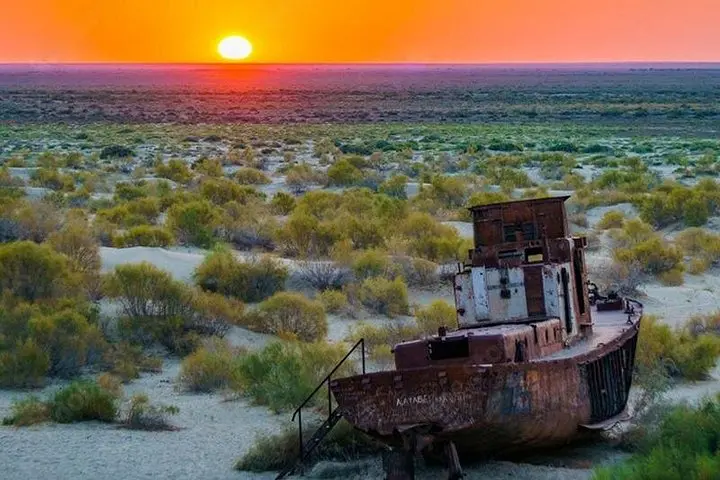
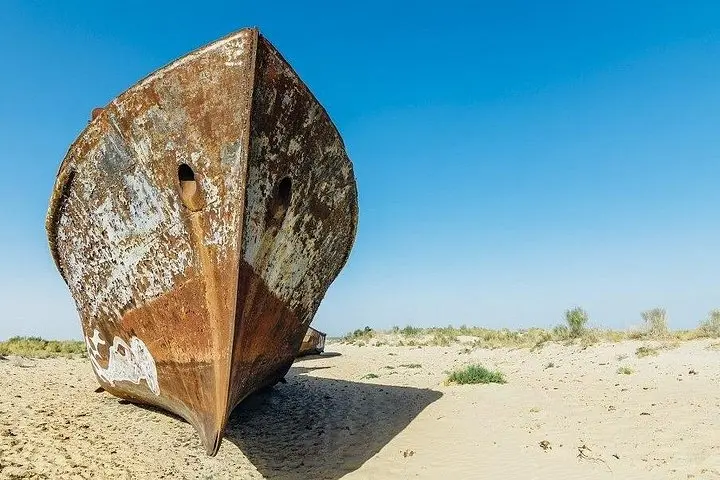
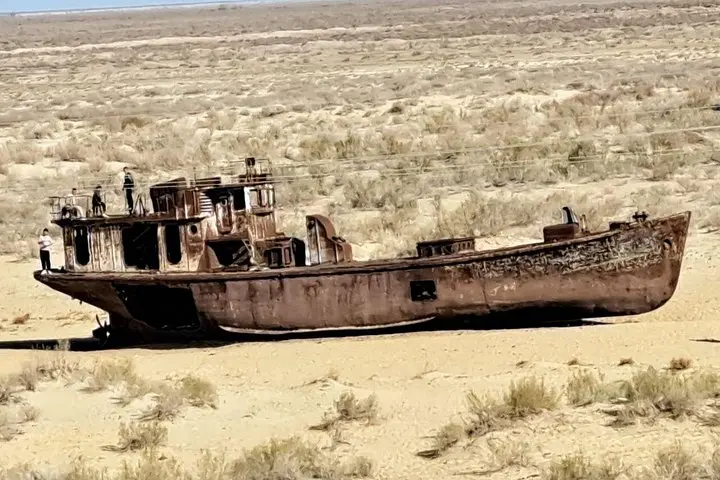
This daylong loop from Tashkent threads history and geography together — the Karakalpak plains, the lacquered corridors of the Savitsky Museum in Nukus, the ancient stones of Mizdahkan necropolis, then out to Muynak where rusting hulls sit like fossils on former seabed.
Geologically the Aral Sea’s retreat is visible in terraces of pale clay and salt pans; where water once pressed against shore, cracked mud now dares you to imagine ships afloat. Culturally, the region holds Soviet-era legacies, Karakalpak traditions, and art that survived isolation: Igor Savitsky assembled a radical collection that reads like a counter-history of 20th-century Central Asia.
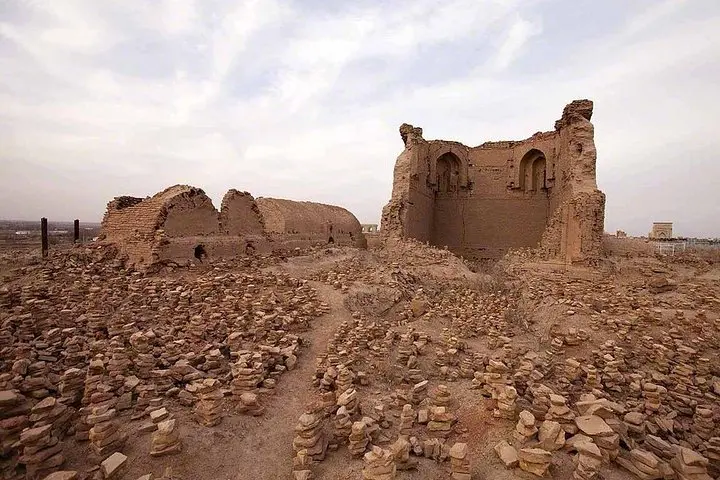
Expect museum walks, a plate of Uzbek plov in Nukus, and an off-road approach into Muynak’s ship graveyard—photography and reflection opportunities dominate the day. The Mizdahkan site adds archaeological scale: ancient burials and mausoleums that predate many regional boundaries.
Practical edge: this is a long, physically demanding day—flights, vehicle transfers and walking on uneven ground. Bring sun protection, at least 3 liters of water, sturdy shoes, and a light wind layer. Phones may lose signal between stops; carry necessary cash and identification. Timing matters: early departures avoid desert heat and guarantee clearer light on the ships at Muynak. The tour is best for travelers ready for a full day of discovery who want to witness both environmental change and resilient culture in one tightly packed itinerary.
Yes—this tour includes round-trip flights between Tashkent and Nukus as part of the itinerary.
Expect several short to moderate walks (30–120 minutes) at museums, the necropolis, and the Muynak ship graveyard on uneven ground.
The operator does not recommend this tour for pregnant travelers; children may participate but should be able to handle long travel days and uneven terrain.
You’ll visit the Muynak ship graveyard and adjacent former shoreline; large parts of the original Aral Sea are now distant or fragmented, so visits focus on the cultural and environmental aftermath.
GOTOUZBEKISTAN operates guided outdoor trips and adventures with an emphasis on safety, stewardship, and memorable experiences.
You step off the small plane onto a hard, wind-scoured runway and the air smells of salt and dust; the land around Nukus opens flat and purposeful, as if telling a long story in slow sentences.
You step off the small plane onto a hard, wind-scoured runway and the air smells of salt and dust; the land around Nukus opens flat and purposeful, as if telling a long story in slow sentences.
This daylong loop from Tashkent threads history and geography together — the Karakalpak plains, the lacquered corridors of the Savitsky Museum in Nukus, the ancient stones of Mizdahkan necropolis, then out to Muynak where rusting hulls sit like fossils on former seabed.
Geologically the Aral Sea’s retreat is visible in terraces of pale clay and salt pans; where water once pressed against shore, cracked mud now dares you to imagine ships afloat. Culturally, the region holds Soviet-era legacies, Karakalpak traditions, and art that survived isolation: Igor Savitsky assembled a radical collection that reads like a counter-history of 20th-century Central Asia.
Expect museum walks, a plate of Uzbek plov in Nukus, and an off-road approach into Muynak’s ship graveyard—photography and reflection opportunities dominate the day. The Mizdahkan site adds archaeological scale: ancient burials and mausoleums that predate many regional boundaries.
Practical edge: this is a long, physically demanding day—flights, vehicle transfers and walking on uneven ground. Bring sun protection, at least 3 liters of water, sturdy shoes, and a light wind layer. Phones may lose signal between stops; carry necessary cash and identification. Timing matters: early departures avoid desert heat and guarantee clearer light on the ships at Muynak. The tour is best for travelers ready for a full day of discovery who want to witness both environmental change and resilient culture in one tightly packed itinerary.