THE ADVENTURE COLLECTIVE® · Independent discovery and booking for outdoor travel

A 13-day overland expedition from Tashkent to the Aral Sea and Ustyurt Plateau that combines desert drives, remote camping, Silk Road cities and the haunting ship cemetery at Muynak. Expect long travel days, salt flats, historic forts and basic camp life.
A 13-day overland expedition from Tashkent to the Aral Sea and Ustyurt Plateau that combines desert drives, remote camping, Silk Road cities and the haunting ship cemetery at Muynak. Expect long travel days, salt flats, historic forts and basic camp life.
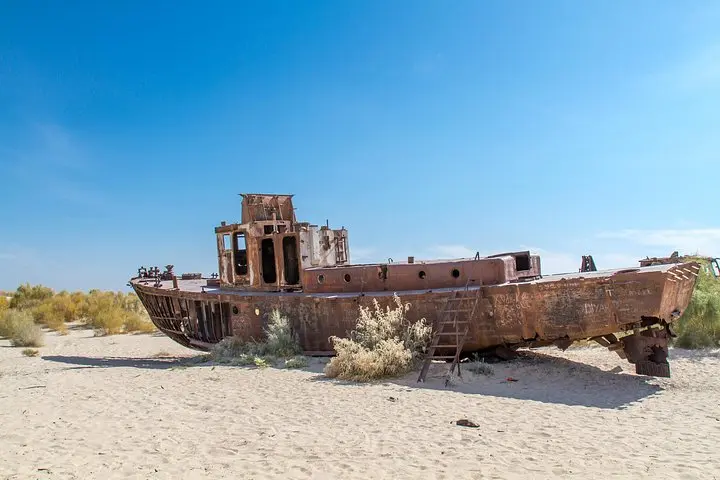
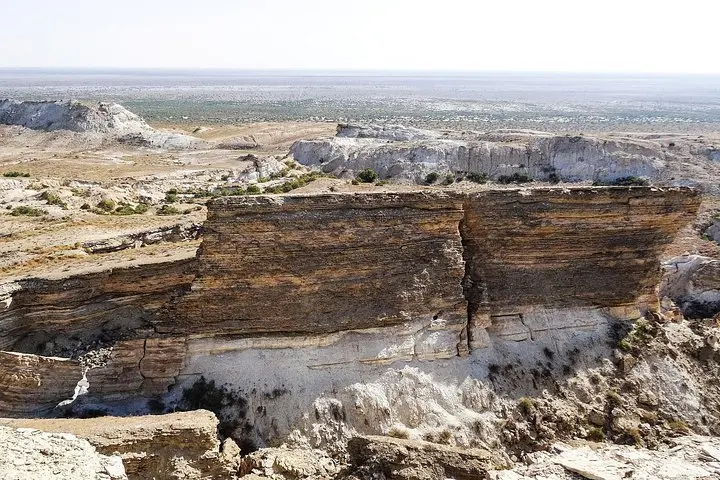
A wind-driven dawn on the Ustyurt Plateau scrapes salt and sand across a flat horizon as your jeep crests an eroded ridge. The Aral Sea—once a vast inland ocean—lies ahead as a pale, cracked plain punctuated by the rusting skeletons of ships stranded where water once lapped the hulls.
Verified experiences and guided adventures in the surrounding area.
Operated by DOCA TOURS · Nukus, Karakalpakstan
A wind-driven dawn on the Ustyurt Plateau scrapes salt and sand across a flat horizon as your jeep crests an eroded ridge. The Aral Sea—once a vast inland ocean—lies ahead as a pale, cracked plain punctuated by the rusting skeletons of ships stranded where water once lapped the hulls.
This 13-day overland circuit begins in Tashkent and threads Soviet-era urban centers, Silk Road oases and desert ruins. Geology here reads like a slow-motion catastrophe: river diversions upstream shrank the Aral, exposing seabed sediments and creating the ship cemetery near Muynak. Archaeology and architecture follow a different line—Toprak Kala and Ayaz-Kala are mud-brick witnesses to Khorezm’s 2nd-century BC frontier forts, while Nukus houses Savitsky’s avant-garde collection, a cultural island amid shifting sands.
Local life is direct and hospitable: fishermen-turned-herders, small bazaars stacked with dried fruits, and regional dishes like shivit oshi and plov that ground long travel days.
Practical guidance: expect long vehicle days (several 4–9 hour drives), basic tent or yurt nights at remote camps, and strong sun and wind on exposed plateaus. Carry at least 3 liters of water per day, layered clothing for cold desert nights, sun protection, and sturdy shoes for rubble and salt crust. Bring valid passport documents—the route crosses Uzbek internal checkpoints—and be prepared for simple facilities in Muynak.
This trip balances photographic drama and cultural depth: plan logistics, respect fragile desert ecosystems, and leave no trace where the sea once was.
Camps are basic—tents or yurts with simple facilities—often in areas without running water; organizers provide meals and a cook but expect rustic conditions.
The tour is labeled as physically easy but involves long vehicle days and simple accommodations; travelers with limited mobility or serious health issues should consult the operator first.
A valid passport is required; bring photocopies and any visas needed for Uzbekistan. The operator collects passport details in advance for permits and internal transport.
Yes—photography is common, but ask permission before photographing people in villages and be sensitive around private property and industrial sites.
DOCA TOURS operates guided outdoor trips and adventures with an emphasis on safety, stewardship, and memorable experiences.
A wind-driven dawn on the Ustyurt Plateau scrapes salt and sand across a flat horizon as your jeep crests an eroded ridge. The Aral Sea—once a vast inland ocean—lies ahead as a pale, cracked plain punctuated by the rusting skeletons of ships stranded where water once lapped the hulls.
A wind-driven dawn on the Ustyurt Plateau scrapes salt and sand across a flat horizon as your jeep crests an eroded ridge. The Aral Sea—once a vast inland ocean—lies ahead as a pale, cracked plain punctuated by the rusting skeletons of ships stranded where water once lapped the hulls.
This 13-day overland circuit begins in Tashkent and threads Soviet-era urban centers, Silk Road oases and desert ruins. Geology here reads like a slow-motion catastrophe: river diversions upstream shrank the Aral, exposing seabed sediments and creating the ship cemetery near Muynak. Archaeology and architecture follow a different line—Toprak Kala and Ayaz-Kala are mud-brick witnesses to Khorezm’s 2nd-century BC frontier forts, while Nukus houses Savitsky’s avant-garde collection, a cultural island amid shifting sands.
Local life is direct and hospitable: fishermen-turned-herders, small bazaars stacked with dried fruits, and regional dishes like shivit oshi and plov that ground long travel days.
Practical guidance: expect long vehicle days (several 4–9 hour drives), basic tent or yurt nights at remote camps, and strong sun and wind on exposed plateaus. Carry at least 3 liters of water per day, layered clothing for cold desert nights, sun protection, and sturdy shoes for rubble and salt crust. Bring valid passport documents—the route crosses Uzbek internal checkpoints—and be prepared for simple facilities in Muynak.
This trip balances photographic drama and cultural depth: plan logistics, respect fragile desert ecosystems, and leave no trace where the sea once was.