THE ADVENTURE COLLECTIVE® · Independent discovery and booking for outdoor travel

Step into Arctic silence on a small-group snowshoe walk from Rovaniemi. Learn basic survival skills, follow wildlife tracks through old forest, and finish with a campfire demonstration in true Lapland style.
Step into Arctic silence on a small-group snowshoe walk from Rovaniemi. Learn basic survival skills, follow wildlife tracks through old forest, and finish with a campfire demonstration in true Lapland style.
Snow crunches underfoot and the forest inhales around you — a horizontal light spills across birch and pine as you step out on snowshoes. The guide checks bindings, points toward a pale river valley, and the group moves single-file into an Arctic quiet that seems to press the world into small sounds: breath, snow, distant ice talking to the bank.
Verified experiences and guided adventures in the surrounding area.
Operated by Wild About Lapland · Rovaniemi, Lapland
Snow crunches underfoot and the forest inhales around you — a horizontal light spills across birch and pine as you step out on snowshoes. The guide checks bindings, points toward a pale river valley, and the group moves single-file into an Arctic quiet that seems to press the world into small sounds: breath, snow, distant ice talking to the bank.
This is Lapland south of the Arctic Circle, a landscape carved by successive ice sheets and held now by old pines and frozen rivers. The terrain is low-relief but sculpted: glacial drumlins, sandy ridges, and peat-filled hollows that freeze into brittle patterns. Culturally, the area is shaped by Sámi reindeer herding and century-old winter travel routes; traditional knowledge — from tracking to firecraft — is part of the local rhythm and shows up in the guide’s stories.
Expect a relaxed 3–4 hour outing, roughly 4–6 km depending on the trail, with minimal elevation gain and a mix of packed tracks and soft, untracked snow. Wildlife leaves signs more often than appearances: reindeer prints and hare tracks are common; fox and grouse calls sometimes punctuate the silence. Guides teach basic snowshoe technique, cold-weather safety, and traditional fire-starting using natural materials — a practical skill tested even in extreme cold.
Practical tips: dress in layers, bring waterproof boots and spare batteries for cameras, hydrate before and during the walk, and time your trip for midday light in winter. The tour supplies snowshoes and professional winter clothing, but personal fit and warm footwear matter. Respect fragile lichens and never walk off-route near sensitive tundra or reindeer grazing areas.
No — guides provide instruction and choose routes suitable for beginners; the pace is relaxed and educational.
Tours are limited to small groups (up to 8 guests) to minimize impact and allow personal attention from the guide.
Snowshoes and professional winter clothing are included, but properly fitted winter boots and personal base layers are recommended.
Tours may be cancelled for safety in very low temperatures or dangerous conditions; the operator allows full refunds if cancelled at least 24 hours prior.
Wild About Lapland operates guided outdoor trips and adventures with an emphasis on safety, stewardship, and memorable experiences.

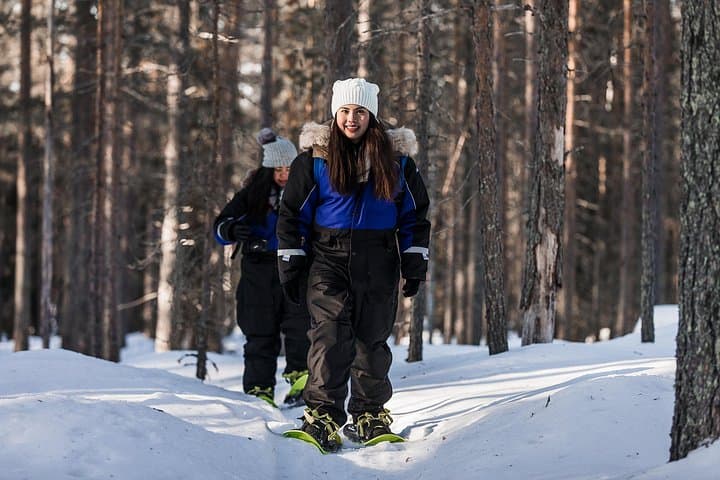
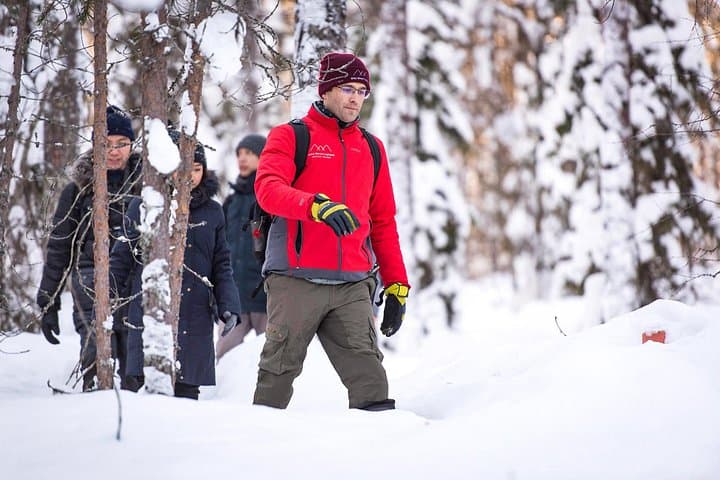

Snow crunches underfoot and the forest inhales around you — a horizontal light spills across birch and pine as you step out on snowshoes. The guide checks bindings, points toward a pale river valley, and the group moves single-file into an Arctic quiet that seems to press the world into small sounds: breath, snow, distant ice talking to the bank.
Snow crunches underfoot and the forest inhales around you — a horizontal light spills across birch and pine as you step out on snowshoes. The guide checks bindings, points toward a pale river valley, and the group moves single-file into an Arctic quiet that seems to press the world into small sounds: breath, snow, distant ice talking to the bank.
This is Lapland south of the Arctic Circle, a landscape carved by successive ice sheets and held now by old pines and frozen rivers. The terrain is low-relief but sculpted: glacial drumlins, sandy ridges, and peat-filled hollows that freeze into brittle patterns. Culturally, the area is shaped by Sámi reindeer herding and century-old winter travel routes; traditional knowledge — from tracking to firecraft — is part of the local rhythm and shows up in the guide’s stories.
Expect a relaxed 3–4 hour outing, roughly 4–6 km depending on the trail, with minimal elevation gain and a mix of packed tracks and soft, untracked snow. Wildlife leaves signs more often than appearances: reindeer prints and hare tracks are common; fox and grouse calls sometimes punctuate the silence. Guides teach basic snowshoe technique, cold-weather safety, and traditional fire-starting using natural materials — a practical skill tested even in extreme cold.
Practical tips: dress in layers, bring waterproof boots and spare batteries for cameras, hydrate before and during the walk, and time your trip for midday light in winter. The tour supplies snowshoes and professional winter clothing, but personal fit and warm footwear matter. Respect fragile lichens and never walk off-route near sensitive tundra or reindeer grazing areas.