THE ADVENTURE COLLECTIVE® · Independent discovery and booking for outdoor travel

Spend an hour walking through six acres of working areca plantation and step into a 1929 heritage home for a simple vegetarian breakfast. Learn about coastal areca cultivation, local architecture and seasonal farm rhythms on this short, accessible experience near Honavar.
Spend an hour walking through six acres of working areca plantation and step into a 1929 heritage home for a simple vegetarian breakfast. Learn about coastal areca cultivation, local architecture and seasonal farm rhythms on this short, accessible experience near Honavar.
A low, salty wind carries the rustle of areca fronds as you step from the lane onto six acres of plantation. The palms stand in measured rows, their long leaf blades catching light and throwing patterned shade over the earthen pathways. Walking here is sensorial: the smell of damp soil after irrigation, the soft click of beetles on dead leaves, and distant voices from the coastal villages reminding you this is working land as much as a view.
Verified experiences and guided adventures in the surrounding area.
Operated by Canara Tours · Honavar, Karnataka
A low, salty wind carries the rustle of areca fronds as you step from the lane onto six acres of plantation. The palms stand in measured rows, their long leaf blades catching light and throwing patterned shade over the earthen pathways. Walking here is sensorial: the smell of damp soil after irrigation, the soft click of beetles on dead leaves, and distant voices from the coastal villages reminding you this is working land as much as a view.
Areca palms (Areca catechu) have been cultivated along Karnataka’s coast for centuries; the crop and its harvest routines shaped local livelihoods and festivals. The on-site 1929 heritage home offers a window into pre-independence coastal architecture — simple verandas, laterite or brick walls and timber beams — reflecting a practical vernacular adapted to monsoon and trade winds. Geologically, the region sits on basalt and lateritic soils overlying the Western Ghats’ ancient formations, with coastal alluvium in the lowlands.
The experience pairs a guided farm walk with a modest vegetarian breakfast served in the heritage house. Guides explain planting cycles, nut processing and how agroforestry practices support biodiversity — kingfishers and monitor lizards are common sights. Photography is abundant but discreet; this is a working farm, not a theme park.
Practical notes: the walk is short (about 40–60 minutes) on flat, sometimes muddy terrain, so wear closed-toe shoes and bring sun protection. Afternoon monsoon showers are frequent June–September; mornings offer cooler light and fewer insects. Carry water and respect farm operations — stay on paths, ask before touching palms or harvesting equipment. The visit is low-effort but rich in coastal agricultural culture, ideal for travelers connecting Gokarna, Murudeshwar or Honavar with a few hours to spare.
The combined plantation walk and heritage home visit typically lasts 40–60 minutes.
Yes—paths are mostly flat and the activity is described as suitable for all fitness levels; the site notes wheelchair and stroller accessibility.
A simple vegetarian breakfast is included and RO purified drinking water refills are available.
Yes, photography is encouraged, but be courteous around farm operations and ask before photographing staff or private areas.
Canara Tours operates guided outdoor trips and adventures with an emphasis on safety, stewardship, and memorable experiences.
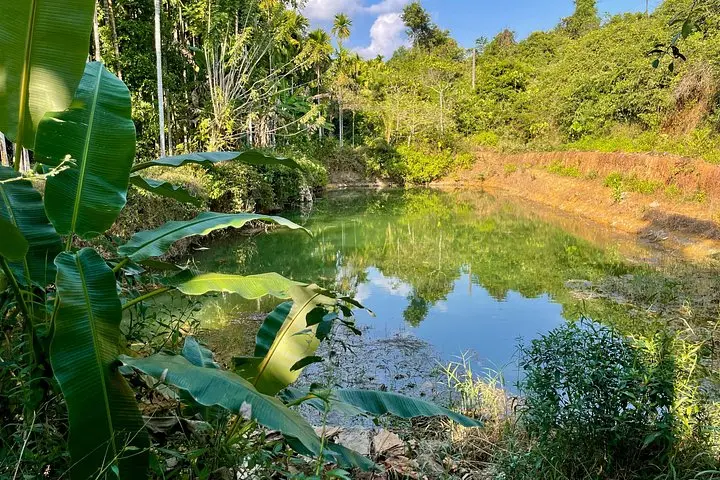

A low, salty wind carries the rustle of areca fronds as you step from the lane onto six acres of plantation. The palms stand in measured rows, their long leaf blades catching light and throwing patterned shade over the earthen pathways. Walking here is sensorial: the smell of damp soil after irrigation, the soft click of beetles on dead leaves, and distant voices from the coastal villages reminding you this is working land as much as a view.
A low, salty wind carries the rustle of areca fronds as you step from the lane onto six acres of plantation. The palms stand in measured rows, their long leaf blades catching light and throwing patterned shade over the earthen pathways. Walking here is sensorial: the smell of damp soil after irrigation, the soft click of beetles on dead leaves, and distant voices from the coastal villages reminding you this is working land as much as a view.
Areca palms (Areca catechu) have been cultivated along Karnataka’s coast for centuries; the crop and its harvest routines shaped local livelihoods and festivals. The on-site 1929 heritage home offers a window into pre-independence coastal architecture — simple verandas, laterite or brick walls and timber beams — reflecting a practical vernacular adapted to monsoon and trade winds. Geologically, the region sits on basalt and lateritic soils overlying the Western Ghats’ ancient formations, with coastal alluvium in the lowlands.
The experience pairs a guided farm walk with a modest vegetarian breakfast served in the heritage house. Guides explain planting cycles, nut processing and how agroforestry practices support biodiversity — kingfishers and monitor lizards are common sights. Photography is abundant but discreet; this is a working farm, not a theme park.
Practical notes: the walk is short (about 40–60 minutes) on flat, sometimes muddy terrain, so wear closed-toe shoes and bring sun protection. Afternoon monsoon showers are frequent June–September; mornings offer cooler light and fewer insects. Carry water and respect farm operations — stay on paths, ask before touching palms or harvesting equipment. The visit is low-effort but rich in coastal agricultural culture, ideal for travelers connecting Gokarna, Murudeshwar or Honavar with a few hours to spare.