THE ADVENTURE COLLECTIVE® · Independent discovery and booking for outdoor travel
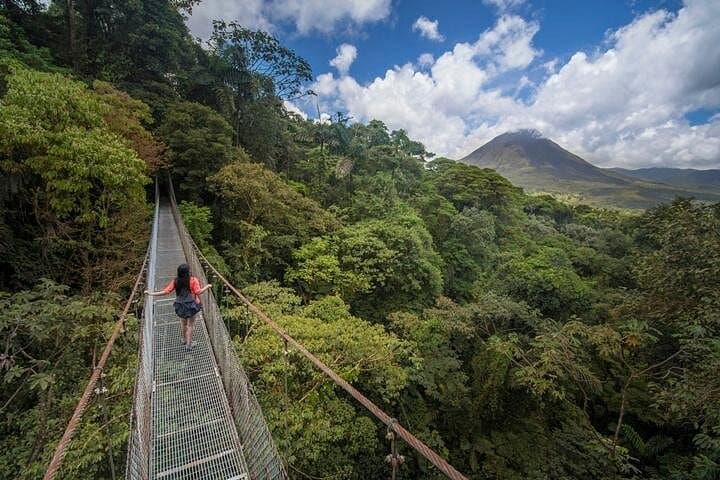
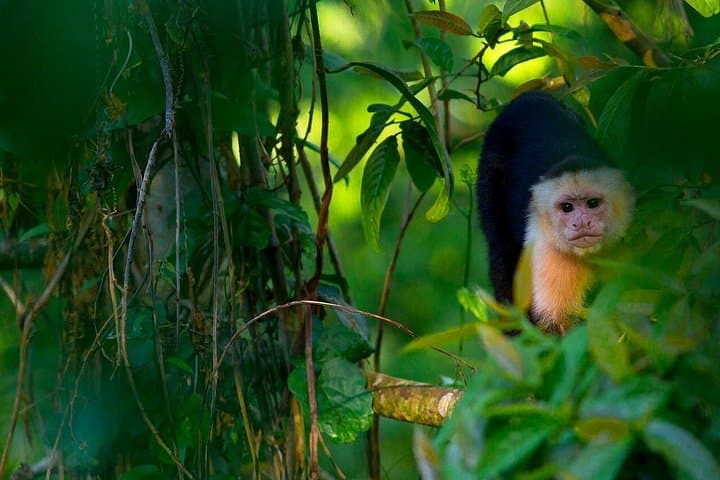
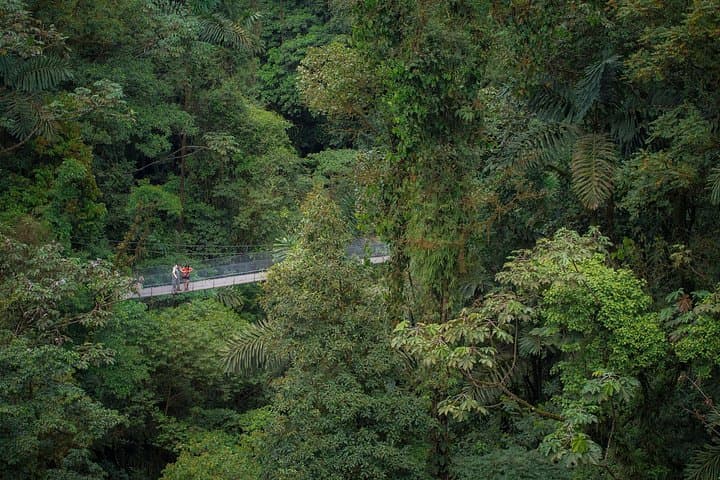
Walk 15 bridges across 243 hectares of rainforest near Arenal and climb through forest levels to find monkeys, toucans and sweeping canopy views. This compact 3.1 km loop balances easy access with rich wildlife viewing.
Walk 15 bridges across 243 hectares of rainforest near Arenal and climb through forest levels to find monkeys, toucans and sweeping canopy views. This compact 3.1 km loop balances easy access with rich wildlife viewing.
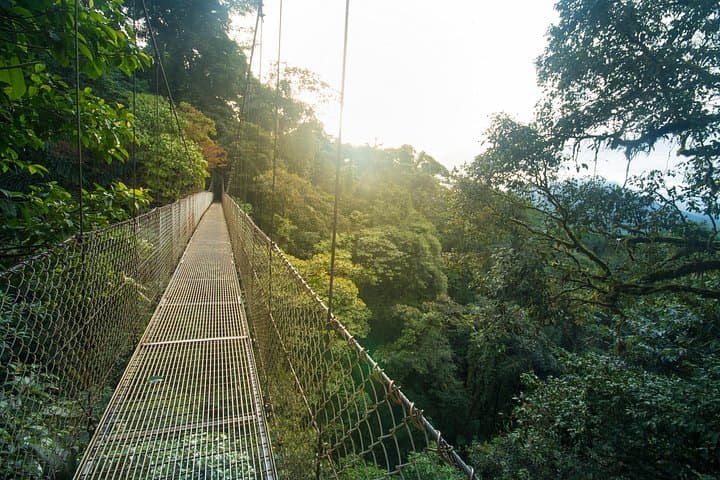
Mist rolls through the upper canopy, beads of water trembling on broad leaves as you step onto the first suspension bridge. Beneath your soles the forest breathes — vines tug at branches, a distant monkey chatters, and the trail ahead narrows into a series of swaying viewports that force you to look up and out.
Verified experiences and guided adventures in the surrounding area.
Operated by Ecoterra Expeditions · La Fortuna, Alajuela
Mist rolls through the upper canopy, beads of water trembling on broad leaves as you step onto the first suspension bridge. Beneath your soles the forest breathes — vines tug at branches, a distant monkey chatters, and the trail ahead narrows into a series of swaying viewports that force you to look up and out.
The Hanging Bridges Reserve protects roughly 243 hectares of lowland and premontane rainforest on Arenal’s flanks. The park’s 3.1 km (2-mile) circuit links 15 bridges, both suspended and fixed, that traverse several vertical levels of the forest and open line-of-sight to treetops, understory and the forest floor. Geologically the area sits on older volcanic deposits from Arenal’s long history; soils are rich and drainage quick, feeding a dense mix of epiphytes, palms and towering emergents. Culturally, guides often weave local knowledge—how cacao and plant medicines grew here—into walks, and conservation efforts focus on reconnecting habitat fragmented by past agriculture.
Practically, expect varied footing with short slopes rather than long climbs; the route is suitable for most fit visitors but includes narrow, sometimes wet boards and railings. Carry rain gear and steady shoes, bring binoculars for canopy birds, and plan for humid conditions that tire novices quickly. Morning visits are best for bird activity and cooler air; afternoons bring heavier rain and a different light across the leaves. Respect posted paths, keep voices low for wildlife sightings, and leave no trace: the forest responds to care and curiosity in equal measure.
The circuit is about 3.1 km (2 miles) long and typically takes 2–4 hours depending on stops for wildlife viewing.
Yes for older children, but it’s not recommended for kids under 4; children should be supervised on bridges and near railings.
Yes — sightings of white-faced capuchins, howler monkeys, toucans and other birds are common, especially early in the morning.
Most bridges are stable and well maintained, but suspended bridges do sway; those with a fear of heights may prefer staying on lower stationary walkways.
Ecoterra Expeditions operates guided outdoor trips and adventures with an emphasis on safety, stewardship, and memorable experiences.
Mist rolls through the upper canopy, beads of water trembling on broad leaves as you step onto the first suspension bridge. Beneath your soles the forest breathes — vines tug at branches, a distant monkey chatters, and the trail ahead narrows into a series of swaying viewports that force you to look up and out.
Mist rolls through the upper canopy, beads of water trembling on broad leaves as you step onto the first suspension bridge. Beneath your soles the forest breathes — vines tug at branches, a distant monkey chatters, and the trail ahead narrows into a series of swaying viewports that force you to look up and out.
The Hanging Bridges Reserve protects roughly 243 hectares of lowland and premontane rainforest on Arenal’s flanks. The park’s 3.1 km (2-mile) circuit links 15 bridges, both suspended and fixed, that traverse several vertical levels of the forest and open line-of-sight to treetops, understory and the forest floor. Geologically the area sits on older volcanic deposits from Arenal’s long history; soils are rich and drainage quick, feeding a dense mix of epiphytes, palms and towering emergents. Culturally, guides often weave local knowledge—how cacao and plant medicines grew here—into walks, and conservation efforts focus on reconnecting habitat fragmented by past agriculture.
Practically, expect varied footing with short slopes rather than long climbs; the route is suitable for most fit visitors but includes narrow, sometimes wet boards and railings. Carry rain gear and steady shoes, bring binoculars for canopy birds, and plan for humid conditions that tire novices quickly. Morning visits are best for bird activity and cooler air; afternoons bring heavier rain and a different light across the leaves. Respect posted paths, keep voices low for wildlife sightings, and leave no trace: the forest responds to care and curiosity in equal measure.
