THE ADVENTURE COLLECTIVE® · Independent discovery and booking for outdoor travel

Trace the raw edges of Arenal’s 1968 lava flows on a short, immersive hike from La Fortuna. This walk pairs volcanic geology, lake panoramas and local history in a compact, accessible trail experience.
Trace the raw edges of Arenal’s 1968 lava flows on a short, immersive hike from La Fortuna. This walk pairs volcanic geology, lake panoramas and local history in a compact, accessible trail experience.
You step off the shaded trail and into a raw, blackened expanse where the ground still remembers fire. The air cools against your skin as Arenal’s cone rises ahead, a dark silhouette above Lake Arenal; wind moves across the old lava as if the volcano is exhaling. The hike follows trails cut through the 1968 eruption’s deposits, crossing broken pahoehoe and 'a'a flows and opening onto a viewpoint that frames the volcano and the shimmering lake beyond.
Verified experiences and guided adventures in the surrounding area.
Operated by Green Vacations Costa Rica · La Fortuna, Alajuela
You step off the shaded trail and into a raw, blackened expanse where the ground still remembers fire. The air cools against your skin as Arenal’s cone rises ahead, a dark silhouette above Lake Arenal; wind moves across the old lava as if the volcano is exhaling. The hike follows trails cut through the 1968 eruption’s deposits, crossing broken pahoehoe and 'a'a flows and opening onto a viewpoint that frames the volcano and the shimmering lake beyond.
Arenal’s modern story pivots on that 1968 eruption—an event that reshaped local settlements, soils, and the economy. Geologically young and steep, the volcano sits on Costa Rica’s volcanic arc and feeds dramatic lava fields and rich, fast-draining volcanic soils. Culturally, the landscape ties to La Fortuna’s evolution from ranching community to eco-tourism hub; guides often weave local lore about the Colossus of Arenal and how hot springs and agriculture grew around the mountain’s fertile margins.
Expect mixed terrain: compact trail, loose volcanic rock, and short sections across cooled lava. Vegetation reclaims edges—low forest, bromeliads, and the occasional guava—while birds and monkeys claim the canopy.
Practical notes: plan for 2–3 hours on the trail itself (tours commonly run 3–4 hours including transfers), bring sturdy footwear and at least 1L of water, and wear sun protection and quick-dry layers. Mornings offer clearer views and cooler air; afternoons can cloud up and bring showers. Stay on marked paths—the lava fields are sharp and unstable—and respect wildlife and private land. The hike is compact, visceral, and direct: a close-up lesson in how recent volcanism shapes landscapes and livelihoods.
The walking portion to the primary viewpoint is roughly 2–2.5 hours round-trip over mixed terrain; tours typically total 3–4 hours with transfers.
Older children with hiking experience and good footwear can do the route; supervise them carefully on sharp lava and uneven sections.
Arenal’s behavior changed after 2010; visitors should not expect visible lava flows—the hike focuses on the 1968 deposits and landscape features.
Guides are not always legally required inside the park, but guided tours provide safety, local history, and easier transport logistics from La Fortuna.
Green Vacations Costa Rica operates guided outdoor trips and adventures with an emphasis on safety, stewardship, and memorable experiences.
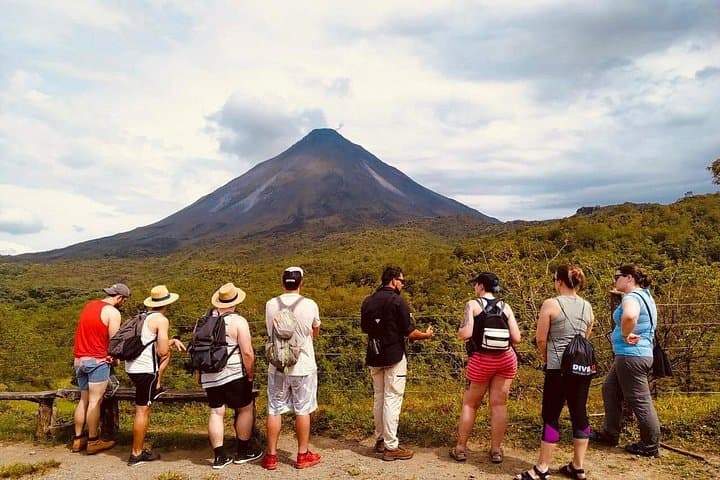
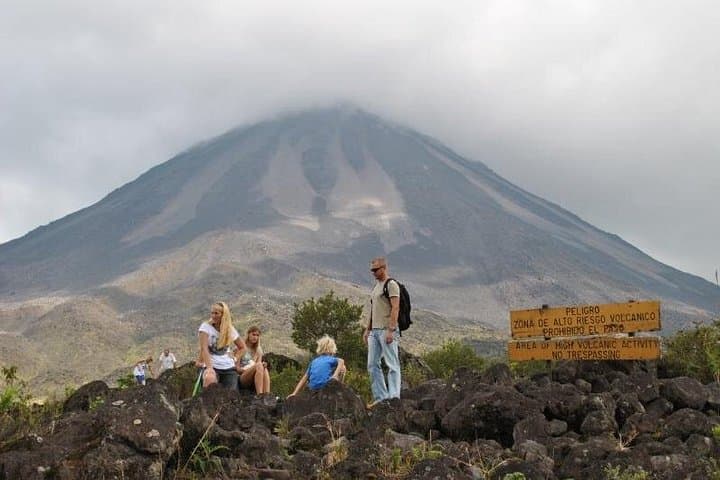
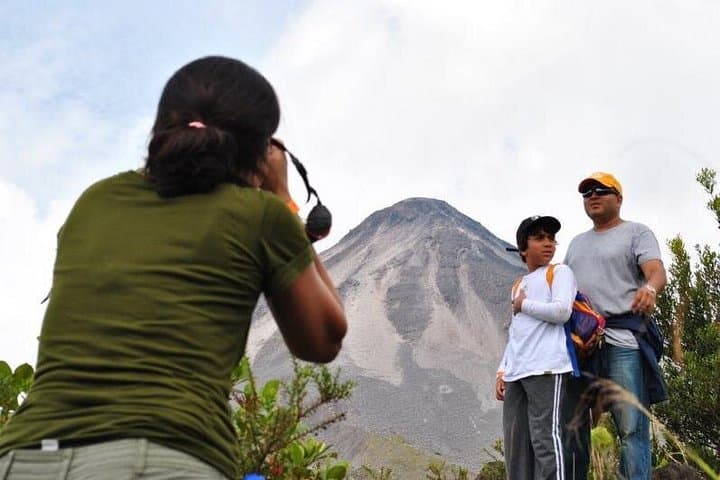
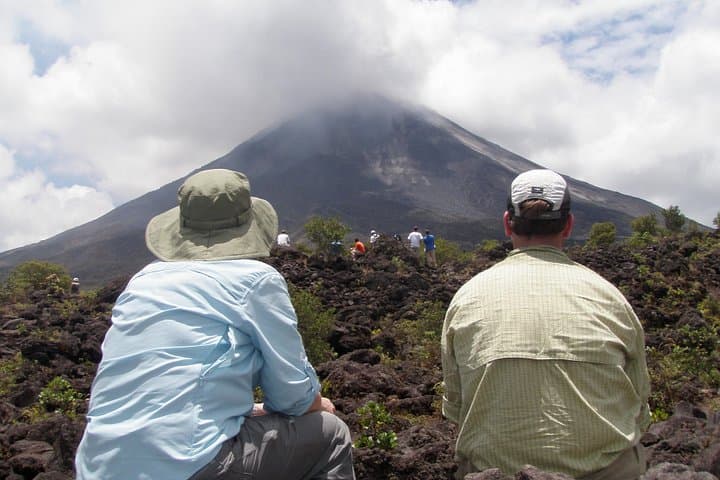
You step off the shaded trail and into a raw, blackened expanse where the ground still remembers fire. The air cools against your skin as Arenal’s cone rises ahead, a dark silhouette above Lake Arenal; wind moves across the old lava as if the volcano is exhaling. The hike follows trails cut through the 1968 eruption’s deposits, crossing broken pahoehoe and 'a'a flows and opening onto a viewpoint that frames the volcano and the shimmering lake beyond.
You step off the shaded trail and into a raw, blackened expanse where the ground still remembers fire. The air cools against your skin as Arenal’s cone rises ahead, a dark silhouette above Lake Arenal; wind moves across the old lava as if the volcano is exhaling. The hike follows trails cut through the 1968 eruption’s deposits, crossing broken pahoehoe and 'a'a flows and opening onto a viewpoint that frames the volcano and the shimmering lake beyond.
Arenal’s modern story pivots on that 1968 eruption—an event that reshaped local settlements, soils, and the economy. Geologically young and steep, the volcano sits on Costa Rica’s volcanic arc and feeds dramatic lava fields and rich, fast-draining volcanic soils. Culturally, the landscape ties to La Fortuna’s evolution from ranching community to eco-tourism hub; guides often weave local lore about the Colossus of Arenal and how hot springs and agriculture grew around the mountain’s fertile margins.
Expect mixed terrain: compact trail, loose volcanic rock, and short sections across cooled lava. Vegetation reclaims edges—low forest, bromeliads, and the occasional guava—while birds and monkeys claim the canopy.
Practical notes: plan for 2–3 hours on the trail itself (tours commonly run 3–4 hours including transfers), bring sturdy footwear and at least 1L of water, and wear sun protection and quick-dry layers. Mornings offer clearer views and cooler air; afternoons can cloud up and bring showers. Stay on marked paths—the lava fields are sharp and unstable—and respect wildlife and private land. The hike is compact, visceral, and direct: a close-up lesson in how recent volcanism shapes landscapes and livelihoods.