THE ADVENTURE COLLECTIVE® · Independent discovery and booking for outdoor travel

Walk across cooled 1992 lava and into three distinct forest bands on a guided 4 km hike from La Fortuna. Expect close wildlife encounters, volcanic geology up close, and practical eco‑farm insights.
Walk across cooled 1992 lava and into three distinct forest bands on a guided 4 km hike from La Fortuna. Expect close wildlife encounters, volcanic geology up close, and practical eco‑farm insights.
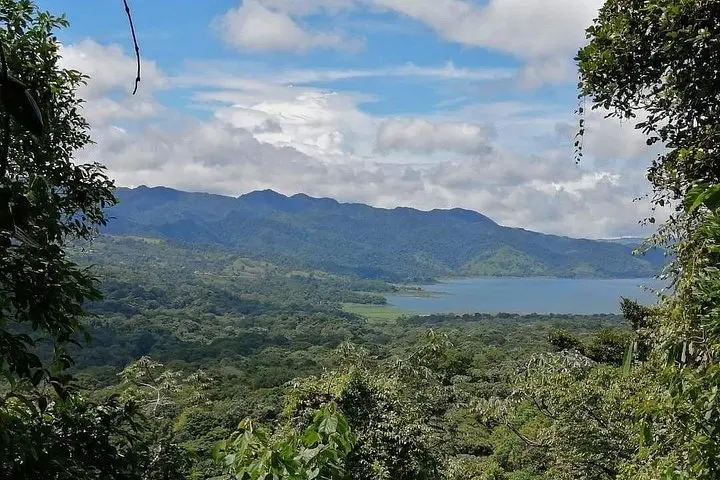
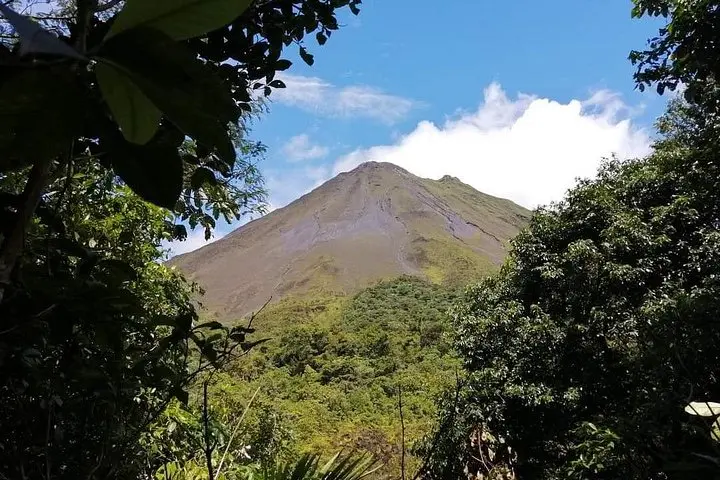
You step from humid agricultural flats into the dark crust of recent lava, the ground crunching underfoot while the conical bulk of Arenal broods ahead. Forest reclaims edges of the flows in bands: lowland wood giving way to denser montane stands and scrub that clings to cooled lava. Birds call from tall figs; the scent of wet soil and volcanic rock hangs in the air.
Verified experiences and guided adventures in the surrounding area.
Operated by Sendero los Tucanes · La Fortuna, Alajuela
You step from humid agricultural flats into the dark crust of recent lava, the ground crunching underfoot while the conical bulk of Arenal broods ahead. Forest reclaims edges of the flows in bands: lowland wood giving way to denser montane stands and scrub that clings to cooled lava. Birds call from tall figs; the scent of wet soil and volcanic rock hangs in the air.
Geology here is immediate — Arenal’s last major eruptive phase reshaped slopes in 1968 and produced later flows, with the 1992 flows still visible as black ridges and glassy pinnacles. Culturally, La Fortuna grew as a gateway town for farmers and guides who learned to read the mountain and river systems; the hike often begins near Volcano Jungle Trails or the Cale Arenal Observatory and follows paths used by both researchers and local farms. The operator’s eco‑farm approach adds a practical look at local renewable systems and land stewardship.
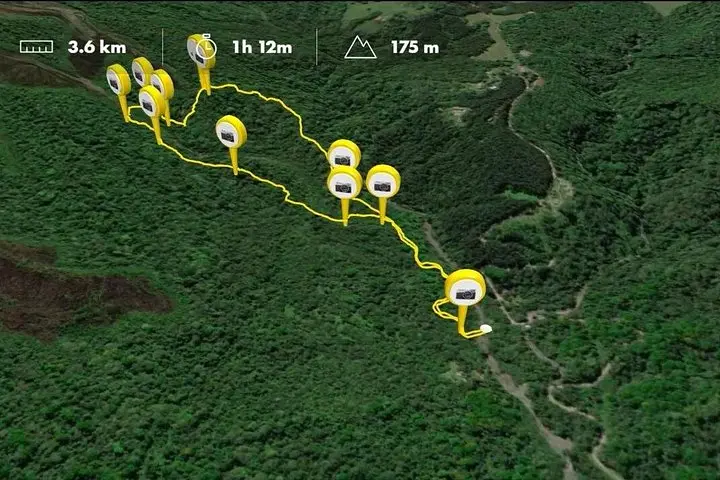
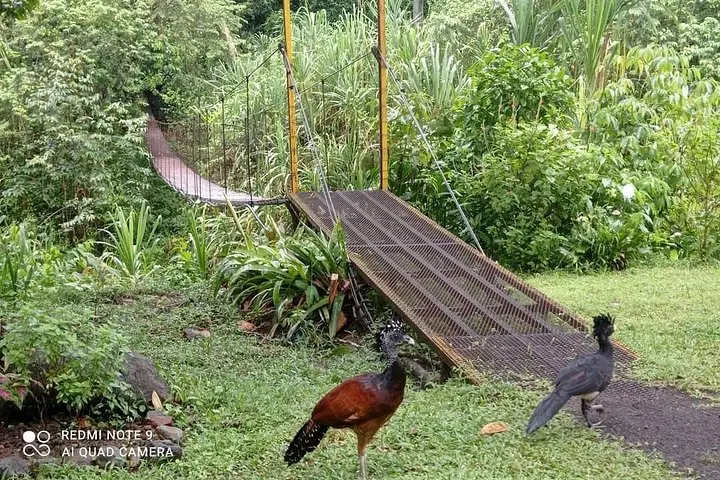
Expect a roughly 4 km loop with intermittent climbs and loose lava rock underfoot, moderate footing changes and patches of jungle canopy. Wildlife sightings are common — monkeys, toucans and coatis move through the trees while small mammals and abundant insects reveal the forest’s layers.
Practical guidance: bring sturdy, treaded footwear, hydration and a light rain shell; start early to avoid midday heat and afternoon showers; allow 1.5–2.5 hours depending on stops for wildlife viewing; follow your guide on narrow sections and respect trail closures. The hike balances raw volcanic landscapes with living forest, offering a compact, educational route into one of Costa Rica’s most tangible natural forces.
The route is about 4 km and typically takes 1.5–2.5 hours; terrain is uneven with short climbs, rated moderate in difficulty.
Local operators provide guided walks that improve wildlife spotting and safety on lava and private‑reserve trails; some sections may cross private farm land where access is controlled.
Trails become slippery after heavy rain and streams can rise; guides may alter or postpone routes in unsafe conditions — bring rain gear and good traction footwear.
Inclusions vary by operator; this tour lists 'entrances' as included, but confirm with the provider before arrival for any additional local fees.
Sendero los Tucanes operates guided outdoor trips and adventures with an emphasis on safety, stewardship, and memorable experiences.
You step from humid agricultural flats into the dark crust of recent lava, the ground crunching underfoot while the conical bulk of Arenal broods ahead. Forest reclaims edges of the flows in bands: lowland wood giving way to denser montane stands and scrub that clings to cooled lava. Birds call from tall figs; the scent of wet soil and volcanic rock hangs in the air.
You step from humid agricultural flats into the dark crust of recent lava, the ground crunching underfoot while the conical bulk of Arenal broods ahead. Forest reclaims edges of the flows in bands: lowland wood giving way to denser montane stands and scrub that clings to cooled lava. Birds call from tall figs; the scent of wet soil and volcanic rock hangs in the air.
Geology here is immediate — Arenal’s last major eruptive phase reshaped slopes in 1968 and produced later flows, with the 1992 flows still visible as black ridges and glassy pinnacles. Culturally, La Fortuna grew as a gateway town for farmers and guides who learned to read the mountain and river systems; the hike often begins near Volcano Jungle Trails or the Cale Arenal Observatory and follows paths used by both researchers and local farms. The operator’s eco‑farm approach adds a practical look at local renewable systems and land stewardship.
Expect a roughly 4 km loop with intermittent climbs and loose lava rock underfoot, moderate footing changes and patches of jungle canopy. Wildlife sightings are common — monkeys, toucans and coatis move through the trees while small mammals and abundant insects reveal the forest’s layers.
Practical guidance: bring sturdy, treaded footwear, hydration and a light rain shell; start early to avoid midday heat and afternoon showers; allow 1.5–2.5 hours depending on stops for wildlife viewing; follow your guide on narrow sections and respect trail closures. The hike balances raw volcanic landscapes with living forest, offering a compact, educational route into one of Costa Rica’s most tangible natural forces.