THE ADVENTURE COLLECTIVE® · Independent discovery and booking for outdoor travel

Explore Arequipa’s green outskirts and two of its most evocative sites—the working Sabandía Mill and the 16th-century Founder’s Mansion—on a compact half-day tour that blends rural vistas, volcanic geology, and colonial history.
Explore Arequipa’s green outskirts and two of its most evocative sites—the working Sabandía Mill and the 16th-century Founder’s Mansion—on a compact half-day tour that blends rural vistas, volcanic geology, and colonial history.
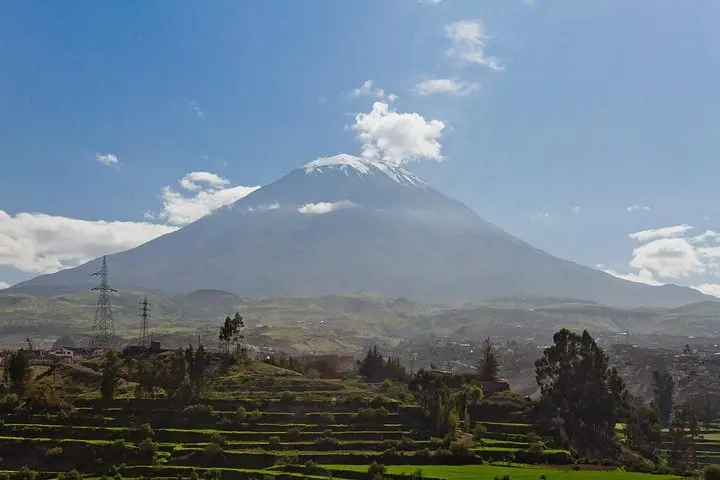
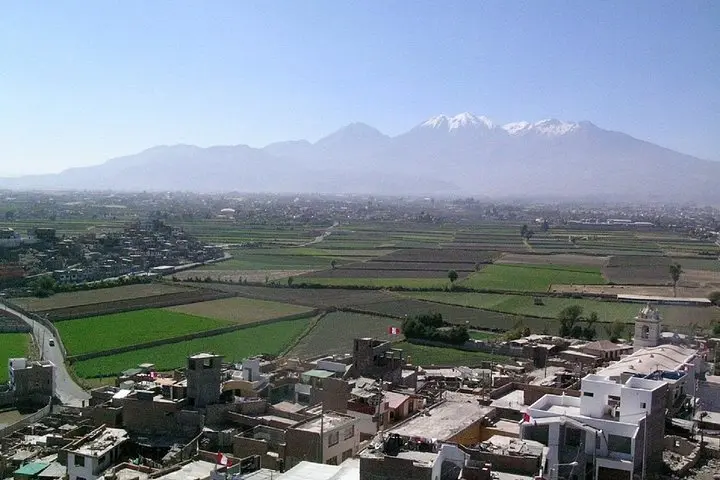
Morning light slides across volcanic slopes as the van leaves Arequipa’s Plaza de Armas and the city’s white sillar façades recede. Fields of garlic and onions ripple in the breeze; the Chili River threads through the valley, daring you to look further. At the Chilina viewpoint, the valley opens—wide green plots, distant terraces, and the Misti volcano standing like a patient guardian.
Verified experiences and guided adventures in the surrounding area.
Operated by Tangol · Arequipa, Arequipa
Morning light slides across volcanic slopes as the van leaves Arequipa’s Plaza de Armas and the city’s white sillar façades recede. Fields of garlic and onions ripple in the breeze; the Chili River threads through the valley, daring you to look further. At the Chilina viewpoint, the valley opens—wide green plots, distant terraces, and the Misti volcano standing like a patient guardian.
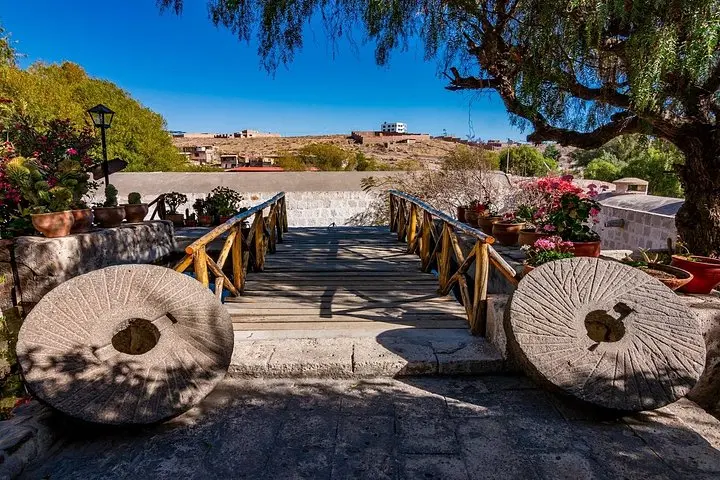
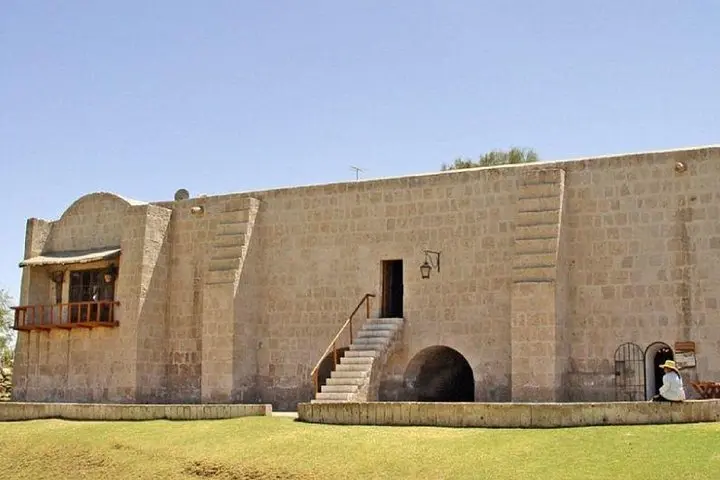
This half-day tour pairs living agricultural landscapes with colonial-era architecture. Sabandía Mill, built in 1621 from local sillar stone, still turns—its wooden gears and stone chute a practical display of early Andean engineering fed by irrigation channels born in the volcanoes. The Founder’s Mansion (Mansión del Fundador), built by Garcí Manuel de Carbajal, preserves original colonial rooms, a small chapel, and European furnishings that speak to Arequipa’s role in colonial administration and landholding patterns.
Geology is tangible here: white sillar—a soft volcanic tuff—gave Arequipa its distinctive buildings and weathered into terraces and arable soils. Culturally, the route crosses peri-urban communities where market produce supports city life and traditional crafts remain visible in family-run plots.
Practical guidance: the tour is easy and largely low-impact—expect paved roads, short walks through gardens, and brief onsite exploration at each stop. Bring sun protection, a camera, comfortable walking shoes, and a light layer for morning chill. Hydrate before you arrive; altitude around 2,300–2,400 m can make exertion feel heavier. The schedule fits a morning or afternoon window—plan hotel pickup accordingly and leave time afterward to stroll Arequipa’s historic center.
The tour runs about 3 hours with hotel pickup and drop-off in downtown Arequipa.
Yes—entrance tickets to both sites are included in the tour price.
Yes—it's rated easy with short walks; infants should sit on an adult’s lap during transport.
Arequipa is around 2,300–2,400 m; mild symptoms are possible—rest, hydrate, and avoid heavy exertion if you feel unwell.
Tangol operates guided outdoor trips and adventures with an emphasis on safety, stewardship, and memorable experiences.
Morning light slides across volcanic slopes as the van leaves Arequipa’s Plaza de Armas and the city’s white sillar façades recede. Fields of garlic and onions ripple in the breeze; the Chili River threads through the valley, daring you to look further. At the Chilina viewpoint, the valley opens—wide green plots, distant terraces, and the Misti volcano standing like a patient guardian.
Morning light slides across volcanic slopes as the van leaves Arequipa’s Plaza de Armas and the city’s white sillar façades recede. Fields of garlic and onions ripple in the breeze; the Chili River threads through the valley, daring you to look further. At the Chilina viewpoint, the valley opens—wide green plots, distant terraces, and the Misti volcano standing like a patient guardian.
This half-day tour pairs living agricultural landscapes with colonial-era architecture. Sabandía Mill, built in 1621 from local sillar stone, still turns—its wooden gears and stone chute a practical display of early Andean engineering fed by irrigation channels born in the volcanoes. The Founder’s Mansion (Mansión del Fundador), built by Garcí Manuel de Carbajal, preserves original colonial rooms, a small chapel, and European furnishings that speak to Arequipa’s role in colonial administration and landholding patterns.
Geology is tangible here: white sillar—a soft volcanic tuff—gave Arequipa its distinctive buildings and weathered into terraces and arable soils. Culturally, the route crosses peri-urban communities where market produce supports city life and traditional crafts remain visible in family-run plots.
Practical guidance: the tour is easy and largely low-impact—expect paved roads, short walks through gardens, and brief onsite exploration at each stop. Bring sun protection, a camera, comfortable walking shoes, and a light layer for morning chill. Hydrate before you arrive; altitude around 2,300–2,400 m can make exertion feel heavier. The schedule fits a morning or afternoon window—plan hotel pickup accordingly and leave time afterward to stroll Arequipa’s historic center.