THE ADVENTURE COLLECTIVE® · Independent discovery and booking for outdoor travel

Travel from Arequipa’s colonial streets into the high Andean world of Colca Canyon on this four-day tour. Expect volcanic panoramas, vicuñas on high plateaus, and the early-morning spectacle of condors at Cruz del Condor.
Travel from Arequipa’s colonial streets into the high Andean world of Colca Canyon on this four-day tour. Expect volcanic panoramas, vicuñas on high plateaus, and the early-morning spectacle of condors at Cruz del Condor.
You step off the bus into sharp, thin air and the white volcanic flanks of Chachani loom above town; the sun cuts across an open sky and the canyon ahead seems to breathe. Over four days the landscape shifts from Arequipa’s colonial sillar facades to the high-altitude plateaus and the vertiginous walls of Colca Canyon, where condors wheel on thermal lifts.
Verified experiences and guided adventures in the surrounding area.
Operated by VIPAC Travel · Arequipa, Arequipa
You step off the bus into sharp, thin air and the white volcanic flanks of Chachani loom above town; the sun cuts across an open sky and the canyon ahead seems to breathe. Over four days the landscape shifts from Arequipa’s colonial sillar facades to the high-altitude plateaus and the vertiginous walls of Colca Canyon, where condors wheel on thermal lifts.
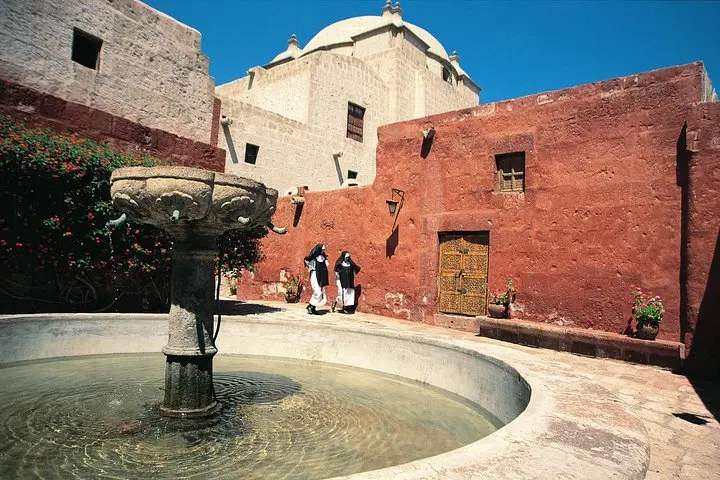
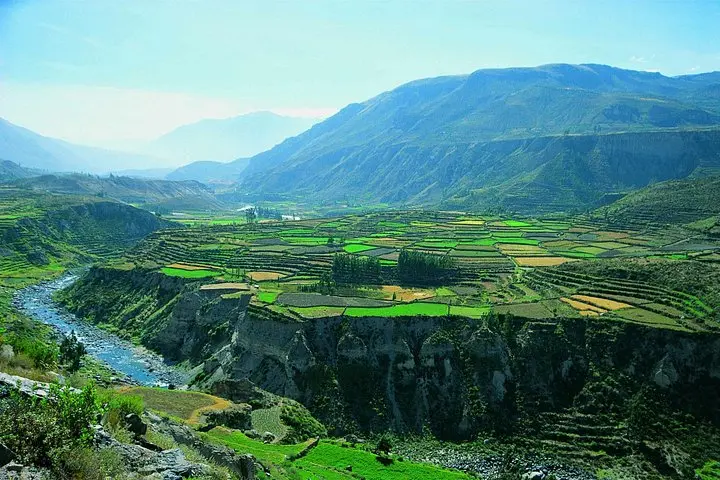
Arequipa’s streets reflect Spanish colonial history and a geology shaped by nearby volcanoes—Chachani and Misti are constant backdrops. The canyon itself slices through volcanic and sedimentary rock; its depth, among the world’s greatest, reveals terraces sculpted by pre-Columbian agriculture still visible on the rims. Local towns—Chivay, Yanque and Maca—preserve Andean customs, church façades, and markets that sell alpaca textiles and highland cheese.
Practically, the trip moves at a steady pace: short city walks, a highland drive across Pampa Cañahuas to look for vicuñas, time to rest at valley lodgings, and an early morning visit to Cruz del Condor for the condor flight. Expect altitude changes (Arequipa ~2,335 m; Colca valley elevations often 3,200–3,600 m), broad daylight UV, and dusty gravel roads on mountain approaches.
Plan for gradual acclimatization, sunscreen, layered clothing for cold mornings, and an early wake for wildlife viewing—condors are most active on morning thermals. Guides handle logistics and local transfers; bringing a reusable water bottle, good hiking shoes and respect for fragile highland ecosystems will make the difference between seeing the canyon and really experiencing it.
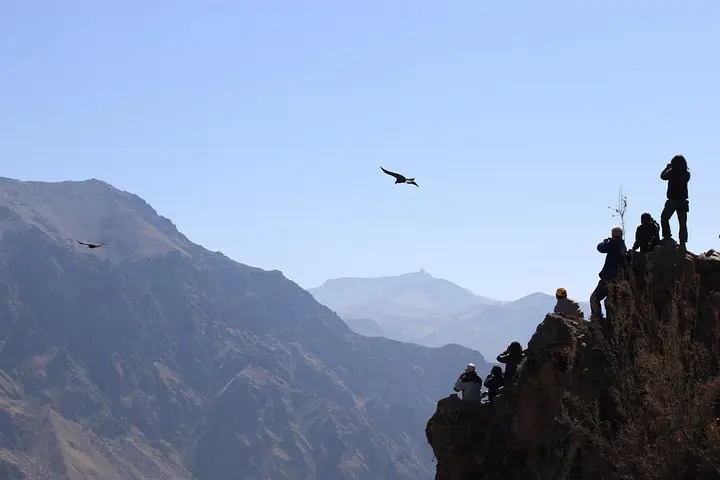
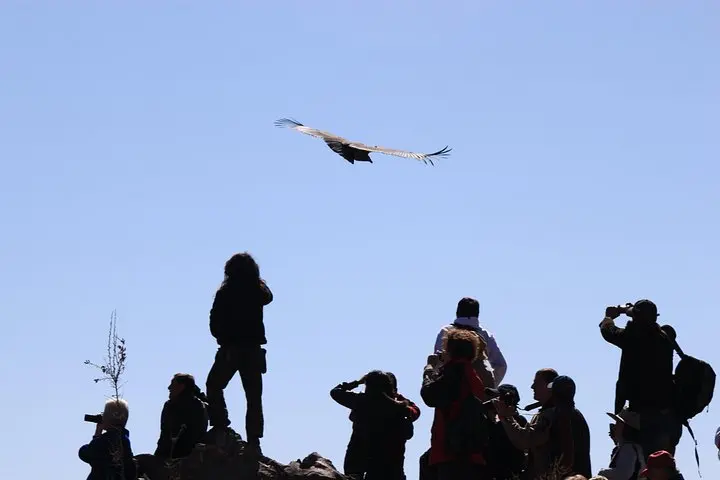
Condor sightings are common at the viewpoint, especially early morning when thermals lift the birds; sightings cannot be guaranteed but most mornings offer multiple flybys.
Yes—parts of the tour reach 3,200–3,600 m; allow a low-activity first day, hydrate, and consult a doctor about prophylactics if you have prior altitude issues.
Mostly short walks to viewpoints and around colonial plazas; no technical hiking is required, but uneven terrain and stairs are common.
Basic lodging and some meals (several breakfasts and lunches) are usually included in the package—confirm details with the operator before booking.
VIPAC Travel operates guided outdoor trips and adventures with an emphasis on safety, stewardship, and memorable experiences.
You step off the bus into sharp, thin air and the white volcanic flanks of Chachani loom above town; the sun cuts across an open sky and the canyon ahead seems to breathe. Over four days the landscape shifts from Arequipa’s colonial sillar facades to the high-altitude plateaus and the vertiginous walls of Colca Canyon, where condors wheel on thermal lifts.
You step off the bus into sharp, thin air and the white volcanic flanks of Chachani loom above town; the sun cuts across an open sky and the canyon ahead seems to breathe. Over four days the landscape shifts from Arequipa’s colonial sillar facades to the high-altitude plateaus and the vertiginous walls of Colca Canyon, where condors wheel on thermal lifts.
Arequipa’s streets reflect Spanish colonial history and a geology shaped by nearby volcanoes—Chachani and Misti are constant backdrops. The canyon itself slices through volcanic and sedimentary rock; its depth, among the world’s greatest, reveals terraces sculpted by pre-Columbian agriculture still visible on the rims. Local towns—Chivay, Yanque and Maca—preserve Andean customs, church façades, and markets that sell alpaca textiles and highland cheese.
Practically, the trip moves at a steady pace: short city walks, a highland drive across Pampa Cañahuas to look for vicuñas, time to rest at valley lodgings, and an early morning visit to Cruz del Condor for the condor flight. Expect altitude changes (Arequipa ~2,335 m; Colca valley elevations often 3,200–3,600 m), broad daylight UV, and dusty gravel roads on mountain approaches.
Plan for gradual acclimatization, sunscreen, layered clothing for cold mornings, and an early wake for wildlife viewing—condors are most active on morning thermals. Guides handle logistics and local transfers; bringing a reusable water bottle, good hiking shoes and respect for fragile highland ecosystems will make the difference between seeing the canyon and really experiencing it.