THE ADVENTURE COLLECTIVE® · Independent discovery and booking for outdoor travel

Step into an Agadir argan factory to watch kernels roasted, pressed and bottled while local cooperatives explain centuries-old techniques. This short, accessible tour blends cultural history, tasting and shopping in 30–60 minutes.
Step into an Agadir argan factory to watch kernels roasted, pressed and bottled while local cooperatives explain centuries-old techniques. This short, accessible tour blends cultural history, tasting and shopping in 30–60 minutes.
You step off the bus into a courtyard warmed by Atlantic sunlight and the faint, nutty scent of roasted argan kernels. Inside the factory, low tables and mortar-and-pestle rhythms give way to stainless-steel presses and racks of glass jars; local women move between stations, demonstrating by hand-pressing, roasting and cold-press extraction.
Verified experiences and guided adventures in the surrounding area.
Operated by Marvels Tours · Agadir, Souss-Massa
You step off the bus into a courtyard warmed by Atlantic sunlight and the faint, nutty scent of roasted argan kernels. Inside the factory, low tables and mortar-and-pestle rhythms give way to stainless-steel presses and racks of glass jars; local women move between stations, demonstrating by hand-pressing, roasting and cold-press extraction.
The argan tree (Argania spinosa) grows only in southwestern Morocco, shaped by centuries of drought and grazing on the Souss plain and the slopes of the Anti-Atlas. Historically prized for oil used in food and cosmetics, the argan ecosystem is now protected as a UNESCO biosphere reserve, and many factories operate as cooperatives that put income into village life and women's education.
Visitors can expect a short, focused visit—typically 30–60 minutes—combining a live demo, tasting of culinary argan oil, and a chance to test cosmetic samples. The tour blends cultural context with the practical: how argan differs from olive oil, why roasting changes flavor, and how cooperatives market fair-trade products.
Practical guidance: plan for flexible timing—some guests stay 15 minutes, others linger to shop. Bring small-denomination cash for purchases and bargaining; many factories accept cards but cash speeds transactions. The site is wheelchair accessible and often includes hotel pickup and drop-off; confirm any extra transfer fees if you’re outside central Agadir.
A factory visit is low-effort but high-context: it’s a compact cultural stop that pairs well with a morning at Souk El Had or an afternoon on Agadir’s waterfront.
Tours are typically 30–60 minutes; some visitors stay as little as 15 minutes to shop, while others spend up to two hours sampling and buying.
Basic listings often include pickup and drop-off from central Agadir; confirm any extra fees if your hotel is outside the city center.
Yes—most factories sell culinary and cosmetic argan oil, plus soaps and creams; inspect seals and ask about cold-press or organic labels.
Many facilities and transport options listed are wheelchair accessible, but always confirm accessibility details with the operator ahead of time.
Marvels Tours operates guided outdoor trips and adventures with an emphasis on safety, stewardship, and memorable experiences.
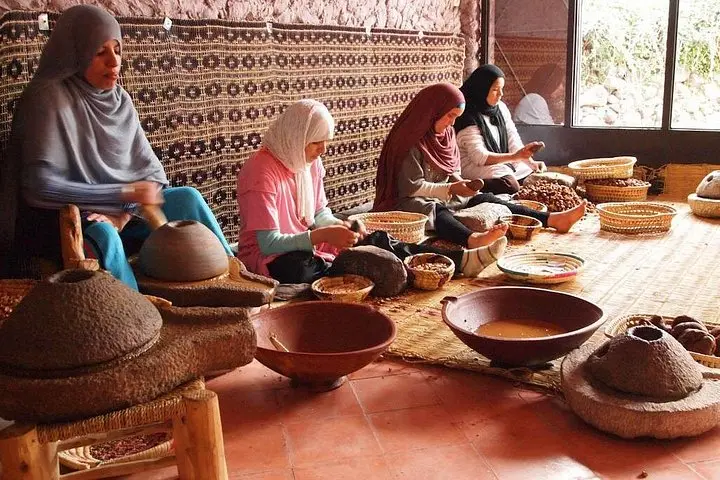
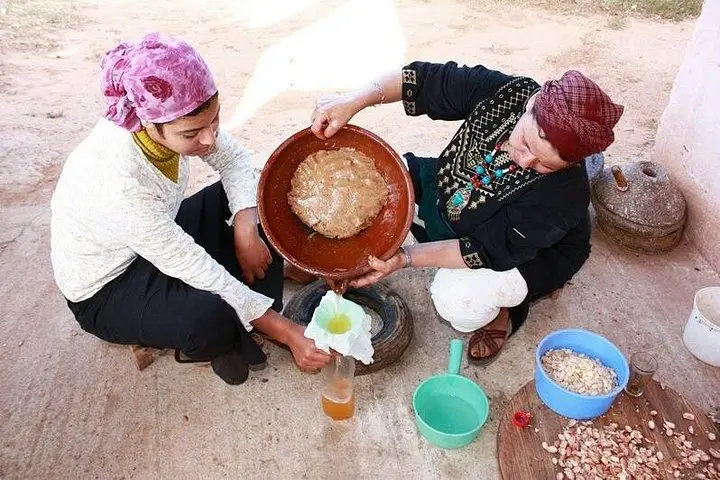
You step off the bus into a courtyard warmed by Atlantic sunlight and the faint, nutty scent of roasted argan kernels. Inside the factory, low tables and mortar-and-pestle rhythms give way to stainless-steel presses and racks of glass jars; local women move between stations, demonstrating by hand-pressing, roasting and cold-press extraction.
You step off the bus into a courtyard warmed by Atlantic sunlight and the faint, nutty scent of roasted argan kernels. Inside the factory, low tables and mortar-and-pestle rhythms give way to stainless-steel presses and racks of glass jars; local women move between stations, demonstrating by hand-pressing, roasting and cold-press extraction.
The argan tree (Argania spinosa) grows only in southwestern Morocco, shaped by centuries of drought and grazing on the Souss plain and the slopes of the Anti-Atlas. Historically prized for oil used in food and cosmetics, the argan ecosystem is now protected as a UNESCO biosphere reserve, and many factories operate as cooperatives that put income into village life and women's education.
Visitors can expect a short, focused visit—typically 30–60 minutes—combining a live demo, tasting of culinary argan oil, and a chance to test cosmetic samples. The tour blends cultural context with the practical: how argan differs from olive oil, why roasting changes flavor, and how cooperatives market fair-trade products.
Practical guidance: plan for flexible timing—some guests stay 15 minutes, others linger to shop. Bring small-denomination cash for purchases and bargaining; many factories accept cards but cash speeds transactions. The site is wheelchair accessible and often includes hotel pickup and drop-off; confirm any extra transfer fees if you’re outside central Agadir.
A factory visit is low-effort but high-context: it’s a compact cultural stop that pairs well with a morning at Souk El Had or an afternoon on Agadir’s waterfront.