THE ADVENTURE COLLECTIVE® · Independent discovery and booking for outdoor travel

Take a one-day excursion from Amsterdam to Arnhem to wander reconstructed Dutch villages at the Open Air Museum, then move to the sobering, human-scale exhibits of the War/Airborne Museum that detail Market Garden and its local impact.
Take a one-day excursion from Amsterdam to Arnhem to wander reconstructed Dutch villages at the Open Air Museum, then move to the sobering, human-scale exhibits of the War/Airborne Museum that detail Market Garden and its local impact.
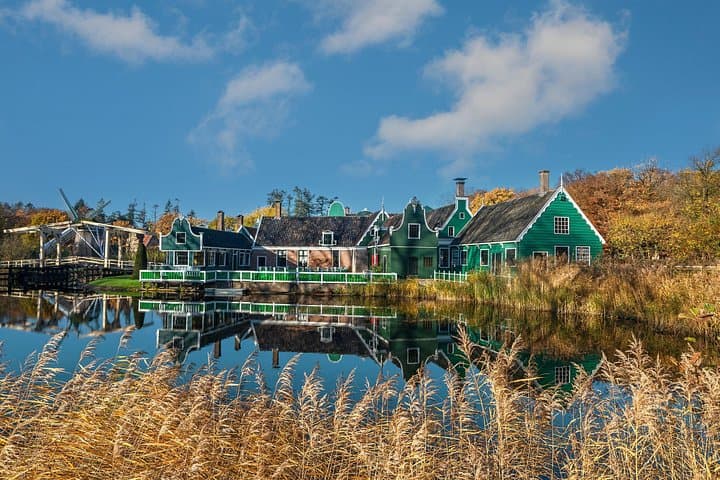
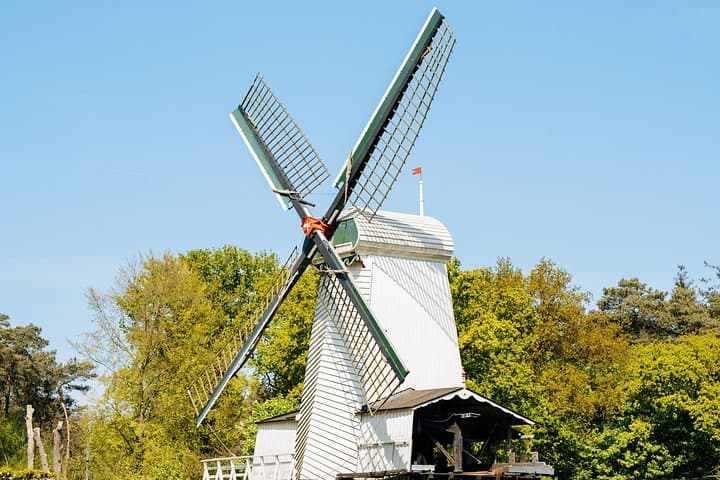
You step out of the minivan and into a stretch of low Dutch countryside where windmills and tiled roofs sit an easy hour from Amsterdam. The air smells faintly of cut grass and diesel from the highway; ahead, open lawns, timber houses and a line of museum buildings invite slow exploration.
Verified experiences and guided adventures in the surrounding area.
Operated by Greetings from Europe · Arnhem, Gelderland
You step out of the minivan and into a stretch of low Dutch countryside where windmills and tiled roofs sit an easy hour from Amsterdam. The air smells faintly of cut grass and diesel from the highway; ahead, open lawns, timber houses and a line of museum buildings invite slow exploration.
The Open Air Museum (Openluchtmuseum) recreates rural and small-town Netherlands across centuries — farmhouses, workshops and working windmills set among broad lawns and shaded lanes. Craftspeople demonstrate glassblowing, dairy work and traditional building techniques; walkways range from packed gravel to cobbled courtyards. Later, the tone shifts at the War Museum (or the nearby Airborne Museum) where personal stories, maps and artefacts reconstruct Arnhem’s role in Operation Market Garden in September 1944, blending military overview with civilian experience.
Geologically the area is flat riverine land shaped by Rhine distributaries; culturally it’s a borderland between urban Arnhem and the timbered villages of Gelderland. Expect a full day: transit from Amsterdam (roughly 1–1.5 hours each way), two museum blocks of roughly four hours each, and steady walking between displays.
Practical guidance: wear firm walking shoes and layers for variable Dutch weather; bring a small daypack, snacks, and a charged phone for photos and ticket codes. If you prefer public transport, trains run regularly to Arnhem with short local transit to the museums. Accessibility is generally good but some historic buildings have steps — check ahead for mobility needs. Allow time to pause on benches, read plaques and let the landscape and history sink in.
The full excursion is about eight hours including travel; expect roughly 1–1.5 hours each way by road depending on traffic.
This tour’s itinerary indicates entrance to the Open Air Museum and a war museum are included, but confirm at booking for the specific museum option provided.
Yes — the Open Air Museum is stroller-accessible on main paths, though some historic buildings have steps and limited access; infant seats are noted as available for transport.
Yes — regular trains run from Amsterdam to Arnhem; you can meet the tour or visit independently using local transit from Arnhem station.
Greetings from Europe operates guided outdoor trips and adventures with an emphasis on safety, stewardship, and memorable experiences.


You step out of the minivan and into a stretch of low Dutch countryside where windmills and tiled roofs sit an easy hour from Amsterdam. The air smells faintly of cut grass and diesel from the highway; ahead, open lawns, timber houses and a line of museum buildings invite slow exploration.
You step out of the minivan and into a stretch of low Dutch countryside where windmills and tiled roofs sit an easy hour from Amsterdam. The air smells faintly of cut grass and diesel from the highway; ahead, open lawns, timber houses and a line of museum buildings invite slow exploration.
The Open Air Museum (Openluchtmuseum) recreates rural and small-town Netherlands across centuries — farmhouses, workshops and working windmills set among broad lawns and shaded lanes. Craftspeople demonstrate glassblowing, dairy work and traditional building techniques; walkways range from packed gravel to cobbled courtyards. Later, the tone shifts at the War Museum (or the nearby Airborne Museum) where personal stories, maps and artefacts reconstruct Arnhem’s role in Operation Market Garden in September 1944, blending military overview with civilian experience.
Geologically the area is flat riverine land shaped by Rhine distributaries; culturally it’s a borderland between urban Arnhem and the timbered villages of Gelderland. Expect a full day: transit from Amsterdam (roughly 1–1.5 hours each way), two museum blocks of roughly four hours each, and steady walking between displays.
Practical guidance: wear firm walking shoes and layers for variable Dutch weather; bring a small daypack, snacks, and a charged phone for photos and ticket codes. If you prefer public transport, trains run regularly to Arnhem with short local transit to the museums. Accessibility is generally good but some historic buildings have steps — check ahead for mobility needs. Allow time to pause on benches, read plaques and let the landscape and history sink in.