THE ADVENTURE COLLECTIVE® · Independent discovery and booking for outdoor travel

Explore Aruba’s rugged coast and hidden roads with a single- or double-seater ATV rental. Expect low elevation, mixed coral-rock and sand terrain, helmeted pick-up service and clear limits—Arikok National Park and many beaches are off-limits.
Explore Aruba’s rugged coast and hidden roads with a single- or double-seater ATV rental. Expect low elevation, mixed coral-rock and sand terrain, helmeted pick-up service and clear limits—Arikok National Park and many beaches are off-limits.
The engine thumps beneath you as salty wind hammers the helmet visor — Aruba’s coastline unspools in low, bright relief: coral flats, volcanic outcrops, and scrub that leans into the trade winds. An ATV rental turns the island’s rougher corridors into a playground, from lighthouse views to abandoned gold-mill ruins.
Verified experiences and guided adventures in the surrounding area.
Operated by Around Aruba Tours · Oranjestad, Aruba
The engine thumps beneath you as salty wind hammers the helmet visor — Aruba’s coastline unspools in low, bright relief: coral flats, volcanic outcrops, and scrub that leans into the trade winds. An ATV rental turns the island’s rougher corridors into a playground, from lighthouse views to abandoned gold-mill ruins.
Aruba’s landscape is geologically split between uplifted limestone terraces and older volcanic rock; the result is short, sharp ridgelines, rocky trails and wide sandy flats. Human history shows here too: colonial-era gold workings, Arawak petroglyphs, and coastal chapels mark routes you’ll pass. Culture in the towns is relaxed and service-forward — pickups, drop-offs and a printed map are commonly provided by local operators.
Practical expectations: rentals run 4–8 hours and cover mostly low-elevation terrain (Aruba’s highest point is under 200 meters), with sections of hard-packed coral, loose sand and jagged rock. Operators supply helmets, require a valid driver’s license and take deposits; note that Arikok National Park, many caves and some beaches are off-limits to ATVs. Avoid wet sand, saltwater and protected habitats.
Prepare for sun, heat and wind: bring a hydration system, sun protection, sturdy closed-toe shoes and a compact first-aid kit. Start early to skip midday glare and give yourself time to return before sunset. Follow local rules, respect sensitive areas, and use the provided map to balance sightseeing with safe riding — Aruba opens up when you travel under your own throttle, but responsibility keeps it open for everyone.
No — Arikok National Park and several features like Conchi (Natural Pool), caves and certain beaches are closed to ATVs by government regulation.
Drivers must be at least 18 (some providers require 25) and carry a valid driver’s license; passengers can be younger if safely seated.
Most rentals require a refundable security deposit (commonly around $200) and may offer optional damage coverage; review terms before booking.
Expect hard-packed coral rock, loose sand and rocky outcrops; avoid wet or white sand, mud and riding through saltwater to prevent damage and fines.
Around Aruba Tours operates guided outdoor trips and adventures with an emphasis on safety, stewardship, and memorable experiences.
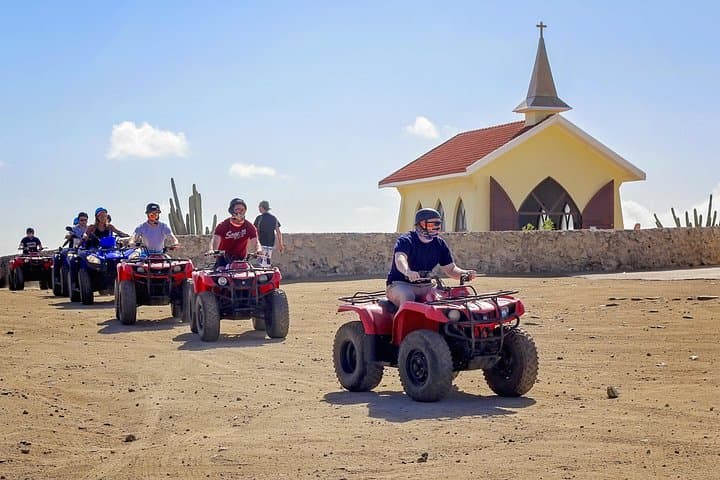
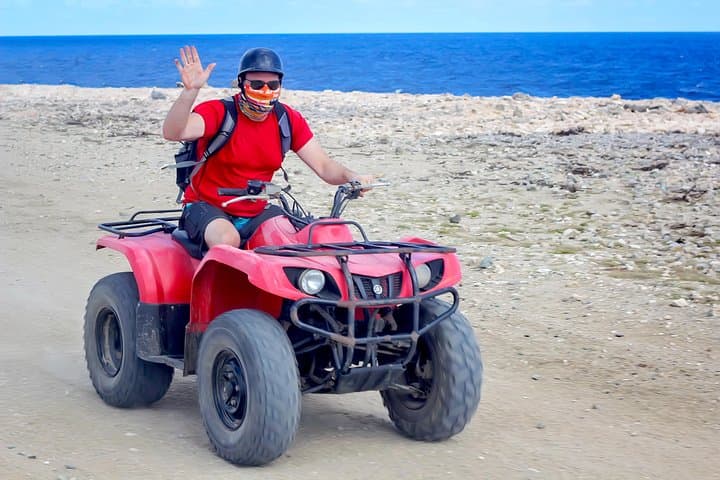
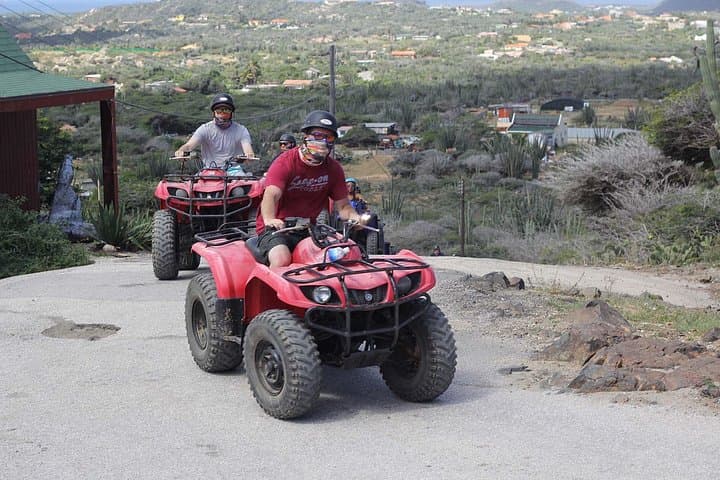
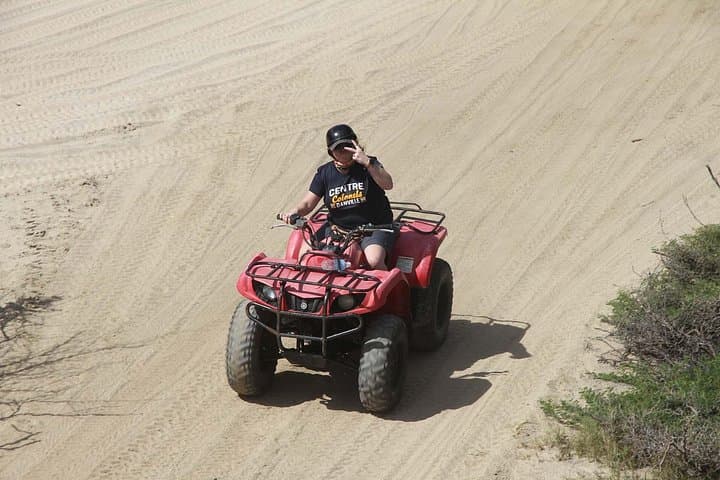
The engine thumps beneath you as salty wind hammers the helmet visor — Aruba’s coastline unspools in low, bright relief: coral flats, volcanic outcrops, and scrub that leans into the trade winds. An ATV rental turns the island’s rougher corridors into a playground, from lighthouse views to abandoned gold-mill ruins.
The engine thumps beneath you as salty wind hammers the helmet visor — Aruba’s coastline unspools in low, bright relief: coral flats, volcanic outcrops, and scrub that leans into the trade winds. An ATV rental turns the island’s rougher corridors into a playground, from lighthouse views to abandoned gold-mill ruins.
Aruba’s landscape is geologically split between uplifted limestone terraces and older volcanic rock; the result is short, sharp ridgelines, rocky trails and wide sandy flats. Human history shows here too: colonial-era gold workings, Arawak petroglyphs, and coastal chapels mark routes you’ll pass. Culture in the towns is relaxed and service-forward — pickups, drop-offs and a printed map are commonly provided by local operators.
Practical expectations: rentals run 4–8 hours and cover mostly low-elevation terrain (Aruba’s highest point is under 200 meters), with sections of hard-packed coral, loose sand and jagged rock. Operators supply helmets, require a valid driver’s license and take deposits; note that Arikok National Park, many caves and some beaches are off-limits to ATVs. Avoid wet sand, saltwater and protected habitats.
Prepare for sun, heat and wind: bring a hydration system, sun protection, sturdy closed-toe shoes and a compact first-aid kit. Start early to skip midday glare and give yourself time to return before sunset. Follow local rules, respect sensitive areas, and use the provided map to balance sightseeing with safe riding — Aruba opens up when you travel under your own throttle, but responsibility keeps it open for everyone.