THE ADVENTURE COLLECTIVE® · Independent discovery and booking for outdoor travel

Take control of Aruba’s rugged lanes in a three-seat Can-Am or Honda UTV. This self-guided full-day rental threads coastal lookouts, snorkeling coves and historic ruins into an eight-hour island loop.
Take control of Aruba’s rugged lanes in a three-seat Can-Am or Honda UTV. This self-guided full-day rental threads coastal lookouts, snorkeling coves and historic ruins into an eight-hour island loop.
You push a Can-Am Defender across a wash of white coral sand and the island opens in stages: wind-pummeled divi-divi trees leaning into the trade wind, low cactus glinting like sentries, and sudden pockets of turquoise where the shore drops away.
Verified experiences and guided adventures in the surrounding area.
Operated by Aruba Roadrunner · Oranjestad, Aruba
You push a Can-Am Defender across a wash of white coral sand and the island opens in stages: wind-pummeled divi-divi trees leaning into the trade wind, low cactus glinting like sentries, and sudden pockets of turquoise where the shore drops away.
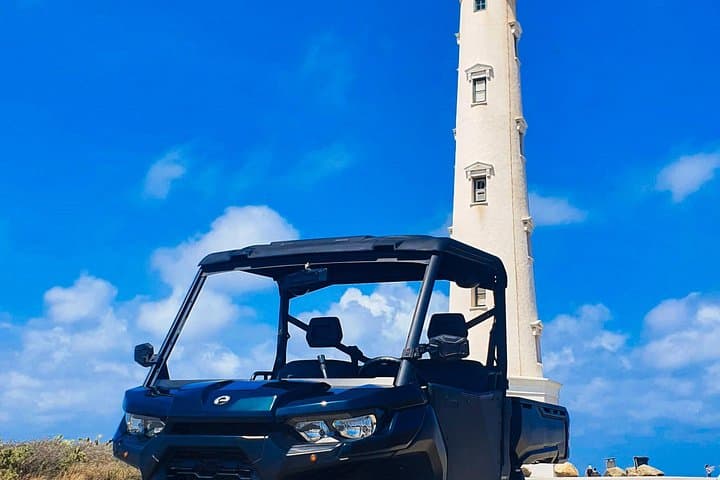
This is not a guided parade; it's a self-directed day to chase Aruba’s contrasts — sheltered snorkeling coves, abandoned gold-mill ruins, and the bluff-top views from the California Lighthouse. The three-seat UTV turns the island’s rough tracks into a compact freedom machine: gearbox humming, tires chewing through rutted washes, you decide when to slow for photos and where to park and walk a little farther.
Aruba’s geology is short on mountains and long on ancient volcanic rock and coral limestone. That mix created the boulder fields at Ayo and Casibari and the offshore reefs that make Baby Beach so famously calm. Culturally, the island blends Arawak roots, Dutch colonial history, and a strong local identity expressed in Papiamento, food stalls selling pan bati and keshi yena, and tiny coastal chapels like Alto Vista that color the hills.
Historically, the skeleton of Aruba’s 19th-century gold industry — ruins like Bushiribana — sits on the north coast, a reminder that this arid landscape once supported mining ambitions and now supports windsurfing and resilient flora.
Practically, this rental is a full-day (8-hour) self-drive in a three-seat UTV (Can-Am or Honda Pioneer, 800–1000cc). Drivers must be 25+ with a valid license. Note: UTV/ATV access is restricted at Arikok National Park; follow park rules and avoid restricted trails. Pickup and drop-off can be arranged from many hotels and select port or airport locations; confirm exact delivery areas when booking.
Plan your route: a morning loop can cover California Lighthouse for sunrise or late-afternoon light, the northern Bushiribana overlooks, then down to Baby Beach for snorkeling and Mangel Halto for a quieter swim. Carry extra water, sun protection, and sturdy closed-toe shoes — the island may look forgiving but rocks and coral can bite.
Safety and respect matter: the vehicle is powerful on loose surfaces; slow down on blind corners and keep to marked tracks. Fuel and insurance options vary — verify inclusions before you go. Pack a dry bag for phones and a soft cooler for drinks, and leave no trace: the fragile cacti, reef, and nesting birds depend on visitors who behave like temporary guests, not permanent residents.
When you return, there’s a certain satisfaction that comes in cleaning sand out of the floorboard — proof you took the backcountry road less traveled on an island that rewards curiosity with unexpected vistas.
Yes — drivers must be 25 years or older and present a valid driving license to operate the UTV.
No — entrance with ATVs/UTVs is prohibited in Arikok National Park; follow park signage and planned routes to avoid penalties.
Inclusions vary by supplier — confirm with the operator at booking whether fuel, roadside assistance, and insurance are included or available as add-ons.
All sales are final; this experience is non-refundable and can be canceled by the operator in bad weather or if minimum requirements aren’t met.
Basic off-road driving confidence helps — you’ll encounter sand washes and uneven tracks, but no technical rock-crawling is required for standard island loops.
Helmet policies vary; ask the supplier when booking — wearing helmets is strongly recommended on uneven terrain for safety.
Aruba Roadrunner operates guided outdoor trips and adventures with an emphasis on safety, stewardship, and memorable experiences.
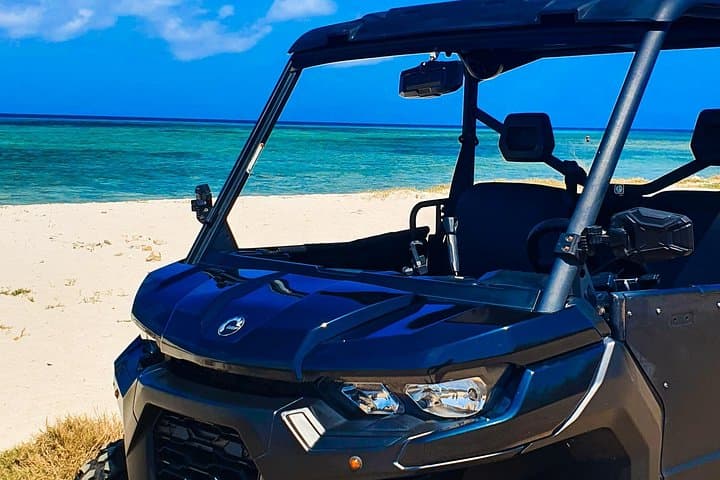
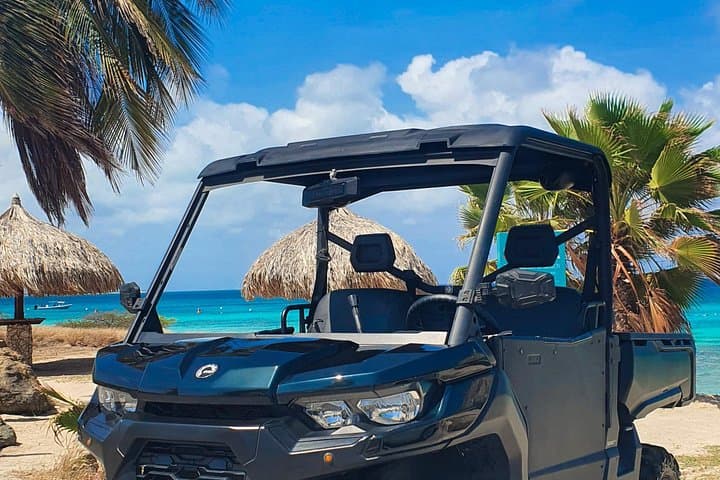
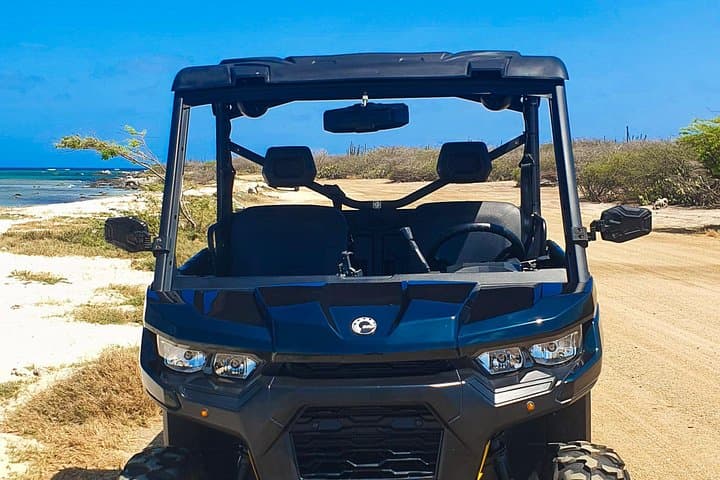
You push a Can-Am Defender across a wash of white coral sand and the island opens in stages: wind-pummeled divi-divi trees leaning into the trade wind, low cactus glinting like sentries, and sudden pockets of turquoise where the shore drops away.
You push a Can-Am Defender across a wash of white coral sand and the island opens in stages: wind-pummeled divi-divi trees leaning into the trade wind, low cactus glinting like sentries, and sudden pockets of turquoise where the shore drops away.
This is not a guided parade; it's a self-directed day to chase Aruba’s contrasts — sheltered snorkeling coves, abandoned gold-mill ruins, and the bluff-top views from the California Lighthouse. The three-seat UTV turns the island’s rough tracks into a compact freedom machine: gearbox humming, tires chewing through rutted washes, you decide when to slow for photos and where to park and walk a little farther.
Aruba’s geology is short on mountains and long on ancient volcanic rock and coral limestone. That mix created the boulder fields at Ayo and Casibari and the offshore reefs that make Baby Beach so famously calm. Culturally, the island blends Arawak roots, Dutch colonial history, and a strong local identity expressed in Papiamento, food stalls selling pan bati and keshi yena, and tiny coastal chapels like Alto Vista that color the hills.
Historically, the skeleton of Aruba’s 19th-century gold industry — ruins like Bushiribana — sits on the north coast, a reminder that this arid landscape once supported mining ambitions and now supports windsurfing and resilient flora.
Practically, this rental is a full-day (8-hour) self-drive in a three-seat UTV (Can-Am or Honda Pioneer, 800–1000cc). Drivers must be 25+ with a valid license. Note: UTV/ATV access is restricted at Arikok National Park; follow park rules and avoid restricted trails. Pickup and drop-off can be arranged from many hotels and select port or airport locations; confirm exact delivery areas when booking.
Plan your route: a morning loop can cover California Lighthouse for sunrise or late-afternoon light, the northern Bushiribana overlooks, then down to Baby Beach for snorkeling and Mangel Halto for a quieter swim. Carry extra water, sun protection, and sturdy closed-toe shoes — the island may look forgiving but rocks and coral can bite.
Safety and respect matter: the vehicle is powerful on loose surfaces; slow down on blind corners and keep to marked tracks. Fuel and insurance options vary — verify inclusions before you go. Pack a dry bag for phones and a soft cooler for drinks, and leave no trace: the fragile cacti, reef, and nesting birds depend on visitors who behave like temporary guests, not permanent residents.
When you return, there’s a certain satisfaction that comes in cleaning sand out of the floorboard — proof you took the backcountry road less traveled on an island that rewards curiosity with unexpected vistas.