THE ADVENTURE COLLECTIVE® · Independent discovery and booking for outdoor travel

Cut a wake beneath the divi-divi trees and see Eagle Beach from the water on a 30-minute Waverunner ride. Fast, accessible, and guided within a marked coastal corridor, this Jetski experience is a direct way to feel Aruba’s trade winds and shoreline up close.
Cut a wake beneath the divi-divi trees and see Eagle Beach from the water on a 30-minute Waverunner ride. Fast, accessible, and guided within a marked coastal corridor, this Jetski experience is a direct way to feel Aruba’s trade winds and shoreline up close.
The engine coughs to life and the ocean answers: a low, hungry hum that turns into a ribbon of spray as you cut away from the floating dock at the edge of Eagle Beach. The shoreline opens—wide, pale sand and the dip of sea—while the Waverunner responds to your weight and intent, carving rhythm into the Atlantic.
Verified experiences and guided adventures in the surrounding area.
Operated by Aruba Watersports Center · Oranjestad, Aruba
The engine coughs to life and the ocean answers: a low, hungry hum that turns into a ribbon of spray as you cut away from the floating dock at the edge of Eagle Beach. The shoreline opens—wide, pale sand and the dip of sea—while the Waverunner responds to your weight and intent, carving rhythm into the Atlantic.
This stretch of Aruba sits on Pleistocene limestone formed when sea levels fluctuated, leaving broad beaches and shallow reefs that shape where operators allow personal watercraft. Aruba’s coastline reflects a layered history: Arawak arrivals, European colonization, and a modern tourism culture that orients many activities around safe, designated swim and ride zones.
Culturally, Eagle Beach is quieter than the resort strip to the north; visitors will notice low-rise hotels, the distinctive divi-divi trees shaped by steady trade winds, and local vendors selling cold drinks and snacks near the shore.
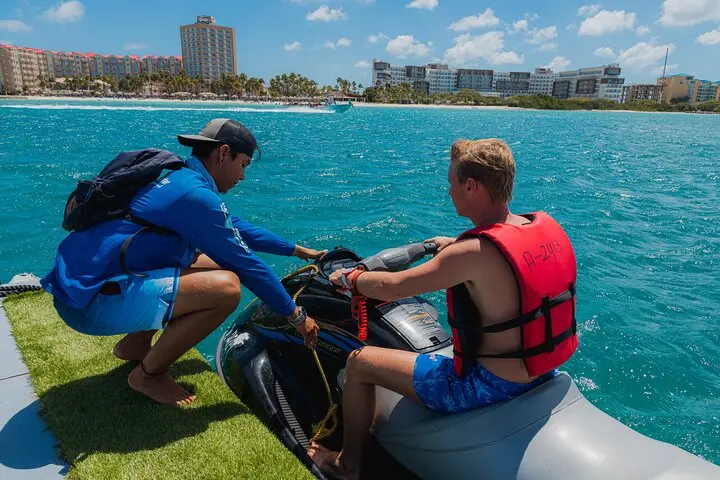
Practically, the guided 30-minute Waverunner session begins from a floating dock and runs within a marked corridor off Eagle Beach. Riders should expect short boat transfers, a safety briefing, and a lifejacket. Conditions change with trade winds—expect choppier water in late winter and calmer seas on settled summer days. Keep sightlines on swimmers and other craft; operators typically enforce speed and distance limits around beaches and reefs.
Tips for timing: ride early for glassy water and softer sun, midafternoon for stronger winds and faster runs. Bring reef-safe sunscreen, a waterproof phone case, and a modest level of comfort with throttle and steering. The short burst of speed and salt wakes makes this among Aruba’s most immediate ways to experience the coast.
No formal boat license is required for the short guided rental; operators provide a safety briefing and basic instruction before you go.
Yes—operators set you up with instruction and restrict rides to designated areas; beginners should start with calm conditions and an instructor nearby.
Tours are often canceled in high winds or rough seas; full refunds are typically offered if canceled 24 hours prior or due to unsafe conditions.
Most bookings are one-person per Waverunner or allow a single passenger depending on operator limits and weight restrictions—confirm at booking.
Aruba Watersports Center operates guided outdoor trips and adventures with an emphasis on safety, stewardship, and memorable experiences.
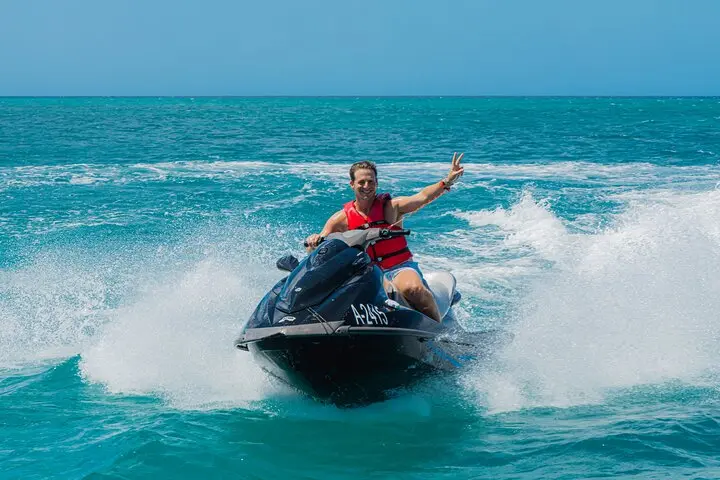
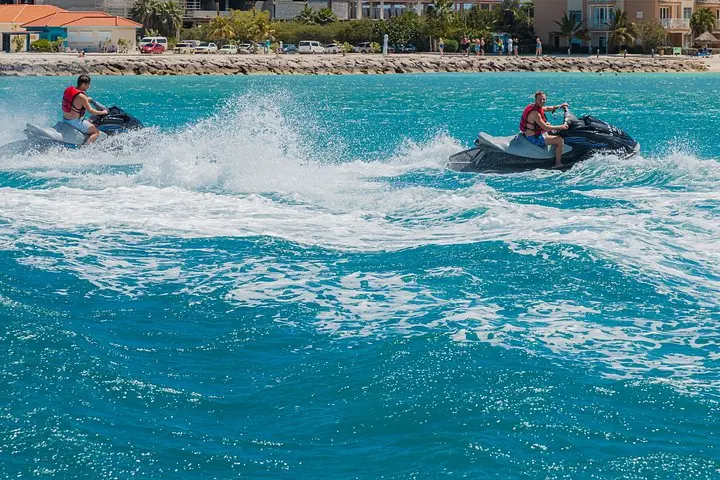
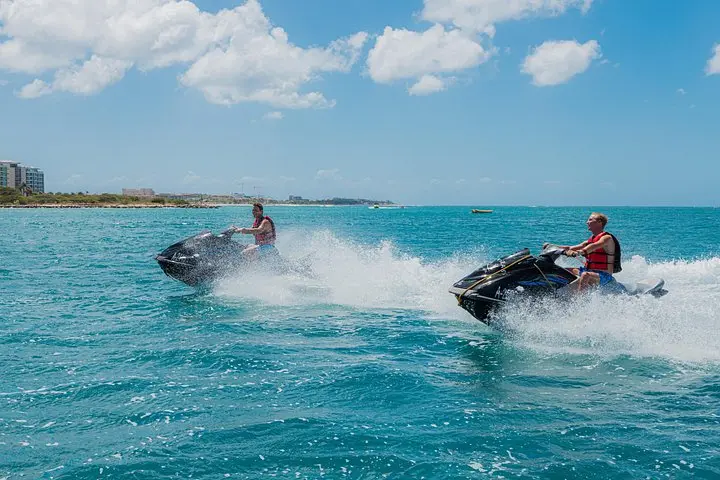
The engine coughs to life and the ocean answers: a low, hungry hum that turns into a ribbon of spray as you cut away from the floating dock at the edge of Eagle Beach. The shoreline opens—wide, pale sand and the dip of sea—while the Waverunner responds to your weight and intent, carving rhythm into the Atlantic.
The engine coughs to life and the ocean answers: a low, hungry hum that turns into a ribbon of spray as you cut away from the floating dock at the edge of Eagle Beach. The shoreline opens—wide, pale sand and the dip of sea—while the Waverunner responds to your weight and intent, carving rhythm into the Atlantic.
This stretch of Aruba sits on Pleistocene limestone formed when sea levels fluctuated, leaving broad beaches and shallow reefs that shape where operators allow personal watercraft. Aruba’s coastline reflects a layered history: Arawak arrivals, European colonization, and a modern tourism culture that orients many activities around safe, designated swim and ride zones.
Culturally, Eagle Beach is quieter than the resort strip to the north; visitors will notice low-rise hotels, the distinctive divi-divi trees shaped by steady trade winds, and local vendors selling cold drinks and snacks near the shore.
Practically, the guided 30-minute Waverunner session begins from a floating dock and runs within a marked corridor off Eagle Beach. Riders should expect short boat transfers, a safety briefing, and a lifejacket. Conditions change with trade winds—expect choppier water in late winter and calmer seas on settled summer days. Keep sightlines on swimmers and other craft; operators typically enforce speed and distance limits around beaches and reefs.
Tips for timing: ride early for glassy water and softer sun, midafternoon for stronger winds and faster runs. Bring reef-safe sunscreen, a waterproof phone case, and a modest level of comfort with throttle and steering. The short burst of speed and salt wakes makes this among Aruba’s most immediate ways to experience the coast.