THE ADVENTURE COLLECTIVE® · Independent discovery and booking for outdoor travel

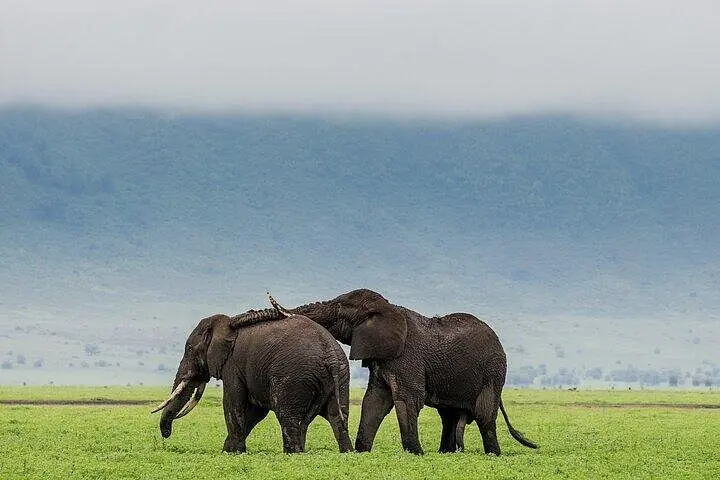
Spend two days chasing big-game sightings from Tarangire’s baobab-lined plains to the green bowl of Ngorongoro Crater. This compact safari pairs high elephant densities with the crater’s enclosed ecosystem for efficient, memorable game viewing.
Spend two days chasing big-game sightings from Tarangire’s baobab-lined plains to the green bowl of Ngorongoro Crater. This compact safari pairs high elephant densities with the crater’s enclosed ecosystem for efficient, memorable game viewing.
The morning light in northern Tanzania finds its way through baobab branches and into dusty tracks, and on this two-day loop the land seems to move around you: pachyderm herds shifting near Tarangire’s river, and a caldera rim that frames the crater’s wide plain below.
Verified experiences and guided adventures in the surrounding area.
Operated by Best Time Adventures · Arusha, Arusha Region
The morning light in northern Tanzania finds its way through baobab branches and into dusty tracks, and on this two-day loop the land seems to move around you: pachyderm herds shifting near Tarangire’s river, and a caldera rim that frames the crater’s wide plain below.
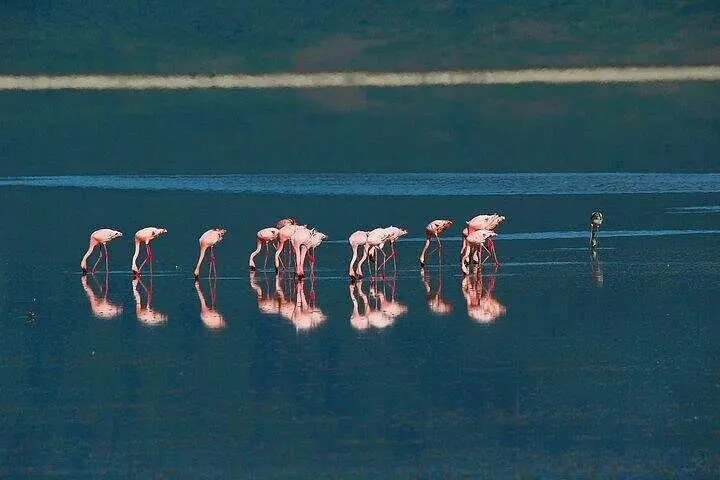
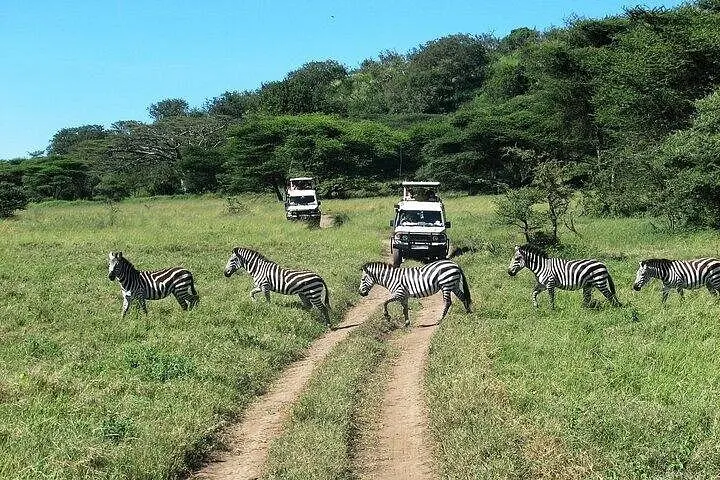
Day one focuses on Tarangire National Park, a lowland of nine vegetation zones where ancient baobabs and the Silale swamp funnel wildlife to water. Expect game drives across savanna and riverine forest; the park’s concentration of elephants often organizes the day’s rhythm. Day two drops into Ngorongoro Crater, the world’s largest intact volcanic caldera. At roughly 600 meters deep with a rim elevation near 2,200–2,400 m, the crater’s geology creates a self-contained ecosystem where lions, hippos and grazing herds co-exist within clear sightlines.
Culturally the route passes Maasai grazing lands and historic sites like Olduvai Gorge nearby; guides will typically share insights on pastoral life and conservation challenges. Practically, the tour departs Arusha early (pick-up around 8:00), with drives of about 2–3 hours to Tarangire and 3–4 hours toward Ngorongoro. Vehicle-based game drives and short walks require minimal fitness but steady tolerance for dusty roads and occasional altitude on the crater rim.
Bring binoculars, sun and rain protection, layered clothing for cool mornings on the rim, and a charged camera with a long lens. Park fees, a packed picnic at a waterfront stop in the crater and an afternoon return to Arusha round out the itinerary. For travelers seeking concentrated wildlife viewing in two classic northern circuits, this compact safari delivers dramatic encounters and accessible logistics.
Most operators pick up from Arusha hotels around 7:30–8:30 and return the evening of day two; exact times vary by hotel location and traffic.
Ngorongoro admission is included per the tour details for day two; confirm Tarangire fees and any vehicle or guide supplements at booking.
The itinerary is vehicle-based and generally suitable for children, but check vehicle seat availability, child pricing and vaccination recommendations before booking.
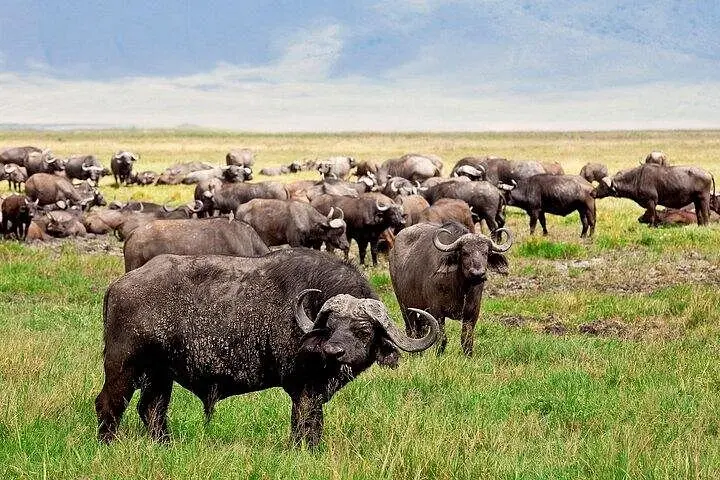
You have strong chances for elephant, lion and buffalo; black rhino are present in Ngorongoro but sightings are uncommon and not guaranteed.
Best Time Adventures operates guided outdoor trips and adventures with an emphasis on safety, stewardship, and memorable experiences.
The morning light in northern Tanzania finds its way through baobab branches and into dusty tracks, and on this two-day loop the land seems to move around you: pachyderm herds shifting near Tarangire’s river, and a caldera rim that frames the crater’s wide plain below.
The morning light in northern Tanzania finds its way through baobab branches and into dusty tracks, and on this two-day loop the land seems to move around you: pachyderm herds shifting near Tarangire’s river, and a caldera rim that frames the crater’s wide plain below.
Day one focuses on Tarangire National Park, a lowland of nine vegetation zones where ancient baobabs and the Silale swamp funnel wildlife to water. Expect game drives across savanna and riverine forest; the park’s concentration of elephants often organizes the day’s rhythm. Day two drops into Ngorongoro Crater, the world’s largest intact volcanic caldera. At roughly 600 meters deep with a rim elevation near 2,200–2,400 m, the crater’s geology creates a self-contained ecosystem where lions, hippos and grazing herds co-exist within clear sightlines.
Culturally the route passes Maasai grazing lands and historic sites like Olduvai Gorge nearby; guides will typically share insights on pastoral life and conservation challenges. Practically, the tour departs Arusha early (pick-up around 8:00), with drives of about 2–3 hours to Tarangire and 3–4 hours toward Ngorongoro. Vehicle-based game drives and short walks require minimal fitness but steady tolerance for dusty roads and occasional altitude on the crater rim.
Bring binoculars, sun and rain protection, layered clothing for cool mornings on the rim, and a charged camera with a long lens. Park fees, a packed picnic at a waterfront stop in the crater and an afternoon return to Arusha round out the itinerary. For travelers seeking concentrated wildlife viewing in two classic northern circuits, this compact safari delivers dramatic encounters and accessible logistics.