THE ADVENTURE COLLECTIVE® · Independent discovery and booking for outdoor travel

Three days of classic northern Tanzania safari action: Tarangire’s elephants, Ngorongoro’s crater concentrations and Lake Manyara’s flamingos and tree-climbing lions. This itinerary balances relaxed lodge nights with full-day game drives for efficient wildlife viewing.
Three days of classic northern Tanzania safari action: Tarangire’s elephants, Ngorongoro’s crater concentrations and Lake Manyara’s flamingos and tree-climbing lions. This itinerary balances relaxed lodge nights with full-day game drives for efficient wildlife viewing.
Morning light slants across the savanna as your vehicle crunches away from Arusha—dust lifts, acacias lean, and elephants move like slow weather toward the Tarangire floodplain.
Verified experiences and guided adventures in the surrounding area.
Operated by Pazuri Africa · Arusha, Arusha Region
Morning light slants across the savanna as your vehicle crunches away from Arusha—dust lifts, acacias lean, and elephants move like slow weather toward the Tarangire floodplain.
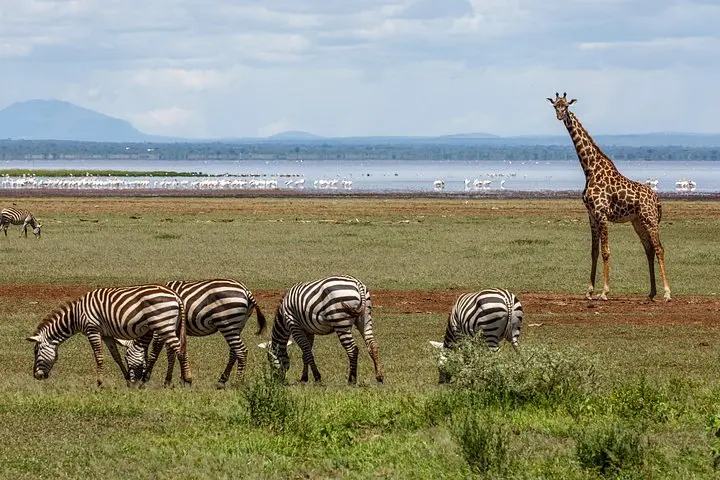
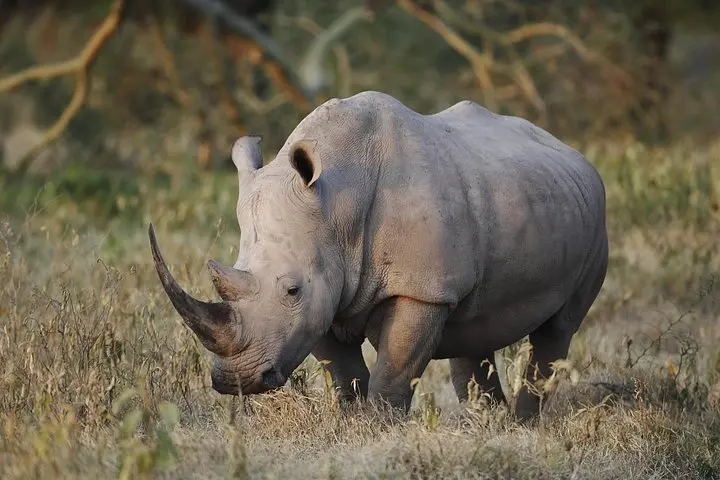
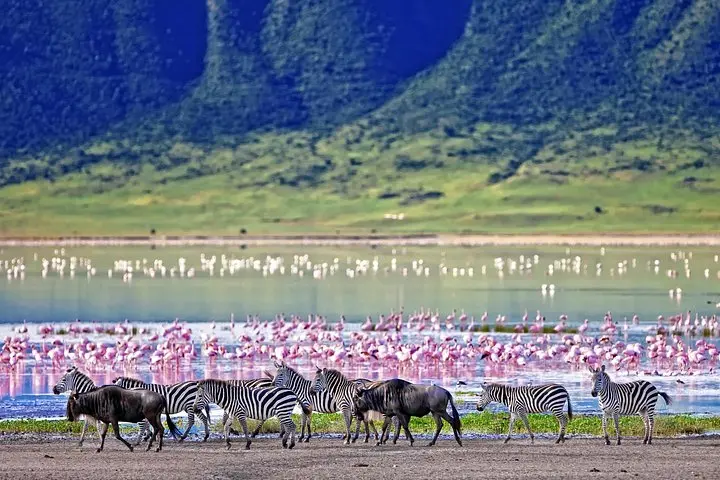
Across three days you ride the spine of northern Tanzania’s wildlife circuit: Tarangire’s elephant herds and baobab-studded woodlands; the Ngorongoro caldera, a volcanic bowl whose floor corrals concentrations of grazing mammals and the elusive black rhino; and Lake Manyara, a shallow rift-valley lake where flamingos flush pink and lions sometimes rest in trees.
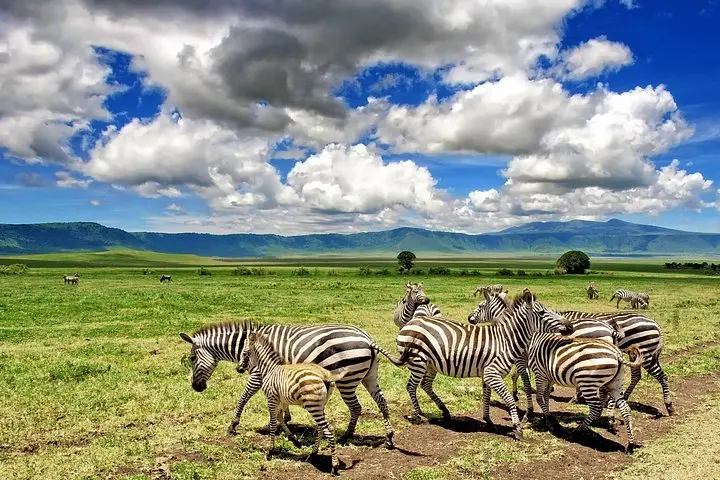
Geology here is obvious—Ngorongoro is a collapsed volcano whose steep rim frames an ecosystem that functions like a natural amphitheater. Culture threads through the landscape: Maasai grazing cattle along park boundaries and traditional homesteads where pastoral practices have shaped the mosaic of grassland and acacia.
Expect full-day game drives with early starts, long drives between parks, and a mix of dusty roads and short walking opportunities near picnic sites. Park fees are typically included; you’ll spend nights at a lodge base with meals provided. Bring binoculars, a sharp camera, sun protection and a small daypack for water and layers—the sun can be fierce but mornings are cool.
Practical notes: vehicles are 4x4 safari jeeps with pop-up roofs for viewing; game is most active at dawn and dusk; carry cash for tips and soft drinks; malaria precautions and routine vaccinations are recommended. Travel times: Arusha to Tarangire ~2 hours, Tarangire to Ngorongoro ~3–4 hours, Ngorongoro to Manyara ~1–2 hours depending on route.
This is a low-impact, observational trip—move quietly, keep windows partly closed near animals, and follow guide instructions to maximize sightings and minimize disturbance.
This tour typically includes park entrance fees—confirm at booking; Ngorongoro fees are often paid separately in some itineraries.
Dry months (June–October) concentrate animals around water and generally offer the best visibility; the short rains (Nov–Dec) can also be rewarding for birdlife.
Consult a travel clinic—yellow fever proof may be required depending on origin; malaria prophylaxis is commonly recommended for northern Tanzania.
Expect full-day game drives of 6–8 hours with breaks for lunch and short walks, plus transfers between parks of 1–4 hours.
Pazuri Africa operates guided outdoor trips and adventures with an emphasis on safety, stewardship, and memorable experiences.
Morning light slants across the savanna as your vehicle crunches away from Arusha—dust lifts, acacias lean, and elephants move like slow weather toward the Tarangire floodplain.
Morning light slants across the savanna as your vehicle crunches away from Arusha—dust lifts, acacias lean, and elephants move like slow weather toward the Tarangire floodplain.
Across three days you ride the spine of northern Tanzania’s wildlife circuit: Tarangire’s elephant herds and baobab-studded woodlands; the Ngorongoro caldera, a volcanic bowl whose floor corrals concentrations of grazing mammals and the elusive black rhino; and Lake Manyara, a shallow rift-valley lake where flamingos flush pink and lions sometimes rest in trees.
Geology here is obvious—Ngorongoro is a collapsed volcano whose steep rim frames an ecosystem that functions like a natural amphitheater. Culture threads through the landscape: Maasai grazing cattle along park boundaries and traditional homesteads where pastoral practices have shaped the mosaic of grassland and acacia.
Expect full-day game drives with early starts, long drives between parks, and a mix of dusty roads and short walking opportunities near picnic sites. Park fees are typically included; you’ll spend nights at a lodge base with meals provided. Bring binoculars, a sharp camera, sun protection and a small daypack for water and layers—the sun can be fierce but mornings are cool.
Practical notes: vehicles are 4x4 safari jeeps with pop-up roofs for viewing; game is most active at dawn and dusk; carry cash for tips and soft drinks; malaria precautions and routine vaccinations are recommended. Travel times: Arusha to Tarangire ~2 hours, Tarangire to Ngorongoro ~3–4 hours, Ngorongoro to Manyara ~1–2 hours depending on route.
This is a low-impact, observational trip—move quietly, keep windows partly closed near animals, and follow guide instructions to maximize sightings and minimize disturbance.