THE ADVENTURE COLLECTIVE® · Independent discovery and booking for outdoor travel

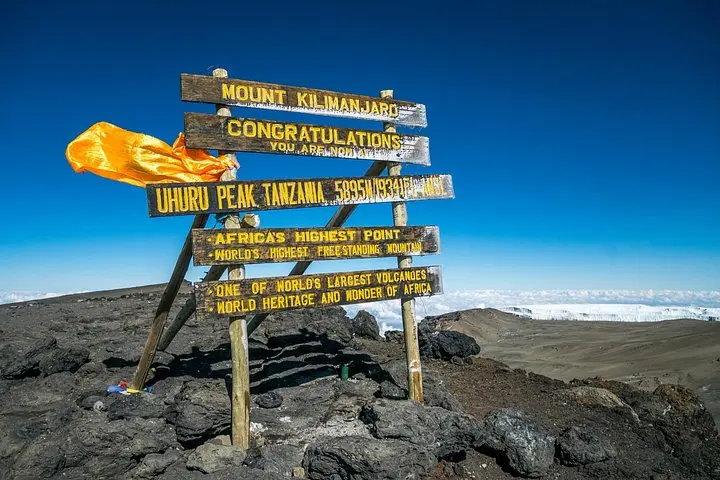
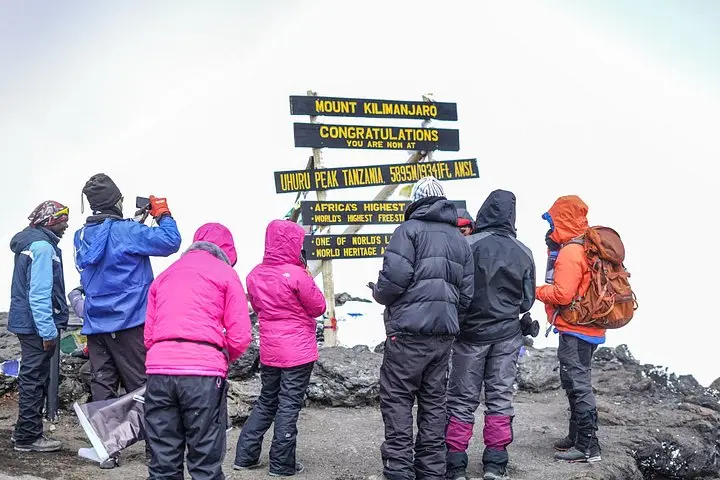
A seven-day, high-success itinerary on the Machame route that balances acclimatization with ambitious summit plans. Expect cloud forest, volcanic plateaus and a pre-dawn push to Uhuru Peak with experienced guides and camping support.
A seven-day, high-success itinerary on the Machame route that balances acclimatization with ambitious summit plans. Expect cloud forest, volcanic plateaus and a pre-dawn push to Uhuru Peak with experienced guides and camping support.
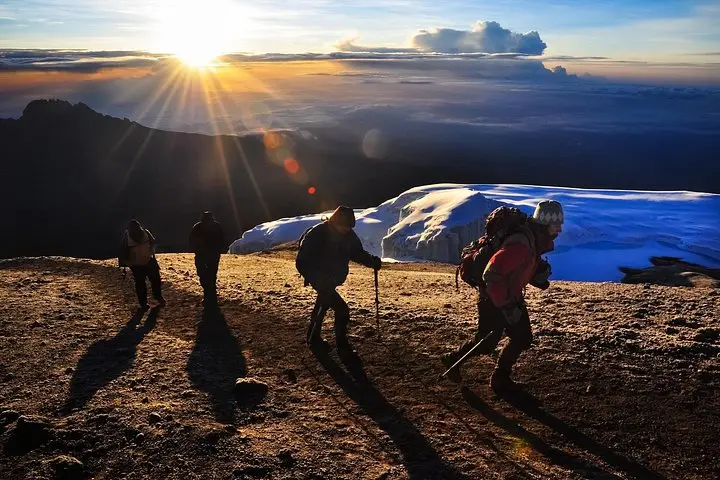
A cold dome of stars hangs over Barafu Camp as headlamps carve a slow ribbon of light toward the crater. On the Machame route the mountain reveals itself in stages: cloud forest that breathes around your boots, a plateau shaped by ancient lava, and an alpine desert that gives way to the jagged rim of Kibo. Each camp—Machame, Shira, Barranco, Karanga, Barafu—has its own character and a different rhythm for acclimatization.
Verified experiences and guided adventures in the surrounding area.
Operated by Mountain Warriors Tours and Safaris · Arusha, Arusha Region
A cold dome of stars hangs over Barafu Camp as headlamps carve a slow ribbon of light toward the crater. On the Machame route the mountain reveals itself in stages: cloud forest that breathes around your boots, a plateau shaped by ancient lava, and an alpine desert that gives way to the jagged rim of Kibo. Each camp—Machame, Shira, Barranco, Karanga, Barafu—has its own character and a different rhythm for acclimatization.
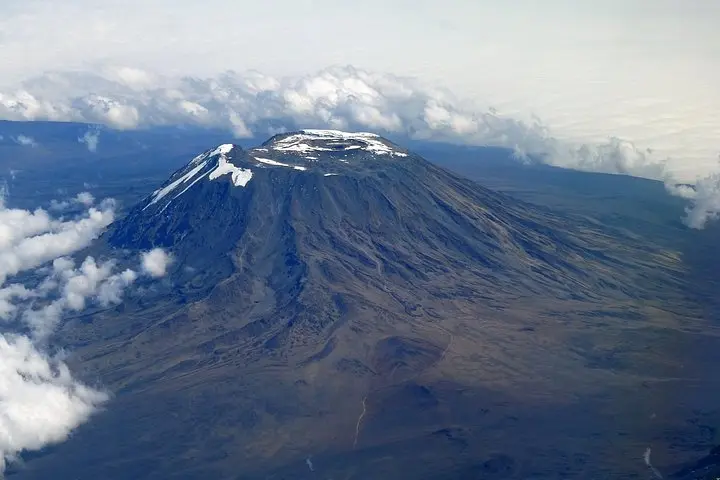
Kilimanjaro is a freestanding stratovolcano with three volcanic cones: Kibo, Mawenzi and Shira. Kibo’s glaciers and the Shira Plateau are evidence of explosive volcanic episodes and long-term glacial retreat. Culturally, the trail threads through lands farmed by the Chagga people; you’ll pass coffee farms on the drive to Machame Gate and rely on local porters and cooks whose mountain knowledge is vital to a successful summit.
Practical notes: expect 6–8 hours of walking on most days, with one very long summit push from midnight to dawn. The technical difficulty is low—no ropes or ice axes on Machame—but altitude is the main challenge; the itinerary builds in acclimatization days and a slow summit night to improve success. Bring warm layers for the summit, a sleeping bag rated to -10°C, and trusted hiking boots with good ankle support. Hydrate steadily, eat small meals frequently, and listen to guides about pace and symptoms of AMS.
You’ll finish with a descent through misted forest to Mweka Gate, where the mountain finally lets you go—exhausted, smaller in memory but larger in achievement.
The summit night is long and steep with sustained elevation gain from Barafu to Stella Point; the effort is more about altitude and sleep deprivation than technical difficulty.
No technical climbing skills are required on the Machame route, but prior multi-day hiking experience and fitness improve comfort and success rates.
Dry months—January–March and June–October—offer more stable weather and clearer summit views, though climbs occur year-round.
Acute mountain sickness can occur; guides monitor symptoms, enforce paced ascents, provide extra rest days, and have access to park rescue and evacuation if needed.
Mountain Warriors Tours and Safaris operates guided outdoor trips and adventures with an emphasis on safety, stewardship, and memorable experiences.
A cold dome of stars hangs over Barafu Camp as headlamps carve a slow ribbon of light toward the crater. On the Machame route the mountain reveals itself in stages: cloud forest that breathes around your boots, a plateau shaped by ancient lava, and an alpine desert that gives way to the jagged rim of Kibo. Each camp—Machame, Shira, Barranco, Karanga, Barafu—has its own character and a different rhythm for acclimatization.
A cold dome of stars hangs over Barafu Camp as headlamps carve a slow ribbon of light toward the crater. On the Machame route the mountain reveals itself in stages: cloud forest that breathes around your boots, a plateau shaped by ancient lava, and an alpine desert that gives way to the jagged rim of Kibo. Each camp—Machame, Shira, Barranco, Karanga, Barafu—has its own character and a different rhythm for acclimatization.
Kilimanjaro is a freestanding stratovolcano with three volcanic cones: Kibo, Mawenzi and Shira. Kibo’s glaciers and the Shira Plateau are evidence of explosive volcanic episodes and long-term glacial retreat. Culturally, the trail threads through lands farmed by the Chagga people; you’ll pass coffee farms on the drive to Machame Gate and rely on local porters and cooks whose mountain knowledge is vital to a successful summit.
Practical notes: expect 6–8 hours of walking on most days, with one very long summit push from midnight to dawn. The technical difficulty is low—no ropes or ice axes on Machame—but altitude is the main challenge; the itinerary builds in acclimatization days and a slow summit night to improve success. Bring warm layers for the summit, a sleeping bag rated to -10°C, and trusted hiking boots with good ankle support. Hydrate steadily, eat small meals frequently, and listen to guides about pace and symptoms of AMS.
You’ll finish with a descent through misted forest to Mweka Gate, where the mountain finally lets you go—exhausted, smaller in memory but larger in achievement.