THE ADVENTURE COLLECTIVE® · Independent discovery and booking for outdoor travel

Step out of the vehicle and into Arusha’s living landscape: a guided walking safari followed by a scenic game drive past Momella Lakes and Ngurdoto Crater. Expect close animal encounters, volcanic scenery, and Mount Meru backdrops on a full-day tour.
Step out of the vehicle and into Arusha’s living landscape: a guided walking safari followed by a scenic game drive past Momella Lakes and Ngurdoto Crater. Expect close animal encounters, volcanic scenery, and Mount Meru backdrops on a full-day tour.
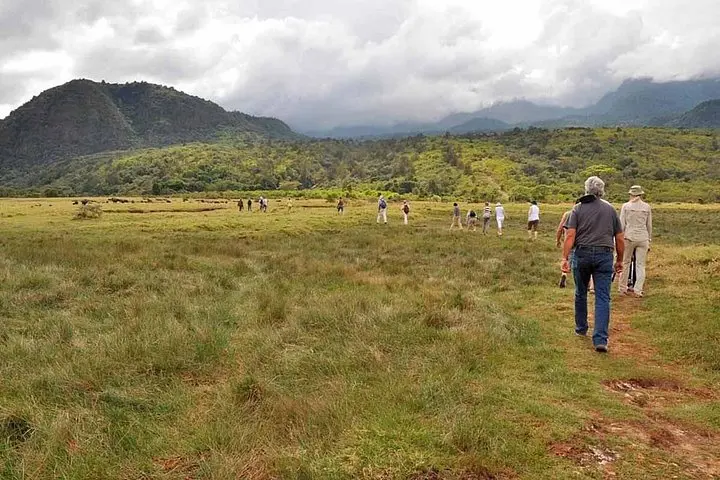
Early light fractures through fever trees as the ranger asks the group to lower voices and step off the vehicle. On an Arusha National Park walking safari the world tightens into detail: the rough hide of a grazing buffalo, the deliberate stride of a giraffe, and the high-pitched chatter of monkeys in the forest canopy. Walking here means trading binocular-shaped windows for a slow, ground-level perspective of East African life.
Verified experiences and guided adventures in the surrounding area.
Operated by RIOBA SAFARIS · Arusha, Arusha Region
Early light fractures through fever trees as the ranger asks the group to lower voices and step off the vehicle. On an Arusha National Park walking safari the world tightens into detail: the rough hide of a grazing buffalo, the deliberate stride of a giraffe, and the high-pitched chatter of monkeys in the forest canopy. Walking here means trading binocular-shaped windows for a slow, ground-level perspective of East African life.
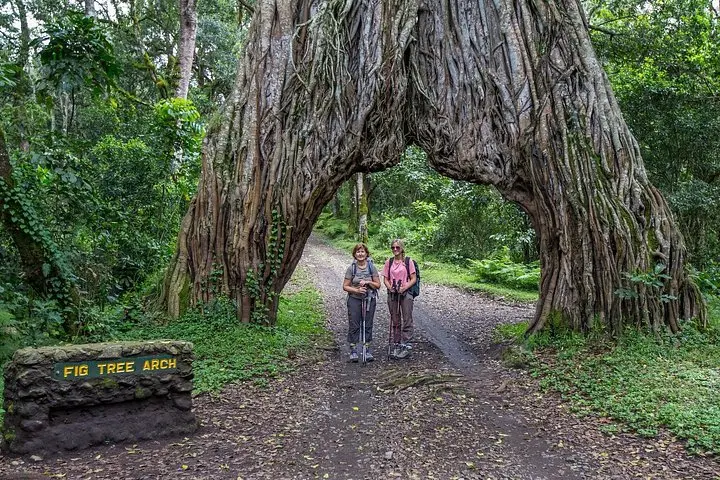
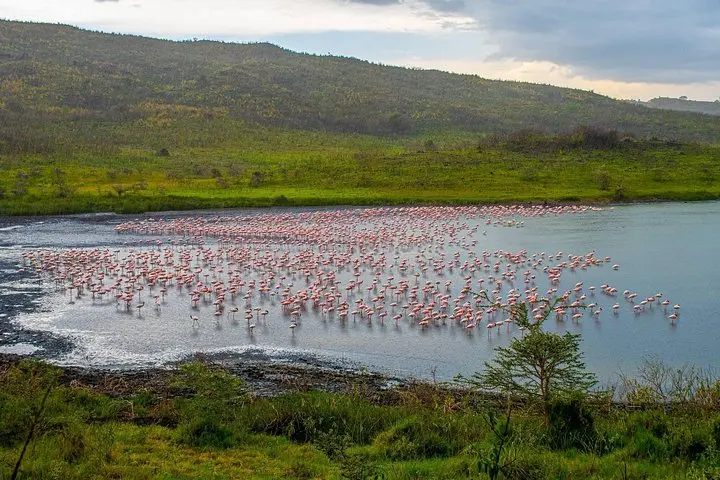
The park sits on the southern shoulders of Mount Meru, a volcanic neighbour to Kilimanjaro, and preserves volcanic craters, montane forest and the alkaline Momella Lakes where flamingos stain the shallows pink. Designated a national park in 1960, Arusha has long been both a scientific outpost and a compact, accessible wildlife reserve favored for short safaris and photography days.
Culturally, the park is part of the Arusha Region’s mosaic—Maasai grazing land meets small farms and market towns—and guides often weave local natural history with practical park lore. Geologically, expect crater rims, ancient lava flows, and shallow lake basins formed by volcanic activity; these shape the habitats that bring zebras, giraffes and buffalo into view.
Practical guidance: the full program runs about nine hours including hotel transfers, a guided 1–3 km walk on firm, uneven ground, and a relaxed 4x4 game drive through Momella Lakes and Ngurdoto Crater. Carry layered clothing for altitude shifts, sun protection for open plains, and binoculars for distant waterbirds. Wildlife encounters are close but unpredictable—follow ranger instructions, keep a respectful distance, and save the flash photography. With a little preparation, the walking safari delivers clarity: noise, movement and the mechanics of wild animals observed up close.
The guided walk is generally short—roughly 1–3 km on firm but uneven ground—designed to be safe for most fitness levels and led by a professional ranger.
Mount Meru dominates the park and is visible on most days; Kilimanjaro can appear on clear days from certain viewpoints but is not guaranteed.
The tour is family-friendly, but infants must sit on an adult’s lap and all participants should be able to follow ranger instructions and manage uneven terrain.
Typical inclusions are park entrance fees, bottled water, lunch, hotel or airport transfers and a professional guide; always confirm specific inclusions when booking.
RIOBA SAFARIS operates guided outdoor trips and adventures with an emphasis on safety, stewardship, and memorable experiences.
Early light fractures through fever trees as the ranger asks the group to lower voices and step off the vehicle. On an Arusha National Park walking safari the world tightens into detail: the rough hide of a grazing buffalo, the deliberate stride of a giraffe, and the high-pitched chatter of monkeys in the forest canopy. Walking here means trading binocular-shaped windows for a slow, ground-level perspective of East African life.
Early light fractures through fever trees as the ranger asks the group to lower voices and step off the vehicle. On an Arusha National Park walking safari the world tightens into detail: the rough hide of a grazing buffalo, the deliberate stride of a giraffe, and the high-pitched chatter of monkeys in the forest canopy. Walking here means trading binocular-shaped windows for a slow, ground-level perspective of East African life.
The park sits on the southern shoulders of Mount Meru, a volcanic neighbour to Kilimanjaro, and preserves volcanic craters, montane forest and the alkaline Momella Lakes where flamingos stain the shallows pink. Designated a national park in 1960, Arusha has long been both a scientific outpost and a compact, accessible wildlife reserve favored for short safaris and photography days.
Culturally, the park is part of the Arusha Region’s mosaic—Maasai grazing land meets small farms and market towns—and guides often weave local natural history with practical park lore. Geologically, expect crater rims, ancient lava flows, and shallow lake basins formed by volcanic activity; these shape the habitats that bring zebras, giraffes and buffalo into view.
Practical guidance: the full program runs about nine hours including hotel transfers, a guided 1–3 km walk on firm, uneven ground, and a relaxed 4x4 game drive through Momella Lakes and Ngurdoto Crater. Carry layered clothing for altitude shifts, sun protection for open plains, and binoculars for distant waterbirds. Wildlife encounters are close but unpredictable—follow ranger instructions, keep a respectful distance, and save the flash photography. With a little preparation, the walking safari delivers clarity: noise, movement and the mechanics of wild animals observed up close.