THE ADVENTURE COLLECTIVE® · Independent discovery and booking for outdoor travel

Walk from Senso‑ji’s busy temple lane to the calmer east side of Sumida Park on a full‑day Asakusa tour that combines Taiko drumming, kitchenware streets and skyline views. Expect flat urban walking, hands‑on culture, and local food stops.
Walk from Senso‑ji’s busy temple lane to the calmer east side of Sumida Park on a full‑day Asakusa tour that combines Taiko drumming, kitchenware streets and skyline views. Expect flat urban walking, hands‑on culture, and local food stops.
A morning in Asakusa starts at the thunder gate of Senso‑ji, where incense smoke curls and the city’s energy slows to a human pace. You move along Nakamise Dori beneath low eaves, past stallfronts selling rice crackers and wooden charms, and the guide points out details that erase the idea that Tokyo is only glass and speed.
Verified experiences and guided adventures in the surrounding area.
A morning in Asakusa starts at the thunder gate of Senso‑ji, where incense smoke curls and the city’s energy slows to a human pace. You move along Nakamise Dori beneath low eaves, past stallfronts selling rice crackers and wooden charms, and the guide points out details that erase the idea that Tokyo is only glass and speed.
This neighborhood was Edo’s commercial heart; its temples, small shrine courtyards and aging merchant streets survive on an alluvial plain beside the Sumida River. Kappabashi’s Kitchen Town preserves the crafts of sushi knives and ceramic ware, while the riverbank and Sumida Park give a glimpse of Tokyo’s pale geology—man‑made terraces and floodplain soils that shaped the city’s footprint.
Cultural highlights include a hands‑on Taiko drumming session, sampling izakaya plates at lunchtime and visiting quieter shrines off the main tourist track. In late afternoon the skyline shifts: traditional rooflines framed by the vertical accent of Tokyo Skytree across the river.
Practical guidance: this is an on‑foot, full‑day itinerary (around eight hours) across mostly flat, paved streets with some park paths. Expect lots of short stops, stairways into small temples, and crowds on Nakamise. Bring cash for small eateries, a charged phone for maps and transit, and shoes that can handle cobbles and standing. Morning light is best for photos and cooler walking; plan to use public transit—Asakusa Station links this area to multiple lines. Respect shrine etiquette, stay with the group, and leave room to taste the local food—this tour is as much about history and craft as it is about the city’s quiet natural edges.
This is a full‑day walking tour covering flat urban streets and park paths; expect 10–15 km of walking with frequent short stops.
Lunch is not typically included; the guide will take you to local eateries where you can sample dishes and pay separately.
Families and active older travelers can usually manage the tour if they can walk several hours and navigate stairs; contact the operator about mobility concerns.
The tour begins at Senso‑ji/Nakamise Dori area; the easiest access is Asakusa Station on the Ginza, Toei Asakusa or Tobu Skytree lines—plan extra time for station congestion.
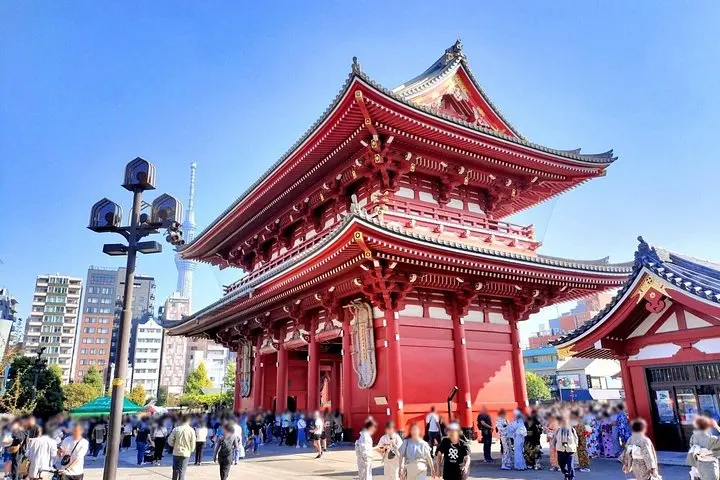
A morning in Asakusa starts at the thunder gate of Senso‑ji, where incense smoke curls and the city’s energy slows to a human pace. You move along Nakamise Dori beneath low eaves, past stallfronts selling rice crackers and wooden charms, and the guide points out details that erase the idea that Tokyo is only glass and speed.
A morning in Asakusa starts at the thunder gate of Senso‑ji, where incense smoke curls and the city’s energy slows to a human pace. You move along Nakamise Dori beneath low eaves, past stallfronts selling rice crackers and wooden charms, and the guide points out details that erase the idea that Tokyo is only glass and speed.
This neighborhood was Edo’s commercial heart; its temples, small shrine courtyards and aging merchant streets survive on an alluvial plain beside the Sumida River. Kappabashi’s Kitchen Town preserves the crafts of sushi knives and ceramic ware, while the riverbank and Sumida Park give a glimpse of Tokyo’s pale geology—man‑made terraces and floodplain soils that shaped the city’s footprint.
Cultural highlights include a hands‑on Taiko drumming session, sampling izakaya plates at lunchtime and visiting quieter shrines off the main tourist track. In late afternoon the skyline shifts: traditional rooflines framed by the vertical accent of Tokyo Skytree across the river.
Practical guidance: this is an on‑foot, full‑day itinerary (around eight hours) across mostly flat, paved streets with some park paths. Expect lots of short stops, stairways into small temples, and crowds on Nakamise. Bring cash for small eateries, a charged phone for maps and transit, and shoes that can handle cobbles and standing. Morning light is best for photos and cooler walking; plan to use public transit—Asakusa Station links this area to multiple lines. Respect shrine etiquette, stay with the group, and leave room to taste the local food—this tour is as much about history and craft as it is about the city’s quiet natural edges.