THE ADVENTURE COLLECTIVE® · Independent discovery and booking for outdoor travel

Scale Quetrupillán, a 2,360 m stratovolcano between Villarrica and Lanín, on a guided full-day ascent from Pucón. Expect 16 km of mixed terrain, seasonal snow, and panoramic volcanic ridgelines.
Scale Quetrupillán, a 2,360 m stratovolcano between Villarrica and Lanín, on a guided full-day ascent from Pucón. Expect 16 km of mixed terrain, seasonal snow, and panoramic volcanic ridgelines.
A thin wind cuts across the high col as climbers tighten boots and shoulder packs beneath a wide southern sky. Quetrupillán’s flanks rise to 2,360 meters, a volcanic cone of black tephra and late-glacial scarp that sits between Villarrica and Lanín—its ridgelines daring you upward and its slopes dotted with lenga and coihue forest below.
Verified experiences and guided adventures in the surrounding area.
Operated by Terra Volcano Pucon · Pucón, Araucanía Region
A thin wind cuts across the high col as climbers tighten boots and shoulder packs beneath a wide southern sky. Quetrupillán’s flanks rise to 2,360 meters, a volcanic cone of black tephra and late-glacial scarp that sits between Villarrica and Lanín—its ridgelines daring you upward and its slopes dotted with lenga and coihue forest below.
The route traces about 16 km round-trip across mixed volcanic scree, snowfields and compacted ash. Geologically, Quetrupillán is a Holocene stratovolcano whose eruptions helped shape the upper Imperial and Trancura valleys; Mapudungun speakers named it “Spirit of few lights,” a reminder of the region’s indigenous Ñuble and Mapuche presence and the mountain’s cultural weight for local communities.
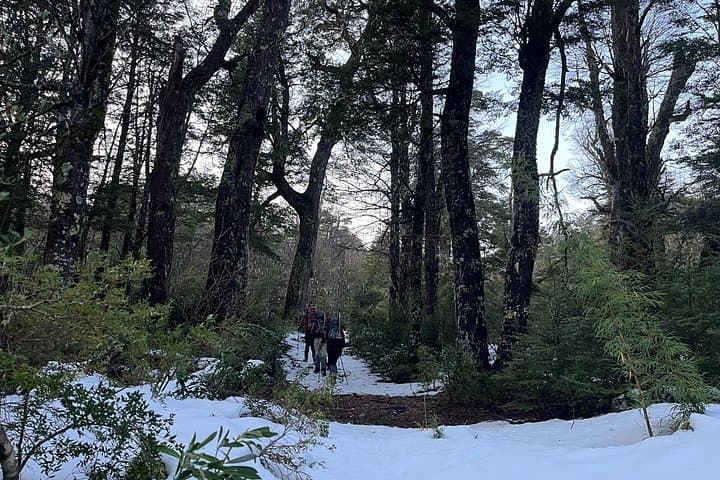
Expect changing terrain: forested approach trails give way to loose rock and, seasonally, hard-packed snow where crampons and ice axe become necessary. Wildlife is subtle—Andean condors wheel on thermals while foxes and Austral birds patrol lower slopes.
Practical guidance is straightforward: start pre-dawn to avoid afternoon wind, carry layered clothing for rapid temperature swings, and plan for a long day—guides supply helmets, crampons, ice axes and a 60L pack, but guests should bring sturdy boots, water and snacks. Fitness needs are real; the climb rewards steady pacing, careful footwork and respect for mountain weather. Finish on the summit ridge and the view across the volcanic chain offers clear evidence why climbers make the effort: raw volcanic skyline, steaming highlands and a sense of earned perspective.
The route is long and involves sections of loose volcanic rock and possible snow; beginners with good fitness can do it with a guided group, but some prior long-hike experience and comfort with altitude are recommended.
Yes—guides typically supply crampons and an ice axe, along with helmets and a 60L pack as noted in the tour inclusions.
Summer (December–March) usually offers the most stable conditions, while shoulder seasons may have variable snow; winter requires technical experience and proper assessment of avalanche risk.
At 2,360 m the altitude is moderate, but participants should arrive rested and hydrated; those coming from sea level should monitor symptoms and inform guides of any issues.
Terra Volcano Pucon operates guided outdoor trips and adventures with an emphasis on safety, stewardship, and memorable experiences.
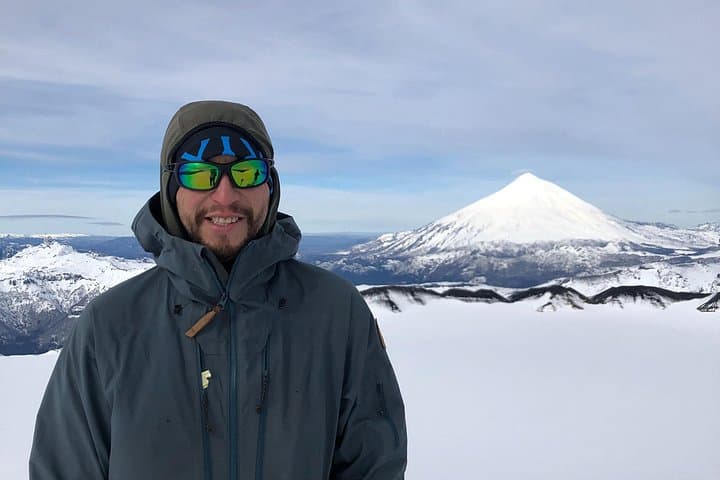


A thin wind cuts across the high col as climbers tighten boots and shoulder packs beneath a wide southern sky. Quetrupillán’s flanks rise to 2,360 meters, a volcanic cone of black tephra and late-glacial scarp that sits between Villarrica and Lanín—its ridgelines daring you upward and its slopes dotted with lenga and coihue forest below.
A thin wind cuts across the high col as climbers tighten boots and shoulder packs beneath a wide southern sky. Quetrupillán’s flanks rise to 2,360 meters, a volcanic cone of black tephra and late-glacial scarp that sits between Villarrica and Lanín—its ridgelines daring you upward and its slopes dotted with lenga and coihue forest below.
The route traces about 16 km round-trip across mixed volcanic scree, snowfields and compacted ash. Geologically, Quetrupillán is a Holocene stratovolcano whose eruptions helped shape the upper Imperial and Trancura valleys; Mapudungun speakers named it “Spirit of few lights,” a reminder of the region’s indigenous Ñuble and Mapuche presence and the mountain’s cultural weight for local communities.
Expect changing terrain: forested approach trails give way to loose rock and, seasonally, hard-packed snow where crampons and ice axe become necessary. Wildlife is subtle—Andean condors wheel on thermals while foxes and Austral birds patrol lower slopes.
Practical guidance is straightforward: start pre-dawn to avoid afternoon wind, carry layered clothing for rapid temperature swings, and plan for a long day—guides supply helmets, crampons, ice axes and a 60L pack, but guests should bring sturdy boots, water and snacks. Fitness needs are real; the climb rewards steady pacing, careful footwork and respect for mountain weather. Finish on the summit ridge and the view across the volcanic chain offers clear evidence why climbers make the effort: raw volcanic skyline, steaming highlands and a sense of earned perspective.