THE ADVENTURE COLLECTIVE® · Independent discovery and booking for outdoor travel

A highland day trek from Lalibela to Asheton Maryam combines steep mountain trails, an authentic village coffee ceremony and a ridge-top monastery at 3,500 m. Expect gelada sightings, rocky singletrack and close cultural encounters on a 6–8 hour outing.
A highland day trek from Lalibela to Asheton Maryam combines steep mountain trails, an authentic village coffee ceremony and a ridge-top monastery at 3,500 m. Expect gelada sightings, rocky singletrack and close cultural encounters on a 6–8 hour outing.
You step out of Lalibela's cool morning and the town slips downward beneath your boots; the trail climbs, turning stone and scrub into a high pasture that opens to wide sky. Wind pushes at the ridge and the Lasta peaks frame a church perched on the horizon—Asheton Maryam sits like an argument between rock and gravity, 3,500 m above sea level.
Verified experiences and guided adventures in the surrounding area.
Operated by Access Eco Trekking Tours · Lalibela, Amhara
You step out of Lalibela's cool morning and the town slips downward beneath your boots; the trail climbs, turning stone and scrub into a high pasture that opens to wide sky. Wind pushes at the ridge and the Lasta peaks frame a church perched on the horizon—Asheton Maryam sits like an argument between rock and gravity, 3,500 m above sea level.
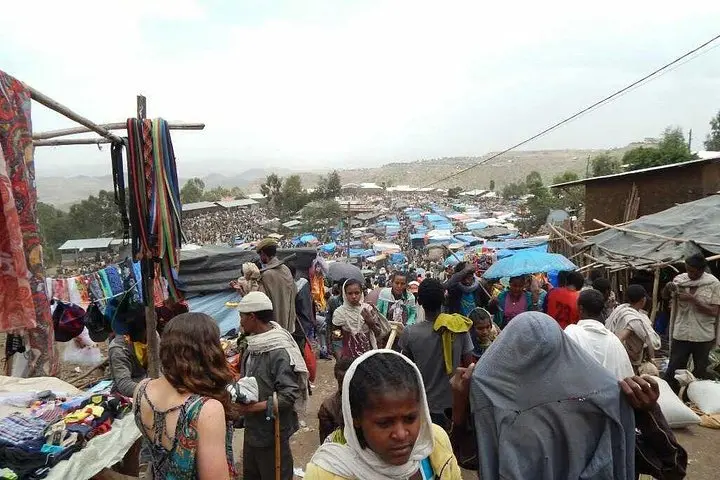
The route threads Afroalpine forest, terraced farmland and small hamlets where oxen plod and women carry water in balanced bundles. Geologically, the Lasta massif is ancient volcanic highland, its ridgelines carved into plateaus and ribs that created natural routes for settlement and monastery sites. Culturally, the monastery is part of Lalibela’s medieval Christian landscape—later pilgrims and local communities still maintain coffee ceremonies and seasonal festivals here.
On the walk expect sharp climbs, switchbacks hugging the mountain, and close-up wildlife: gelada troops grazing on cliffside grasses and the occasional lammergeier circling thermals. The village coffee ceremony offers a quiet social window—prepared by hand, served hot and loud with conversation.
Practical guidance: start early to avoid afternoon wind, carry layers for rapid temperature swings and bring altitude awareness—drink water and move deliberately uphill. Footwear with good traction is essential; trails can be steep and rocky. The full-day outing runs about 6–8 hours round-trip, mostly on singletrack and mule paths, and is suitable for hikers in reasonable condition who can handle sustained climbs. Local guides provide porter support and cultural interpretation, turning a demanding walk into an accessible cultural-ecology day trek.
The route is a steady uphill with rocky singletrack and switchbacks; overall difficulty is moderate and suitable for hikers used to several hours of sustained ascent.
Yes — gelada baboons are commonly seen grazing on highland grasses and lammergeiers may be observed circling thermals above ridges.
Guides typically arrange a village visit and the coffee ceremony; small local contributions or refreshments may be expected but a basic ceremony is usually included in the cultural stop.
Start early to avoid afternoon winds and to enjoy clearer views; mornings also offer cooler temperatures for the initial ascent.
Access Eco Trekking Tours operates guided outdoor trips and adventures with an emphasis on safety, stewardship, and memorable experiences.
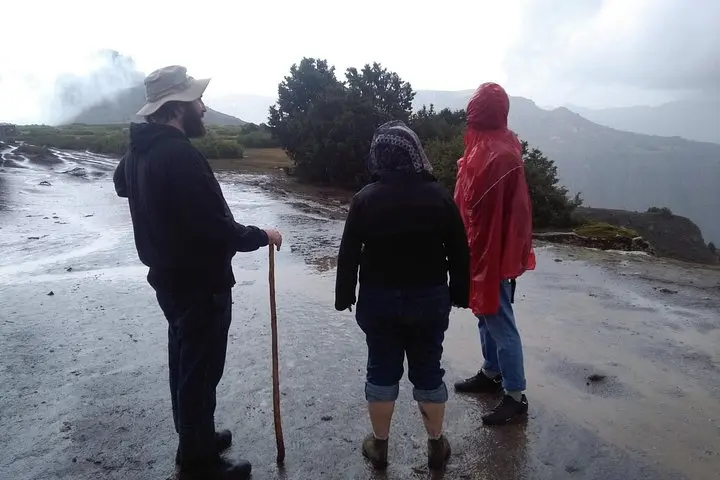
You step out of Lalibela's cool morning and the town slips downward beneath your boots; the trail climbs, turning stone and scrub into a high pasture that opens to wide sky. Wind pushes at the ridge and the Lasta peaks frame a church perched on the horizon—Asheton Maryam sits like an argument between rock and gravity, 3,500 m above sea level.
You step out of Lalibela's cool morning and the town slips downward beneath your boots; the trail climbs, turning stone and scrub into a high pasture that opens to wide sky. Wind pushes at the ridge and the Lasta peaks frame a church perched on the horizon—Asheton Maryam sits like an argument between rock and gravity, 3,500 m above sea level.
The route threads Afroalpine forest, terraced farmland and small hamlets where oxen plod and women carry water in balanced bundles. Geologically, the Lasta massif is ancient volcanic highland, its ridgelines carved into plateaus and ribs that created natural routes for settlement and monastery sites. Culturally, the monastery is part of Lalibela’s medieval Christian landscape—later pilgrims and local communities still maintain coffee ceremonies and seasonal festivals here.
On the walk expect sharp climbs, switchbacks hugging the mountain, and close-up wildlife: gelada troops grazing on cliffside grasses and the occasional lammergeier circling thermals. The village coffee ceremony offers a quiet social window—prepared by hand, served hot and loud with conversation.
Practical guidance: start early to avoid afternoon wind, carry layers for rapid temperature swings and bring altitude awareness—drink water and move deliberately uphill. Footwear with good traction is essential; trails can be steep and rocky. The full-day outing runs about 6–8 hours round-trip, mostly on singletrack and mule paths, and is suitable for hikers in reasonable condition who can handle sustained climbs. Local guides provide porter support and cultural interpretation, turning a demanding walk into an accessible cultural-ecology day trek.