THE ADVENTURE COLLECTIVE® · Independent discovery and booking for outdoor travel

Walk Asheville’s downtown like a design insider on a private architecture tour through Art Deco icons, Gothic spires, and the famed Grove Arcade. It’s two hours of sharp observation, local history, and city texture—more city hike than classroom.
Walk Asheville’s downtown like a design insider on a private architecture tour through Art Deco icons, Gothic spires, and the famed Grove Arcade. It’s two hours of sharp observation, local history, and city texture—more city hike than classroom.
Morning light slides along Asheville’s brick and stone, waking cornices and arches as if the buildings are stretching into the day. You step from the sidewalk into a moving gallery, the Blue Ridge ridgeline hovering like a stage backdrop. A local guide sets the pace—unhurried, observant—inviting you to read the city the way architects do: through line, shadow, and material.
Verified experiences and guided adventures in the surrounding area.
Operated by Opatrip.com USA · Asheville, North Carolina
Morning light slides along Asheville’s brick and stone, waking cornices and arches as if the buildings are stretching into the day. You step from the sidewalk into a moving gallery, the Blue Ridge ridgeline hovering like a stage backdrop. A local guide sets the pace—unhurried, observant—inviting you to read the city the way architects do: through line, shadow, and material.
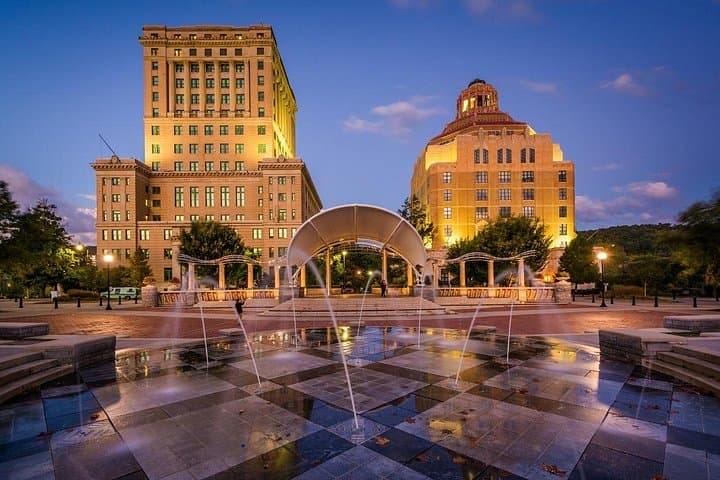
This two-hour private walking tour stays outside but never feels distant. At the First Baptist Church, glazed tiles catch the sun and the copper dome wears the sky. A few blocks on, the Jackson Building, Asheville’s early skyscraper, needles upward with neo-Gothic ambition—look for its stone grotesques daring you to spot them. Across Pack Square, the paired profiles of Buncombe County Courthouse and Asheville City Hall trace the city’s 1920s boom. The courthouse stands classical and assured; City Hall answers with Douglas Ellington’s bold Art Deco, terracotta rippling in salmon and green. It’s a dialogue in stone about optimism, interrupted when the Great Depression stalled Asheville for decades. Ironically, that pause helped preserve this streetscape.
The Grove Arcade brings the story down to human scale—arcades and ornament coaxing you under their arches. Terracotta glows warm even on overcast days, and the detailing rewards patience: stylized flora, tight zigzags, ambitious geometry. At corners, flatiron angles slice the light; down Wall Street, curved façades soften the grid. When the breeze pulls through, the city hums: café clatter, bus brakes sighing, the faint rush of the French Broad pushing through the valley as if urging downtown forward.
Expect about 1–1.5 miles on city sidewalks with mild grades. Your guide ties form to function—why skyscrapers rose on narrow parcels, how new transit changed storefronts, where fires or floods nudged design codes. If you’re an urbanist, you’ll note the setbacks and materials. If you’re new to architecture, you’ll leave with a sharper eye for what makes Asheville’s skyline feel cohesive yet playful.
Practicalities are straightforward: comfortable walking shoes, a small water bottle, and a weather layer. Spring and summer can turn from bright to thunderstorm quickly; fall rewards with clean air and long shadows; winter light sculpts every cornice. Bring a phone or compact camera—overcast conditions can be your friend for texture. And bring questions. The buildings will do most of the talking, but a good guide translates their accents.
By the final stop, you’ve stitched together courthouses and arcades, domes and gargoyles, understanding how a mountain boomtown wrote its story in brick, glass, and tile—and how that story keeps adding chapters, one façade at a time.
Plan on 1–1.5 miles over about two hours on sidewalks with mild grades and occasional uneven brick.
Most of the route has curb cuts and smooth sidewalks; some brick sections are bumpy. Ask your guide to adapt the path to your needs.
This experience focuses on exterior architecture. Select interiors may be discussed from outside to preserve timing and group flow.
Yes—curious kids enjoy spotting gargoyles, domes, and patterns. The pace is relaxed with frequent stops.
Tours run rain or shine unless conditions are unsafe (severe storms or ice). Bring a rain layer and your guide will use sheltered viewing spots.
City garages like Rankin Avenue and College Street are convenient. ART buses serve downtown; rideshares can drop at the meeting point.
Opatrip.com USA operates guided outdoor trips and adventures with an emphasis on safety, stewardship, and memorable experiences.



Morning light slides along Asheville’s brick and stone, waking cornices and arches as if the buildings are stretching into the day. You step from the sidewalk into a moving gallery, the Blue Ridge ridgeline hovering like a stage backdrop. A local guide sets the pace—unhurried, observant—inviting you to read the city the way architects do: through line, shadow, and material.
Morning light slides along Asheville’s brick and stone, waking cornices and arches as if the buildings are stretching into the day. You step from the sidewalk into a moving gallery, the Blue Ridge ridgeline hovering like a stage backdrop. A local guide sets the pace—unhurried, observant—inviting you to read the city the way architects do: through line, shadow, and material.
This two-hour private walking tour stays outside but never feels distant. At the First Baptist Church, glazed tiles catch the sun and the copper dome wears the sky. A few blocks on, the Jackson Building, Asheville’s early skyscraper, needles upward with neo-Gothic ambition—look for its stone grotesques daring you to spot them. Across Pack Square, the paired profiles of Buncombe County Courthouse and Asheville City Hall trace the city’s 1920s boom. The courthouse stands classical and assured; City Hall answers with Douglas Ellington’s bold Art Deco, terracotta rippling in salmon and green. It’s a dialogue in stone about optimism, interrupted when the Great Depression stalled Asheville for decades. Ironically, that pause helped preserve this streetscape.
The Grove Arcade brings the story down to human scale—arcades and ornament coaxing you under their arches. Terracotta glows warm even on overcast days, and the detailing rewards patience: stylized flora, tight zigzags, ambitious geometry. At corners, flatiron angles slice the light; down Wall Street, curved façades soften the grid. When the breeze pulls through, the city hums: café clatter, bus brakes sighing, the faint rush of the French Broad pushing through the valley as if urging downtown forward.
Expect about 1–1.5 miles on city sidewalks with mild grades. Your guide ties form to function—why skyscrapers rose on narrow parcels, how new transit changed storefronts, where fires or floods nudged design codes. If you’re an urbanist, you’ll note the setbacks and materials. If you’re new to architecture, you’ll leave with a sharper eye for what makes Asheville’s skyline feel cohesive yet playful.
Practicalities are straightforward: comfortable walking shoes, a small water bottle, and a weather layer. Spring and summer can turn from bright to thunderstorm quickly; fall rewards with clean air and long shadows; winter light sculpts every cornice. Bring a phone or compact camera—overcast conditions can be your friend for texture. And bring questions. The buildings will do most of the talking, but a good guide translates their accents.
By the final stop, you’ve stitched together courthouses and arcades, domes and gargoyles, understanding how a mountain boomtown wrote its story in brick, glass, and tile—and how that story keeps adding chapters, one façade at a time.