THE ADVENTURE COLLECTIVE® · Independent discovery and booking for outdoor travel

Cross to Asinara by ferry, then explore the island’s granite coasts, abandoned penal villages and famed white donkeys by minivan. This full-day excursion mixes wildlife, history and a swim at Cala Sabina—ideal for travelers based in Stintino.
Cross to Asinara by ferry, then explore the island’s granite coasts, abandoned penal villages and famed white donkeys by minivan. This full-day excursion mixes wildlife, history and a swim at Cala Sabina—ideal for travelers based in Stintino.
The ferry eases away from Stintino and the mainland folds behind you: a flat ribbon of harbor, pastel houses, and the last tilt of olive trees. Ahead, Asinara rises like an uninhabited kingdom—granite cliffs catching the sun, scrubland that smells of thyme, and a shoreline cut into hidden coves. You step ashore at Fornelli, meet your guide, and climb into a comfortable minivan that will thread gravel tracks across a place both wild and historically complex.
Verified experiences and guided adventures in the surrounding area.
Operated by Escursì - experience sardinia · Stintino, Sardinia
The ferry eases away from Stintino and the mainland folds behind you: a flat ribbon of harbor, pastel houses, and the last tilt of olive trees. Ahead, Asinara rises like an uninhabited kingdom—granite cliffs catching the sun, scrubland that smells of thyme, and a shoreline cut into hidden coves. You step ashore at Fornelli, meet your guide, and climb into a comfortable minivan that will thread gravel tracks across a place both wild and historically complex.
Asinara feels like Sardinia before roads and speed defeated it. The island was a quarantine station, a penal colony and a military outpost; its stone barracks and abandoned lazaretto still line Cala Reale and Cala d’Oliva. Geologically, Asinara is a slab of Paleozoic granite and schist, scoured by wind and sea into cliffs and fine white-sand pockets like Cala Sabina. The park’s isolation—closed to private development for decades—has preserved breeding grounds for seabirds, a small mouflon population, and the famous albino donkeys whose pale hides are a local oddity.
A day tour is a concentrated primer: a ferry transfer from Stintino, a minivan loop past Fornelli’s former prison, a stop at Cala di Sgombro to watch waterfowl on the rocks, a walk through the late 19th-century village of Cala Reale, and time at Cala Sabina where the sand is almost talc-fine and the water pulls you in with crystalline clarity. The Marine Turtle Recovery Center (CRAMA) is an important human story—rehabilitating loggerheads and reminding visitors why the island’s protections exist.
Practicalities are straightforward. The full-day excursion runs about eight hours; most of that is slow, observational travel with short guided walks. Paths are mostly gravel tracks and gentle beach access—no technical hiking required—but sun, salt and glare will fatigue you faster than distance. Bring reef-capable footwear for rocky coves, reef-safe sunscreen, and a reusable water bottle. If you want to swim, prioritize early or late in the day when waters are calm and small boats have fewer wake effects.
Culturally, guides will explain how Asinara’s recent history shaped its ecology: military exclusion created a de facto reserve. Conservation rules are strict—many zones are off-limits by land and sea—and your visit funds ongoing protection efforts. Photographers will find low, sculpted light at golden hour and isolating vistas from the minivan’s roadside turnouts. Expect intimate wildlife moments more than dramatic sightings; the scene here is subtle, patient and quietly rewarding.
For travelers based in Stintino, this is an accessible way to see Asinara in a day: a tidy blend of geology, history, wildlife and swimming made comfortable by ferry transfer and minivan routing.
Meet at the Marina di Stintino (Porto Turistico) where the Ausonia ferry embarks; central Stintino is walkable from most hotels and there’s limited parking nearby.
Yes—the excursion includes transfer by ferry from Stintino to Asinara and back as part of the full-day tour.
Yes; the itinerary includes beach time at Cala Sabina, the only permitted swimming beach in the park, weather permitting.
Children are welcome, but infants must sit on an adult’s lap on the ferry; activities are suitable for most ages with parental supervision.
You’ll likely see the white/gray donkeys near Campo Perdu and may visit the turtle recovery center—wildlife sightings are frequent but never guaranteed.
Yes—large parts of Asinara are protected and some coves and routes are off-limits; guides stick to permitted trails and viewpoints to minimize impact.
Escursì - experience sardinia operates guided outdoor trips and adventures with an emphasis on safety, stewardship, and memorable experiences.



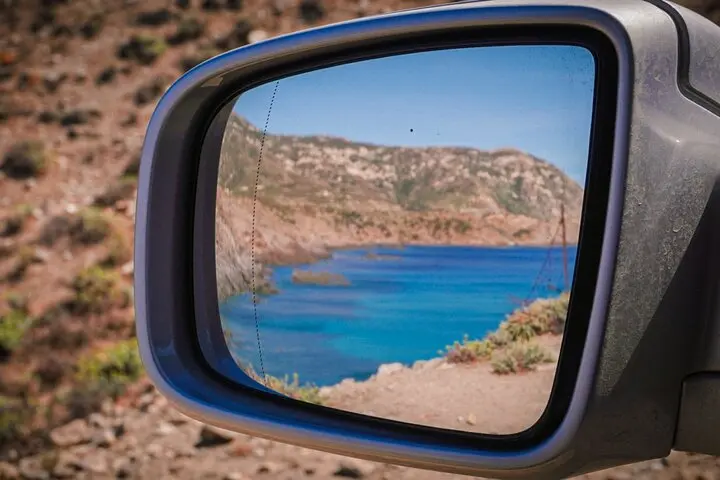
The ferry eases away from Stintino and the mainland folds behind you: a flat ribbon of harbor, pastel houses, and the last tilt of olive trees. Ahead, Asinara rises like an uninhabited kingdom—granite cliffs catching the sun, scrubland that smells of thyme, and a shoreline cut into hidden coves. You step ashore at Fornelli, meet your guide, and climb into a comfortable minivan that will thread gravel tracks across a place both wild and historically complex.
The ferry eases away from Stintino and the mainland folds behind you: a flat ribbon of harbor, pastel houses, and the last tilt of olive trees. Ahead, Asinara rises like an uninhabited kingdom—granite cliffs catching the sun, scrubland that smells of thyme, and a shoreline cut into hidden coves. You step ashore at Fornelli, meet your guide, and climb into a comfortable minivan that will thread gravel tracks across a place both wild and historically complex.
Asinara feels like Sardinia before roads and speed defeated it. The island was a quarantine station, a penal colony and a military outpost; its stone barracks and abandoned lazaretto still line Cala Reale and Cala d’Oliva. Geologically, Asinara is a slab of Paleozoic granite and schist, scoured by wind and sea into cliffs and fine white-sand pockets like Cala Sabina. The park’s isolation—closed to private development for decades—has preserved breeding grounds for seabirds, a small mouflon population, and the famous albino donkeys whose pale hides are a local oddity.
A day tour is a concentrated primer: a ferry transfer from Stintino, a minivan loop past Fornelli’s former prison, a stop at Cala di Sgombro to watch waterfowl on the rocks, a walk through the late 19th-century village of Cala Reale, and time at Cala Sabina where the sand is almost talc-fine and the water pulls you in with crystalline clarity. The Marine Turtle Recovery Center (CRAMA) is an important human story—rehabilitating loggerheads and reminding visitors why the island’s protections exist.
Practicalities are straightforward. The full-day excursion runs about eight hours; most of that is slow, observational travel with short guided walks. Paths are mostly gravel tracks and gentle beach access—no technical hiking required—but sun, salt and glare will fatigue you faster than distance. Bring reef-capable footwear for rocky coves, reef-safe sunscreen, and a reusable water bottle. If you want to swim, prioritize early or late in the day when waters are calm and small boats have fewer wake effects.
Culturally, guides will explain how Asinara’s recent history shaped its ecology: military exclusion created a de facto reserve. Conservation rules are strict—many zones are off-limits by land and sea—and your visit funds ongoing protection efforts. Photographers will find low, sculpted light at golden hour and isolating vistas from the minivan’s roadside turnouts. Expect intimate wildlife moments more than dramatic sightings; the scene here is subtle, patient and quietly rewarding.
For travelers based in Stintino, this is an accessible way to see Asinara in a day: a tidy blend of geology, history, wildlife and swimming made comfortable by ferry transfer and minivan routing.