THE ADVENTURE COLLECTIVE® · Independent discovery and booking for outdoor travel

Explore Asmara’s distinctive modernist architecture, lively metal markets, and the evocative Tank Graveyard on a half- to full-day guided tour. This experience pairs historical context with accessible city walking and vehicle transfers.
Explore Asmara’s distinctive modernist architecture, lively metal markets, and the evocative Tank Graveyard on a half- to full-day guided tour. This experience pairs historical context with accessible city walking and vehicle transfers.
You step out of an air-conditioned minivan onto a wide avenue where sun-bleached façades catch the light and the city hums with the slow confidence of a place that rebuilt itself from conflict.
Verified experiences and guided adventures in the surrounding area.
Operated by Eritrea Visit · Asmara, Maekel
You step out of an air-conditioned minivan onto a wide avenue where sun-bleached façades catch the light and the city hums with the slow confidence of a place that rebuilt itself from conflict.
Asmara’s streets read like an architectural field guide: clean-lined Italian modernism, art deco apartment blocks, and functionalist cinemas sit side-by-side with bustling metal workshops and neighborhood coffee houses. The Tank Graveyard, a short drive from the center, confronts visitors with the tangible cost of Eritrea’s independence struggle; it is literal history in the open air, rusting and raw.
Geologically, Asmara perches on the Eritrean Highlands—red soil, volcanic ridges in the distance, and a climate that feels milder than the coastal lowlands. Culturally, the city is a blend of Italian-era infrastructure and local crafts: Medeber’s metalworkers upcycle scraps into tools and art, and Orthodox churches anchor community life with plain, monumental forms.
Practical guidance: bring comfortable walking shoes and a sun layer—many streets are exposed. The tour ranges from four to eight hours and commonly includes vehicle transfers between sites, bottled water, snacks, and short guided explanations at each stop. Photography is welcome but be respectful near religious sites and the Tank Graveyard; security or cultural norms may limit shooting.
Timing matters: mornings and late afternoons offer softer light and cooler air for walking; midday is best reserved for vehicle transfers or a long coffee stop. The experience is equal parts civic history, hands-on craft culture, and architectural study—ideal for travelers who want context with every corner they turn.
The tour runs between four and eight hours depending on the itinerary selected and time spent at each stop.
Yes—transportation and many sites are listed as wheelchair accessible, but check in advance for specific ramp availability at every stop.
Yes, photography is generally allowed, though guides may restrict photos at religious sites or for security reasons at certain locations like the Tank Graveyard.
Bottled water, snacks, and coffee or tea are included in the tour; plan for additional meals if you choose the longer itineraries.
Eritrea Visit operates guided outdoor trips and adventures with an emphasis on safety, stewardship, and memorable experiences.
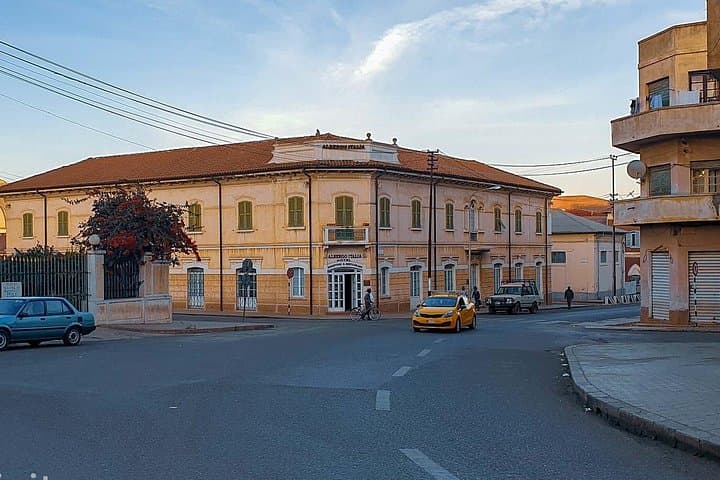


You step out of an air-conditioned minivan onto a wide avenue where sun-bleached façades catch the light and the city hums with the slow confidence of a place that rebuilt itself from conflict.
You step out of an air-conditioned minivan onto a wide avenue where sun-bleached façades catch the light and the city hums with the slow confidence of a place that rebuilt itself from conflict.
Asmara’s streets read like an architectural field guide: clean-lined Italian modernism, art deco apartment blocks, and functionalist cinemas sit side-by-side with bustling metal workshops and neighborhood coffee houses. The Tank Graveyard, a short drive from the center, confronts visitors with the tangible cost of Eritrea’s independence struggle; it is literal history in the open air, rusting and raw.
Geologically, Asmara perches on the Eritrean Highlands—red soil, volcanic ridges in the distance, and a climate that feels milder than the coastal lowlands. Culturally, the city is a blend of Italian-era infrastructure and local crafts: Medeber’s metalworkers upcycle scraps into tools and art, and Orthodox churches anchor community life with plain, monumental forms.
Practical guidance: bring comfortable walking shoes and a sun layer—many streets are exposed. The tour ranges from four to eight hours and commonly includes vehicle transfers between sites, bottled water, snacks, and short guided explanations at each stop. Photography is welcome but be respectful near religious sites and the Tank Graveyard; security or cultural norms may limit shooting.
Timing matters: mornings and late afternoons offer softer light and cooler air for walking; midday is best reserved for vehicle transfers or a long coffee stop. The experience is equal parts civic history, hands-on craft culture, and architectural study—ideal for travelers who want context with every corner they turn.