THE ADVENTURE COLLECTIVE® · Independent discovery and booking for outdoor travel

Escape Marrakech for a day and follow a road that climbs into the High Atlas to Lake Ouirgane and the Asni valley. Expect cedar-lined trails, village markets, and easy to moderate walking with striking foothill views.
Escape Marrakech for a day and follow a road that climbs into the High Atlas to Lake Ouirgane and the Asni valley. Expect cedar-lined trails, village markets, and easy to moderate walking with striking foothill views.
The road out of Marrakech slips from ochre medina walls into a ribbon of highway that climbs toward the High Atlas. Within an hour the city’s heat thins and cedar-dusted slopes begin to frame the valley — green fields, terraced plots, and the placid mirror of Lake Ouirgane. On arrival visitors step from the vehicle into a landscape shaped by seasonal irrigation, centuries of Amazigh (Berber) farming, and the slow weathering of volcanic and metamorphic rock that built these foothills.
Verified experiences and guided adventures in the surrounding area.
The road out of Marrakech slips from ochre medina walls into a ribbon of highway that climbs toward the High Atlas. Within an hour the city’s heat thins and cedar-dusted slopes begin to frame the valley — green fields, terraced plots, and the placid mirror of Lake Ouirgane. On arrival visitors step from the vehicle into a landscape shaped by seasonal irrigation, centuries of Amazigh (Berber) farming, and the slow weathering of volcanic and metamorphic rock that built these foothills.
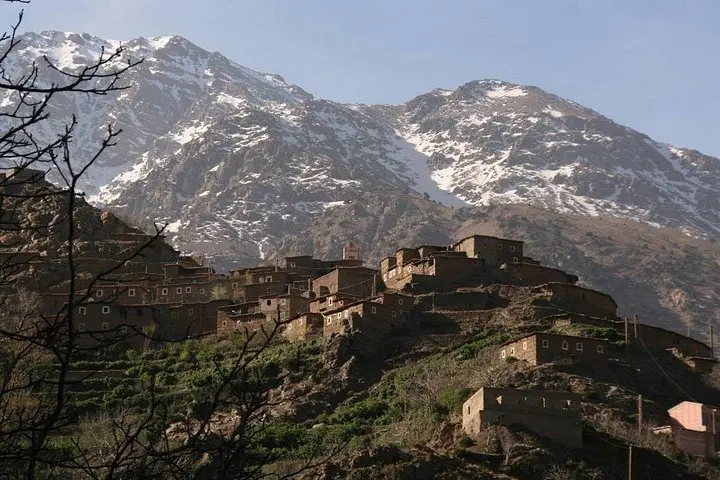
Asni and Ouirgane sit at roughly 1,100–1,400 m elevation where small rivers have carved shallow channels and created fertile valley bottoms. The area’s history is visible in stone houses, irrigation channels (seguias), and a weekend souk in Asni where local produce and woven goods change hands. Geologically, the valley is a transition from Marrakech’s red plains to the rugged granite rising toward Mount Toubkal; hikers will find a mix of packed dirt tracks, rocky mule trails, and short steeper gullies.
A typical day trip mixes short guided walks along the lake shore, visits to Berber villages, and optional tea stops with views. Expect easy to moderate walking, uneven terrain, and altitude that can make midday exertion feel harder than in the city. Practical notes: bring layered clothing for cool mornings, sturdy shoes for rocky paths, sun protection for exposed stretches, and cash for village purchases. Aim to travel earlier in spring or autumn to avoid summer heat; winter can bring crisp air and possible rain. This trip is a compact introduction to Atlas landscapes — accessible, cultural, and quietly powerful.
The drive typically takes about 60–90 minutes each way depending on traffic and route, covering roughly 50–80 km.
Short lakeside strolls and village visits are accessible to most ages, but steeper mule tracks may be tiring for young children and those with limited mobility.
Meals depend on the tour operator—many include a tea stop and optional lunch in a local restaurant, while others leave dining to participants; check the itinerary before booking.
Guides add cultural and safety context and help navigate village trails; for short lakeside walks a guide isn’t strictly necessary but is recommended to enrich the visit.
The road out of Marrakech slips from ochre medina walls into a ribbon of highway that climbs toward the High Atlas. Within an hour the city’s heat thins and cedar-dusted slopes begin to frame the valley — green fields, terraced plots, and the placid mirror of Lake Ouirgane. On arrival visitors step from the vehicle into a landscape shaped by seasonal irrigation, centuries of Amazigh (Berber) farming, and the slow weathering of volcanic and metamorphic rock that built these foothills.
The road out of Marrakech slips from ochre medina walls into a ribbon of highway that climbs toward the High Atlas. Within an hour the city’s heat thins and cedar-dusted slopes begin to frame the valley — green fields, terraced plots, and the placid mirror of Lake Ouirgane. On arrival visitors step from the vehicle into a landscape shaped by seasonal irrigation, centuries of Amazigh (Berber) farming, and the slow weathering of volcanic and metamorphic rock that built these foothills.
Asni and Ouirgane sit at roughly 1,100–1,400 m elevation where small rivers have carved shallow channels and created fertile valley bottoms. The area’s history is visible in stone houses, irrigation channels (seguias), and a weekend souk in Asni where local produce and woven goods change hands. Geologically, the valley is a transition from Marrakech’s red plains to the rugged granite rising toward Mount Toubkal; hikers will find a mix of packed dirt tracks, rocky mule trails, and short steeper gullies.
A typical day trip mixes short guided walks along the lake shore, visits to Berber villages, and optional tea stops with views. Expect easy to moderate walking, uneven terrain, and altitude that can make midday exertion feel harder than in the city. Practical notes: bring layered clothing for cool mornings, sturdy shoes for rocky paths, sun protection for exposed stretches, and cash for village purchases. Aim to travel earlier in spring or autumn to avoid summer heat; winter can bring crisp air and possible rain. This trip is a compact introduction to Atlas landscapes — accessible, cultural, and quietly powerful.