THE ADVENTURE COLLECTIVE® · Independent discovery and booking for outdoor travel
Trace the path from Assin Manso’s Ancestral Slave River to the stone chambers of Cape Coast and Elmina Castles on a full-day history tour. Expect coastal markets, steep castle steps, and guided interpretation of one of West Africa’s most difficult histories.
Trace the path from Assin Manso’s Ancestral Slave River to the stone chambers of Cape Coast and Elmina Castles on a full-day history tour. Expect coastal markets, steep castle steps, and guided interpretation of one of West Africa’s most difficult histories.
Dawn on Ghana’s central coast arrives humid and bright; the Atlantic throws light across black rock as a bus eases away from Accra toward the old forts. By midmorning the group steps onto the scorched earth of Assin Manso, where the Ancestral Slave River still moves as if urging memory forward. Visitors follow a path once used for final baths, then continue to Cape Coast and Elmina — two castles whose stone holds the weight of centuries.
Verified experiences and guided adventures in the surrounding area.
Operated by Best of Africa Travels Ltd · Cape Coast, Central Region
Dawn on Ghana’s central coast arrives humid and bright; the Atlantic throws light across black rock as a bus eases away from Accra toward the old forts. By midmorning the group steps onto the scorched earth of Assin Manso, where the Ancestral Slave River still moves as if urging memory forward. Visitors follow a path once used for final baths, then continue to Cape Coast and Elmina — two castles whose stone holds the weight of centuries.
These sites—Elmina, founded by the Portuguese in 1482, and Cape Coast, later expanded under British control—are anchors in West Africa’s colonial and slave-trade history. The geology is coastal sandstone and laterite; tides and wind shaped the shoreline fishing communities you pass, and market culture remains central to daily life. Guides often point out reburial sites and plaques commemorating diasporas returned from the Americas and the Caribbean.
Practical guidance sits beneath that history: expect a long day (10–16 hours) with several sets of uneven stairs, humid heat, and crowded museum rooms. Wear sturdy shoes for cobbled courtyards and shell-beach paths, bring sun protection and a refillable bottle (bottled water is typically provided), and budget time to absorb exhibits rather than rush. Photography is usually permitted outside and in many galleries but may be restricted in sensitive areas—follow guide instructions.
Plan for conversation with local fishers at Elmina’s market, and allow quieter moments at Assin Manso’s riverbank to reflect. This is less a sightseeing circuit than a concentrated history lesson—physical, human, and necessary.
The tour runs about 10–16 hours and typically includes guided visits to Assin Manso, Cape Coast Castle and Elmina Castle, lunch, bottled water and transportation; check your voucher for exact inclusions.
Admissions to the main castles are commonly included on organized history tours, but verify on confirmation—some special exhibitions may require separate fees.
Yes, but the day is long and involves many stairs and uneven surfaces; plan rest breaks and consider mobility limitations before booking.
Photography rules vary by site and room—exterior and public areas are generally fine, but obey signage and your guide in sensitive interior spaces.
Best of Africa Travels Ltd operates guided outdoor trips and adventures with an emphasis on safety, stewardship, and memorable experiences.

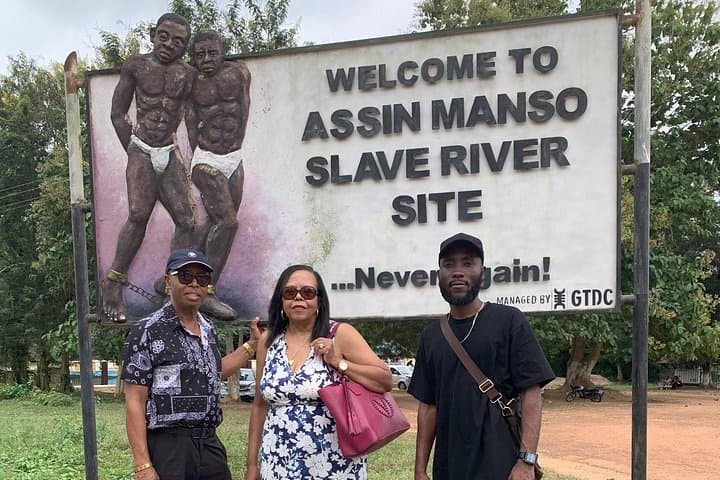

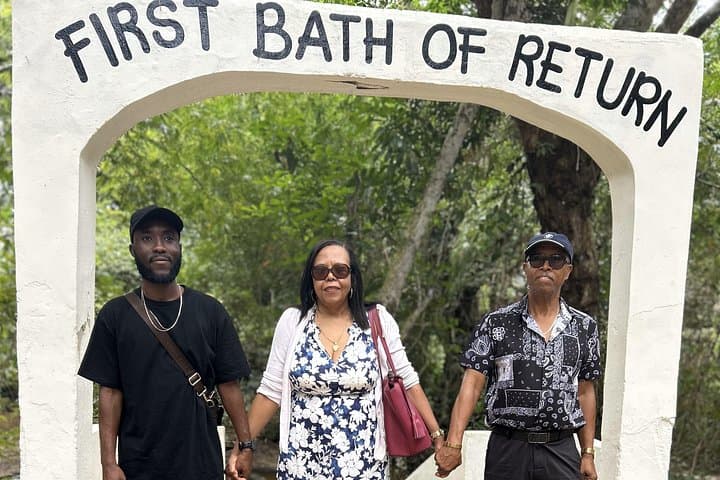
Dawn on Ghana’s central coast arrives humid and bright; the Atlantic throws light across black rock as a bus eases away from Accra toward the old forts. By midmorning the group steps onto the scorched earth of Assin Manso, where the Ancestral Slave River still moves as if urging memory forward. Visitors follow a path once used for final baths, then continue to Cape Coast and Elmina — two castles whose stone holds the weight of centuries.
Dawn on Ghana’s central coast arrives humid and bright; the Atlantic throws light across black rock as a bus eases away from Accra toward the old forts. By midmorning the group steps onto the scorched earth of Assin Manso, where the Ancestral Slave River still moves as if urging memory forward. Visitors follow a path once used for final baths, then continue to Cape Coast and Elmina — two castles whose stone holds the weight of centuries.
These sites—Elmina, founded by the Portuguese in 1482, and Cape Coast, later expanded under British control—are anchors in West Africa’s colonial and slave-trade history. The geology is coastal sandstone and laterite; tides and wind shaped the shoreline fishing communities you pass, and market culture remains central to daily life. Guides often point out reburial sites and plaques commemorating diasporas returned from the Americas and the Caribbean.
Practical guidance sits beneath that history: expect a long day (10–16 hours) with several sets of uneven stairs, humid heat, and crowded museum rooms. Wear sturdy shoes for cobbled courtyards and shell-beach paths, bring sun protection and a refillable bottle (bottled water is typically provided), and budget time to absorb exhibits rather than rush. Photography is usually permitted outside and in many galleries but may be restricted in sensitive areas—follow guide instructions.
Plan for conversation with local fishers at Elmina’s market, and allow quieter moments at Assin Manso’s riverbank to reflect. This is less a sightseeing circuit than a concentrated history lesson—physical, human, and necessary.
