THE ADVENTURE COLLECTIVE® · Independent discovery and booking for outdoor travel

Short domestic flights and private transfers deliver you to Aswan’s Nilefront, where Philae’s island temples, the Aswan High Dam and a felucca sail set the pace. On day two, Abu Simbel’s relocated colossi reward the early start.
Short domestic flights and private transfers deliver you to Aswan’s Nilefront, where Philae’s island temples, the Aswan High Dam and a felucca sail set the pace. On day two, Abu Simbel’s relocated colossi reward the early start.
You step off a short domestic flight into the dry blue of Upper Egypt and a wind that carries river salt and sun-warmed stone. Aswan’s palm-lined quays and the slow pulse of the Nile frame the first day: a private Egyptology guide leads you across Philae Island’s columns, where the goddess Isis once drew crowds, then onward to the concrete bulk of the Aswan High Dam—111 meters of modern engineering holding back Lake Nasser.
Verified experiences and guided adventures in the surrounding area.
Operated by Best Of Egypt Tours · Aswan, Aswan
You step off a short domestic flight into the dry blue of Upper Egypt and a wind that carries river salt and sun-warmed stone. Aswan’s palm-lined quays and the slow pulse of the Nile frame the first day: a private Egyptology guide leads you across Philae Island’s columns, where the goddess Isis once drew crowds, then onward to the concrete bulk of the Aswan High Dam—111 meters of modern engineering holding back Lake Nasser.
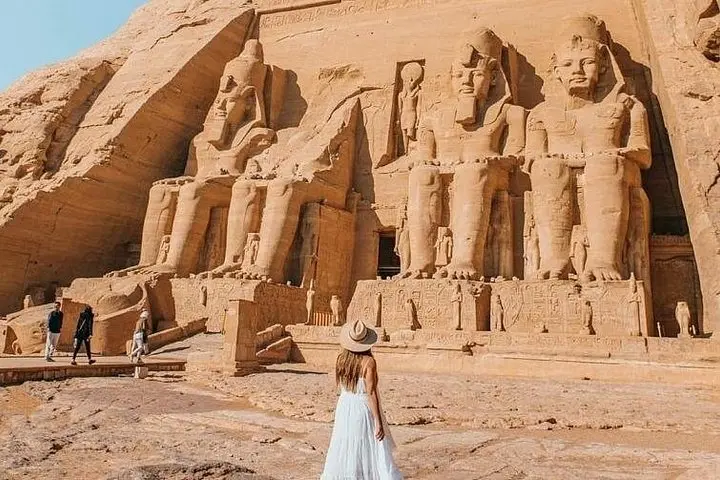
The next day takes you farther south: Abu Simbel sits roughly 290 km from Aswan at the edge of Lake Nasser, the twin temples carved by Ramses II and moved stone‑by‑stone in the 1960s to escape inundation. Geology here is simple and stark—ancient sandstone cliffs, alluvial Nile terraces and the human-made horizon of the dam. Culture is immediate: Nubian villages, felucca sailors with practiced hands, and camels that know the rhythm of shorelines.
Practical guidance: visits are long but low-impact—expect several short walks over uneven stone and dusty paths, plus a felucca sail and a gentle camel ride. Carry layered sun protection, a refillable water bottle, and photocopies of travel documents for domestic flights. Aim for early morning or late afternoon access to temples to avoid peak sun and to catch softer light on the colossal sculptures.
This private overnight format delivers comfort—airport transfers, a four‑star hotel, and curated local meals—while keeping the focus on ancient history and the living Nile.
Yes—round-trip domestic flights Cairo–Aswan–Cairo are included in this private tour.
Ticket policy varies—confirm at booking; many packages include guiding and transfers but not official site entrance fees, so bring local currency or card.
Several components list wheelchair accessibility and accessible transport, but some temple approaches have steps or uneven surfaces—contact the operator in advance to confirm accommodations.
Domestic flights have standard carry and checked luggage limits; pack a small overnight bag for convenience and verify weight limits with the operator or airline before travel.
Best Of Egypt Tours operates guided outdoor trips and adventures with an emphasis on safety, stewardship, and memorable experiences.
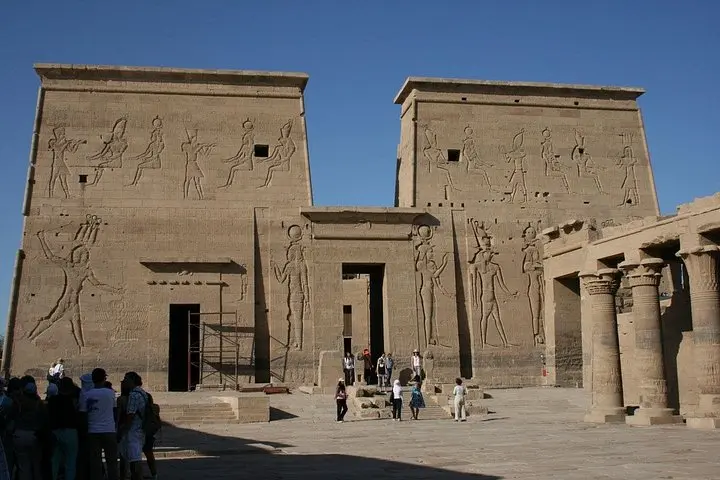
You step off a short domestic flight into the dry blue of Upper Egypt and a wind that carries river salt and sun-warmed stone. Aswan’s palm-lined quays and the slow pulse of the Nile frame the first day: a private Egyptology guide leads you across Philae Island’s columns, where the goddess Isis once drew crowds, then onward to the concrete bulk of the Aswan High Dam—111 meters of modern engineering holding back Lake Nasser.
You step off a short domestic flight into the dry blue of Upper Egypt and a wind that carries river salt and sun-warmed stone. Aswan’s palm-lined quays and the slow pulse of the Nile frame the first day: a private Egyptology guide leads you across Philae Island’s columns, where the goddess Isis once drew crowds, then onward to the concrete bulk of the Aswan High Dam—111 meters of modern engineering holding back Lake Nasser.
The next day takes you farther south: Abu Simbel sits roughly 290 km from Aswan at the edge of Lake Nasser, the twin temples carved by Ramses II and moved stone‑by‑stone in the 1960s to escape inundation. Geology here is simple and stark—ancient sandstone cliffs, alluvial Nile terraces and the human-made horizon of the dam. Culture is immediate: Nubian villages, felucca sailors with practiced hands, and camels that know the rhythm of shorelines.
Practical guidance: visits are long but low-impact—expect several short walks over uneven stone and dusty paths, plus a felucca sail and a gentle camel ride. Carry layered sun protection, a refillable water bottle, and photocopies of travel documents for domestic flights. Aim for early morning or late afternoon access to temples to avoid peak sun and to catch softer light on the colossal sculptures.
This private overnight format delivers comfort—airport transfers, a four‑star hotel, and curated local meals—while keeping the focus on ancient history and the living Nile.