THE ADVENTURE COLLECTIVE® · Independent discovery and booking for outdoor travel

Spend a day on the Nile’s southern edge visiting Philae’s rescued temples, the massive Unfinished Obelisk exposed in the granite quarries, and the sweeping Aswan High Dam. This guided tour blends archaeology, geology and modern history into a single, easily paced excursion.
Spend a day on the Nile’s southern edge visiting Philae’s rescued temples, the massive Unfinished Obelisk exposed in the granite quarries, and the sweeping Aswan High Dam. This guided tour blends archaeology, geology and modern history into a single, easily paced excursion.
A hot Nile breeze lifts dust from the quay as you meet the guide at 9:00 a.m.; feluccas and motorboats cut low wakes across the river while the city shifts into motion. Crossing to Philae’s Agilkia Island, granite columns and painted reliefs catch light like pages in an open book — the river dare you to stay indifferent.
Verified experiences and guided adventures in the surrounding area.
Operated by ToBadaa · Aswan, Aswan Governorate
A hot Nile breeze lifts dust from the quay as you meet the guide at 9:00 a.m.; feluccas and motorboats cut low wakes across the river while the city shifts into motion. Crossing to Philae’s Agilkia Island, granite columns and painted reliefs catch light like pages in an open book — the river dare you to stay indifferent.
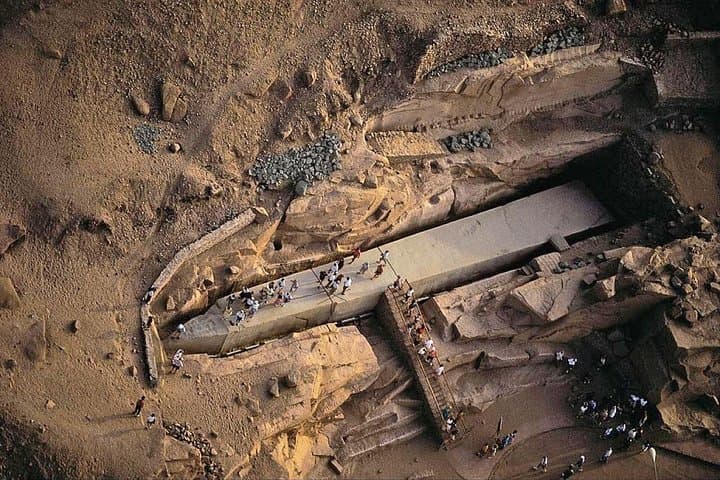
This full-day loop stitches together three eras: Philae’s Ptolemaic and Roman layers saved from submersion by a 1960s UNESCO relocation; the northern quarries where the Unfinished Obelisk lies cleaved from bedrock, an instructive ruin that reveals ancient stone-working methods; and the modern bulk of the Aswan High Dam, a mid-20th century engineering project that remade the Nile and created Lake Nasser. Geology is central here — hard pink granite underfoot at the quarries, smooth basalt at the dam, and the Nile’s alluvial plain beyond.
Expect a mix of easy paved walks and uneven quarry rock underfoot, with short climbs and steps at temple sites. Cultural notes: local Nubian communities remain an active presence in the city and markets; guides will often share both archaeological and living-history perspectives.
Practical guidance: start early to avoid the midday heat, carry 1–2 liters of water, wear sturdy shoes for quarry surfaces, and bring sun protection and some local cash for entry souvenirs and tips. The tour runs about seven hours with boat transfers; comfortable pacing makes this an accessible but content-rich day for most visitors.
Philae and the transportation options offer accessibility features; however, quarry surfaces at the Unfinished Obelisk are uneven—check with the operator about specific mobility needs.
Confirm with the booking provider; the itinerary notes water and transport are included but verify whether museum or site entry fees are covered.
Expect 2–3 kilometers total on foot across different surfaces, with short stair sections at temple complexes and minimal elevation gain.
Photography is generally allowed at outdoor temple sites; some indoor areas may restrict flash or tripods—respect signage and guide instructions.
ToBadaa operates guided outdoor trips and adventures with an emphasis on safety, stewardship, and memorable experiences.


A hot Nile breeze lifts dust from the quay as you meet the guide at 9:00 a.m.; feluccas and motorboats cut low wakes across the river while the city shifts into motion. Crossing to Philae’s Agilkia Island, granite columns and painted reliefs catch light like pages in an open book — the river dare you to stay indifferent.
A hot Nile breeze lifts dust from the quay as you meet the guide at 9:00 a.m.; feluccas and motorboats cut low wakes across the river while the city shifts into motion. Crossing to Philae’s Agilkia Island, granite columns and painted reliefs catch light like pages in an open book — the river dare you to stay indifferent.
This full-day loop stitches together three eras: Philae’s Ptolemaic and Roman layers saved from submersion by a 1960s UNESCO relocation; the northern quarries where the Unfinished Obelisk lies cleaved from bedrock, an instructive ruin that reveals ancient stone-working methods; and the modern bulk of the Aswan High Dam, a mid-20th century engineering project that remade the Nile and created Lake Nasser. Geology is central here — hard pink granite underfoot at the quarries, smooth basalt at the dam, and the Nile’s alluvial plain beyond.
Expect a mix of easy paved walks and uneven quarry rock underfoot, with short climbs and steps at temple sites. Cultural notes: local Nubian communities remain an active presence in the city and markets; guides will often share both archaeological and living-history perspectives.
Practical guidance: start early to avoid the midday heat, carry 1–2 liters of water, wear sturdy shoes for quarry surfaces, and bring sun protection and some local cash for entry souvenirs and tips. The tour runs about seven hours with boat transfers; comfortable pacing makes this an accessible but content-rich day for most visitors.