THE ADVENTURE COLLECTIVE® · Independent discovery and booking for outdoor travel

A private late-afternoon transfer from Aswan to Kom Ombo reveals a rare twin-temple—dedicated to Sobek and Horus—bathed in golden light. This concise half-day tour blends river scenery, detailed reliefs and the small crocodile museum for a focused look at Ptolemaic Egypt.
A private late-afternoon transfer from Aswan to Kom Ombo reveals a rare twin-temple—dedicated to Sobek and Horus—bathed in golden light. This concise half-day tour blends river scenery, detailed reliefs and the small crocodile museum for a focused look at Ptolemaic Egypt.
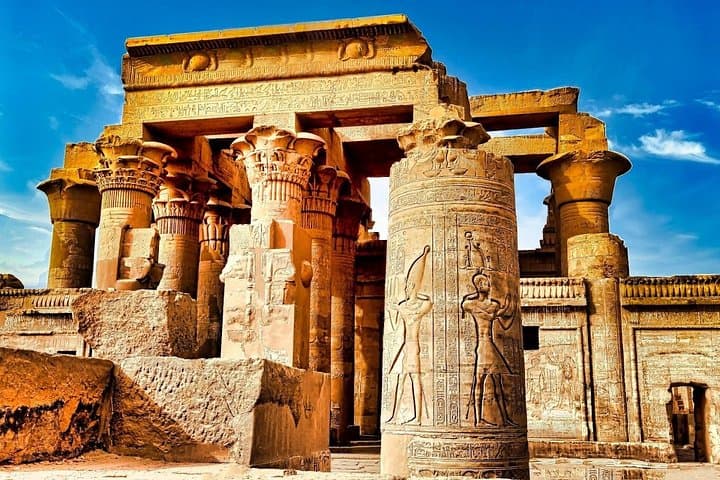
You arrive in late afternoon light, the road from Aswan sliding along the Nile with a shifting palette of reeds, mud flats and small feluccas. The private vehicle drops you at Kom Ombo as the sun leans west; the sandstone façade of the twin temple reads like a split story—two sanctuaries sharing one entrance, two gods sharing one roof.
Verified experiences and guided adventures in the surrounding area.
Operated by Eyes of Egypt · Kom Ombo, Aswan Governorate
You arrive in late afternoon light, the road from Aswan sliding along the Nile with a shifting palette of reeds, mud flats and small feluccas. The private vehicle drops you at Kom Ombo as the sun leans west; the sandstone façade of the twin temple reads like a split story—two sanctuaries sharing one entrance, two gods sharing one roof.
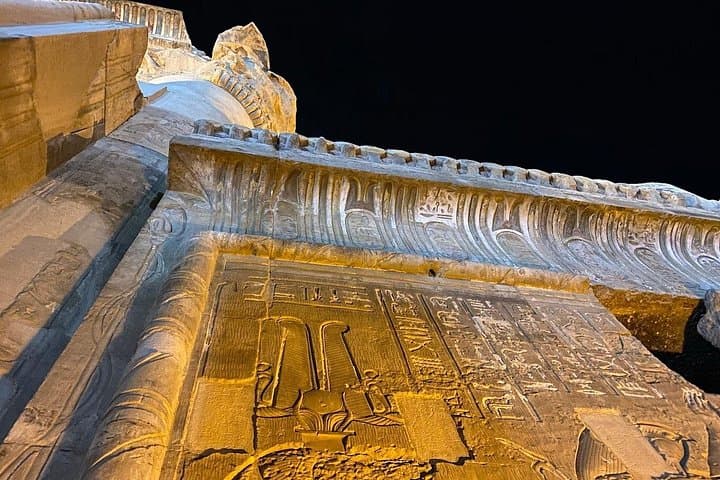
Built mostly during the Ptolemaic period over earlier foundations, Kom Ombo sits on a bend of the Nile where fertility met fear—Sobek the crocodile god for river power, Horus the falcon for celestial authority. The site’s reliefs and an on-site crocodile museum point to local cult practice and medical texts carved into stone. Geologically, the temple rests on Nile silt and sandstone formations that have weathered into crisp carved lines; erosion and past Nile floods shaped both approach and setting.
Culturally, Kom Ombo was a regional center for healing and animal cults; the reliefs are often practical—surgical tools, offerings, lists—less myth than municipal record.
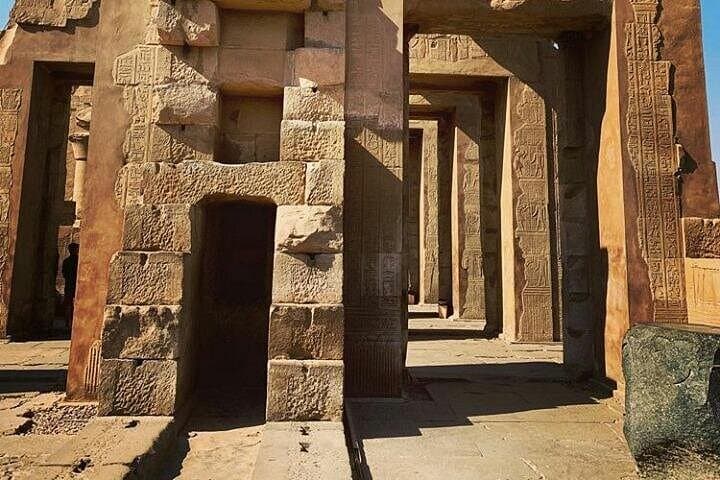
Practical guidance: tours typically last about four hours round-trip from Aswan, with 60–90 minutes at the temple. Best light is late afternoon; bring sun protection and water, and plan for flat but uneven stone surfaces and low doorways. Photography is excellent at sunset but watch shadows that hide details.
Expect a calm transfer with strong photo opportunities along the river. Respect the site: no climbing on reliefs, follow your guide’s route, and allow time to visit the small on-site crocodile museum for context.
The one-way drive is roughly 45–60 minutes depending on traffic and exact pickup point; the full private tour including temple time is typically 4–5 hours.
Yes—Diamond and Golden packages typically include all entrance tickets; check your chosen package details at booking.
The site has uneven surfaces and low steps; some access is possible but discuss wheelchair needs with the operator for vehicle and route accommodations.
Yes, photography is allowed for most areas; use care around other visitors and follow any onsite signage or guide instructions about restricted zones.
Eyes of Egypt operates guided outdoor trips and adventures with an emphasis on safety, stewardship, and memorable experiences.

You arrive in late afternoon light, the road from Aswan sliding along the Nile with a shifting palette of reeds, mud flats and small feluccas. The private vehicle drops you at Kom Ombo as the sun leans west; the sandstone façade of the twin temple reads like a split story—two sanctuaries sharing one entrance, two gods sharing one roof.
You arrive in late afternoon light, the road from Aswan sliding along the Nile with a shifting palette of reeds, mud flats and small feluccas. The private vehicle drops you at Kom Ombo as the sun leans west; the sandstone façade of the twin temple reads like a split story—two sanctuaries sharing one entrance, two gods sharing one roof.
Built mostly during the Ptolemaic period over earlier foundations, Kom Ombo sits on a bend of the Nile where fertility met fear—Sobek the crocodile god for river power, Horus the falcon for celestial authority. The site’s reliefs and an on-site crocodile museum point to local cult practice and medical texts carved into stone. Geologically, the temple rests on Nile silt and sandstone formations that have weathered into crisp carved lines; erosion and past Nile floods shaped both approach and setting.
Culturally, Kom Ombo was a regional center for healing and animal cults; the reliefs are often practical—surgical tools, offerings, lists—less myth than municipal record.
Practical guidance: tours typically last about four hours round-trip from Aswan, with 60–90 minutes at the temple. Best light is late afternoon; bring sun protection and water, and plan for flat but uneven stone surfaces and low doorways. Photography is excellent at sunset but watch shadows that hide details.
Expect a calm transfer with strong photo opportunities along the river. Respect the site: no climbing on reliefs, follow your guide’s route, and allow time to visit the small on-site crocodile museum for context.