THE ADVENTURE COLLECTIVE® · Independent discovery and booking for outdoor travel

Sail from Aswan to Luxor over two nights aboard a full‑service Nile cruise, stopping at Kom Ombo and Edfu while watching island life unfold. Expect guided temple visits, three onboard meals, and sunrise views from the deck.
Sail from Aswan to Luxor over two nights aboard a full‑service Nile cruise, stopping at Kom Ombo and Edfu while watching island life unfold. Expect guided temple visits, three onboard meals, and sunrise views from the deck.
The river widens into a slow, glinting highway as the cruise slips away from Aswan—palm-fringed islands slide past like pages in a field journal and the captain in a traditional galabya steers with practiced calm. On this two-night voyage, the Nile does the talking: fishermen nudge reed boats into shaded inlets, children wave on mud-brick banks, and dawn paints temple columns gold.
Verified experiences and guided adventures in the surrounding area.
Operated by Nile Prince Travel · Aswan, Aswan Governorate
The river widens into a slow, glinting highway as the cruise slips away from Aswan—palm-fringed islands slide past like pages in a field journal and the captain in a traditional galabya steers with practiced calm. On this two-night voyage, the Nile does the talking: fishermen nudge reed boats into shaded inlets, children wave on mud-brick banks, and dawn paints temple columns gold.
This corridor between Aswan and Luxor carries millennia of history. Granite quarries and pharaonic temples mark an ancient artery of grain, trade, and ritual; Kom Ombo’s twin sanctuaries and Edfu’s towering pylon are practical reminders of a civilization that organized around the river’s pulse. Geologically the river has carved a narrow valley through Nubian sandstone and older gneiss, creating habitable strips of alluvial soil where villages cling.
Culturally, Upper Egypt retains visible continuity: Nubian settlements, simple felucca skiffs, and traditional dress punctuate the voyage. Travelers will glimpse local agriculture—green fields irrigated from the Nile—and can visit Kom Ombo and Edfu with short onshore excursions.
Practically, expect comfortable overnight cabins, three meals a day onboard, Wi‑Fi allowances, and guided Egyptology commentary. Mornings are best for shore visits when heat is low; afternoons make for photography from the sun deck. Carry sun protection, lightweight layers for cool mornings, and motion‑sickness remedies if sensitive to gentle pitching. The cruise pace is unhurried—time to read, photograph, and let the river push your itinerary forward.
The itinerary begins in Aswan and disembarks in Luxor, with scheduled stops at Kom Ombo and Edfu for guided visits.
Yes—this two‑night cruise includes onboard accommodation and full board (lunch, dinner, breakfast) as described in the itinerary.
The provider lists wheelchair accessibility for transfers and many surfaces, but some temple sites have steps and uneven terrain—verify specific needs in advance.
Travelers to Egypt require a valid passport and, for many nationalities, a visa—check current entry requirements and ensure passport validity meets airline and local rules.
Nile Prince Travel operates guided outdoor trips and adventures with an emphasis on safety, stewardship, and memorable experiences.

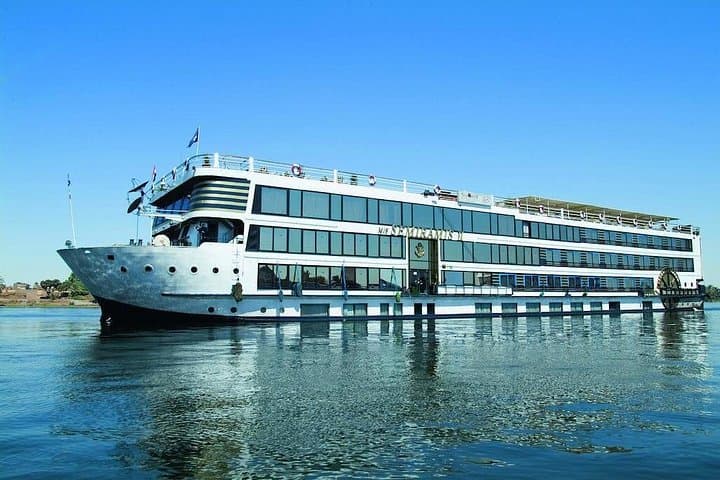


The river widens into a slow, glinting highway as the cruise slips away from Aswan—palm-fringed islands slide past like pages in a field journal and the captain in a traditional galabya steers with practiced calm. On this two-night voyage, the Nile does the talking: fishermen nudge reed boats into shaded inlets, children wave on mud-brick banks, and dawn paints temple columns gold.
The river widens into a slow, glinting highway as the cruise slips away from Aswan—palm-fringed islands slide past like pages in a field journal and the captain in a traditional galabya steers with practiced calm. On this two-night voyage, the Nile does the talking: fishermen nudge reed boats into shaded inlets, children wave on mud-brick banks, and dawn paints temple columns gold.
This corridor between Aswan and Luxor carries millennia of history. Granite quarries and pharaonic temples mark an ancient artery of grain, trade, and ritual; Kom Ombo’s twin sanctuaries and Edfu’s towering pylon are practical reminders of a civilization that organized around the river’s pulse. Geologically the river has carved a narrow valley through Nubian sandstone and older gneiss, creating habitable strips of alluvial soil where villages cling.
Culturally, Upper Egypt retains visible continuity: Nubian settlements, simple felucca skiffs, and traditional dress punctuate the voyage. Travelers will glimpse local agriculture—green fields irrigated from the Nile—and can visit Kom Ombo and Edfu with short onshore excursions.
Practically, expect comfortable overnight cabins, three meals a day onboard, Wi‑Fi allowances, and guided Egyptology commentary. Mornings are best for shore visits when heat is low; afternoons make for photography from the sun deck. Carry sun protection, lightweight layers for cool mornings, and motion‑sickness remedies if sensitive to gentle pitching. The cruise pace is unhurried—time to read, photograph, and let the river push your itinerary forward.