THE ADVENTURE COLLECTIVE® · Independent discovery and booking for outdoor travel

Float between ancient temples on a six-night Nile cruise from Aswan to Luxor. Experience Pharaonic monuments, Nubian culture and quiet river time with daily guided land excursions.
Float between ancient temples on a six-night Nile cruise from Aswan to Luxor. Experience Pharaonic monuments, Nubian culture and quiet river time with daily guided land excursions.
You step onto the ship as the Nile yawns wide beneath a pale sunrise, feluccas gliding like slow punctuation along its banks. Date palms and low mudbrick villages pass in a steady ribbon while the boat hums forward — six nights of waking and sleeping to the river’s pace.
Verified experiences and guided adventures in the surrounding area.
Operated by Tips for traveler · Aswan, Aswan Governorate
You step onto the ship as the Nile yawns wide beneath a pale sunrise, feluccas gliding like slow punctuation along its banks. Date palms and low mudbrick villages pass in a steady ribbon while the boat hums forward — six nights of waking and sleeping to the river’s pace.
This route threads Egypt’s core: Philae’s island temple, the unfinished granite obelisk at Aswan’s quarries, the colossal rock-cut faces of Abu Simbel, Edfu’s intact Ptolemaic halls, Kom Ombo’s twin shrines and Luxor’s twin banks of tombs and temples. Geologically the river cuts a narrow, fertile corridor through arid sandstone and granite; culturally it has carried trade, faith and seasonal life for millennia. The Aswan High Dam (1960–70) reshaped the Nile here — controlling floods but altering sediment and local ecology.
On board, expect full-board meals, daily guided excursions, and short coach transfers to sites; many visits require walking on uneven stone, steps and sand. Practical notes: travel in cooler hours for outdoor sites, carry cash for small purchases and tips, and choose modest clothing that shades and breathes. Hydration is essential in daytime heat, and early-morning balloon flights above Luxor provide a quiet, panoramic counterpoint to stone monuments.
This cruise blends leisurely river time with concentrated cultural outings. It’s ideal for travelers who prefer low-impact travel rhythms, guided context at key ruins, and the rare experience of watching Egyptian history unfold from a deck chair as the Nile pushes you downstream.
Yes — the itinerary includes full-board accommodation with breakfasts, lunches and dinners as listed; drinks are typically extra.
Many nationalities require a visa; check Egypt’s entry rules before travel and arrange a visa or e-Visa if needed.
Abu Simbel is an early-morning excursion with a coach transfer and on-site time of around 2–3 hours; expect a full morning away from the boat.
Itineraries are usually planned as round-trip packages; discuss drop-off options with the operator ahead of booking if you need flexible disembarkation.
Tips for traveler operates guided outdoor trips and adventures with an emphasis on safety, stewardship, and memorable experiences.

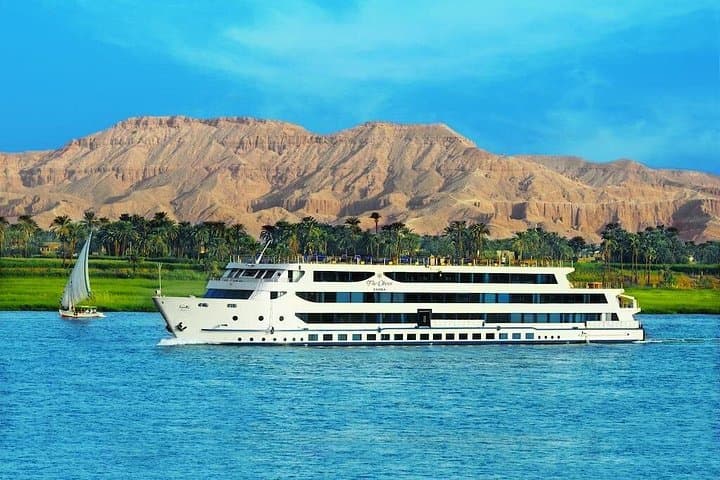
You step onto the ship as the Nile yawns wide beneath a pale sunrise, feluccas gliding like slow punctuation along its banks. Date palms and low mudbrick villages pass in a steady ribbon while the boat hums forward — six nights of waking and sleeping to the river’s pace.
You step onto the ship as the Nile yawns wide beneath a pale sunrise, feluccas gliding like slow punctuation along its banks. Date palms and low mudbrick villages pass in a steady ribbon while the boat hums forward — six nights of waking and sleeping to the river’s pace.
This route threads Egypt’s core: Philae’s island temple, the unfinished granite obelisk at Aswan’s quarries, the colossal rock-cut faces of Abu Simbel, Edfu’s intact Ptolemaic halls, Kom Ombo’s twin shrines and Luxor’s twin banks of tombs and temples. Geologically the river cuts a narrow, fertile corridor through arid sandstone and granite; culturally it has carried trade, faith and seasonal life for millennia. The Aswan High Dam (1960–70) reshaped the Nile here — controlling floods but altering sediment and local ecology.
On board, expect full-board meals, daily guided excursions, and short coach transfers to sites; many visits require walking on uneven stone, steps and sand. Practical notes: travel in cooler hours for outdoor sites, carry cash for small purchases and tips, and choose modest clothing that shades and breathes. Hydration is essential in daytime heat, and early-morning balloon flights above Luxor provide a quiet, panoramic counterpoint to stone monuments.
This cruise blends leisurely river time with concentrated cultural outings. It’s ideal for travelers who prefer low-impact travel rhythms, guided context at key ruins, and the rare experience of watching Egyptian history unfold from a deck chair as the Nile pushes you downstream.