THE ADVENTURE COLLECTIVE® · Independent discovery and booking for outdoor travel

Tour Aswan’s defining contrasts in one private experience: the modern scale of the High Dam and the ancient stone of Philae Temple, relocated and restored. This tailor‑made tour pairs engineering history with island temple views and short motorboat crossings.
Tour Aswan’s defining contrasts in one private experience: the modern scale of the High Dam and the ancient stone of Philae Temple, relocated and restored. This tailor‑made tour pairs engineering history with island temple views and short motorboat crossings.
You step out of your air‑conditioned car onto a broad concrete rim that faces the Nile’s placid spread, the High Dam rising like deliberate modern rock against the sky. Wind from Lake Nasser pushes across the plaza and the guide’s voice folds into the click of cameras and distant motorboats that will take you to Philae Island.
Verified experiences and guided adventures in the surrounding area.
Operated by Eyes of Egypt · Aswan, Aswan Governorate
You step out of your air‑conditioned car onto a broad concrete rim that faces the Nile’s placid spread, the High Dam rising like deliberate modern rock against the sky. Wind from Lake Nasser pushes across the plaza and the guide’s voice folds into the click of cameras and distant motorboats that will take you to Philae Island.
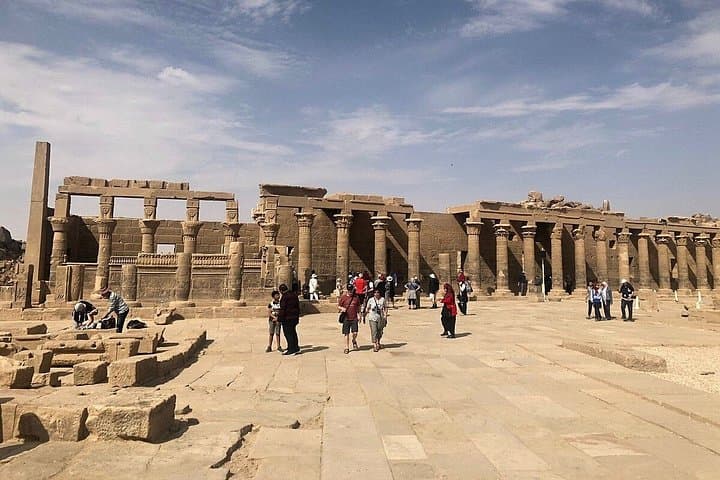
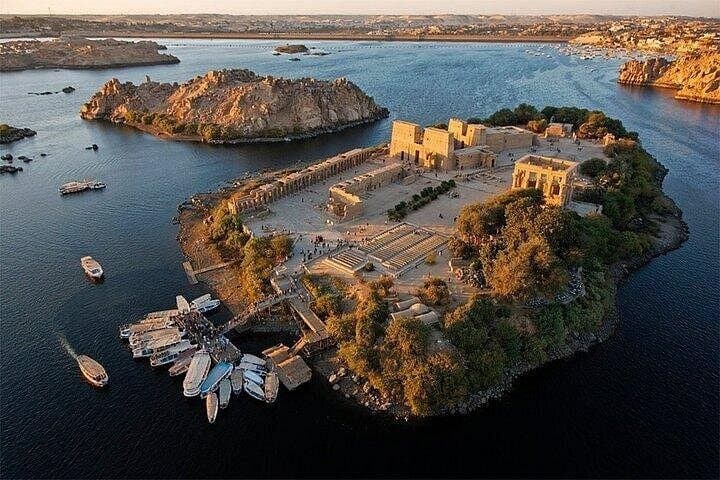
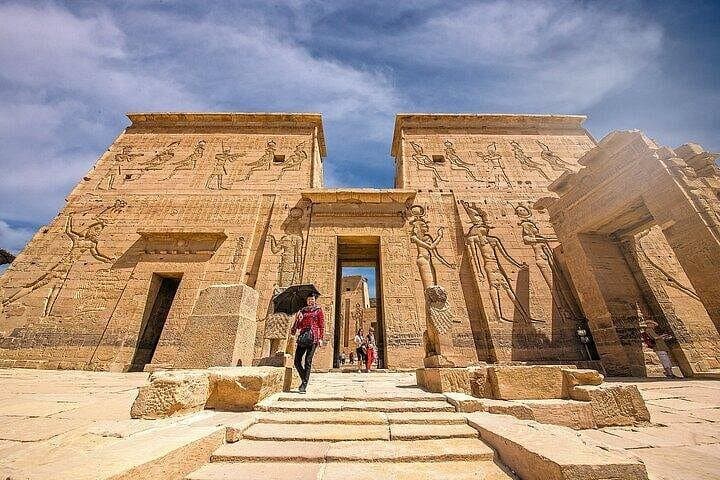
The Aswan High Dam (about 3,830 m long and 111 m high) transformed Egypt’s relationship with the Nile—stabilizing floods, powering hydroelectric grids and creating Lake Nasser. A short drive and a 10–15 minute motorboat ride brings you to Philae, a UNESCO‑rescued temple complex that was dismantled and reconstructed on Agilkia Island after the original site was flooded during the dam’s creation. The carved reliefs, Roman kiosks and later Coptic inscriptions trace centuries of religious change: Isis’s ceremonies, Roman patronage and early Christian reuse.
Geology here is simple but dramatic: granite outcrops and the slow broadening of the Nile create calm reservoir waters that reflect temple colonnades, while desert bluffs hold up the skyline. Local life centers on the river—boatmen, temple conservators and market stalls selling papyrus and spices.
Practically, expect light walking on uneven stone, short boat transfers, and sun that can intensify quickly. Carry water, sun protection and a camera with a fast shutter for temple details. Wheelchair access exists at key points but check boat boarding assistance in advance. This private tour’s pace lets you linger at carved panels or step back for wide photographic frames—plan your time around mid‑day heat and the angle of light for the best pictures.
Admission is typically not included by default—confirm with your booking; tickets can be purchased at the marina or arranged by your guide.
Yes; photography for personal use is generally allowed but tripods and professional video may require prior permission.
Key areas and vehicles are wheelchair accessible, but boarding the boat can be challenging—request assistance when you book so operators can prepare.
Boat transfers take roughly 10–15 minutes each way across the reservoir, offering clear views of the temple façades from the water.
Eyes of Egypt operates guided outdoor trips and adventures with an emphasis on safety, stewardship, and memorable experiences.

You step out of your air‑conditioned car onto a broad concrete rim that faces the Nile’s placid spread, the High Dam rising like deliberate modern rock against the sky. Wind from Lake Nasser pushes across the plaza and the guide’s voice folds into the click of cameras and distant motorboats that will take you to Philae Island.
You step out of your air‑conditioned car onto a broad concrete rim that faces the Nile’s placid spread, the High Dam rising like deliberate modern rock against the sky. Wind from Lake Nasser pushes across the plaza and the guide’s voice folds into the click of cameras and distant motorboats that will take you to Philae Island.
The Aswan High Dam (about 3,830 m long and 111 m high) transformed Egypt’s relationship with the Nile—stabilizing floods, powering hydroelectric grids and creating Lake Nasser. A short drive and a 10–15 minute motorboat ride brings you to Philae, a UNESCO‑rescued temple complex that was dismantled and reconstructed on Agilkia Island after the original site was flooded during the dam’s creation. The carved reliefs, Roman kiosks and later Coptic inscriptions trace centuries of religious change: Isis’s ceremonies, Roman patronage and early Christian reuse.
Geology here is simple but dramatic: granite outcrops and the slow broadening of the Nile create calm reservoir waters that reflect temple colonnades, while desert bluffs hold up the skyline. Local life centers on the river—boatmen, temple conservators and market stalls selling papyrus and spices.
Practically, expect light walking on uneven stone, short boat transfers, and sun that can intensify quickly. Carry water, sun protection and a camera with a fast shutter for temple details. Wheelchair access exists at key points but check boat boarding assistance in advance. This private tour’s pace lets you linger at carved panels or step back for wide photographic frames—plan your time around mid‑day heat and the angle of light for the best pictures.