THE ADVENTURE COLLECTIVE® · Independent discovery and booking for outdoor travel

Climb out of Cairns for a ten‑hour loop across the Atherton Tablelands: rainforest platforms, crater lakes, wallaby encounters and farm tastings that map geology and culture into a single, well-paced day. Practical stops and local storytelling make this a smart introduction to Far North Queensland.
Climb out of Cairns for a ten‑hour loop across the Atherton Tablelands: rainforest platforms, crater lakes, wallaby encounters and farm tastings that map geology and culture into a single, well-paced day. Practical stops and local storytelling make this a smart introduction to Far North Queensland.
The van eases out of Cairns and the air changes: humidity thins, the road climbs, and low rainforest gives way to open paddocks and volcanic plateaus. On a full-day tour of the Atherton Tablelands you feel the landscape shift under your wheels — mist clinging to gullies, cattle grazing on rich volcanic soils, and a rainforest canopy that still holds last night’s rain. Over the next ten hours a personable local guide stitches together geology, culture and taste, stopping at waterfalls, crater lakes, wildlife pockets and small producers for tastings that make the region legible.
Verified experiences and guided adventures in the surrounding area.
Operated by Tropic Tours · Atherton, Queensland
The van eases out of Cairns and the air changes: humidity thins, the road climbs, and low rainforest gives way to open paddocks and volcanic plateaus. On a full-day tour of the Atherton Tablelands you feel the landscape shift under your wheels — mist clinging to gullies, cattle grazing on rich volcanic soils, and a rainforest canopy that still holds last night’s rain. Over the next ten hours a personable local guide stitches together geology, culture and taste, stopping at waterfalls, crater lakes, wildlife pockets and small producers for tastings that make the region legible.
Geology here is obvious and ancient. The Tablelands rise on the western escarpment of the Great Dividing Range, a quilt of extinct volcanoes whose craters now hold Lake Eacham and Lake Barrine. You’ll learn how lava flows and eruptions sculpted the shallow basins that hold clear, cold water, and how erosion fed the fertile soils that support coffee, papaya and dairy farms. Cultural history is threaded through the day: the lands are traditional country of regional Aboriginal groups, including Yidinji and Ngadjon-jii peoples, and your guide will point out sites of historical use and WWII landmarks like Bromfield Swamp.
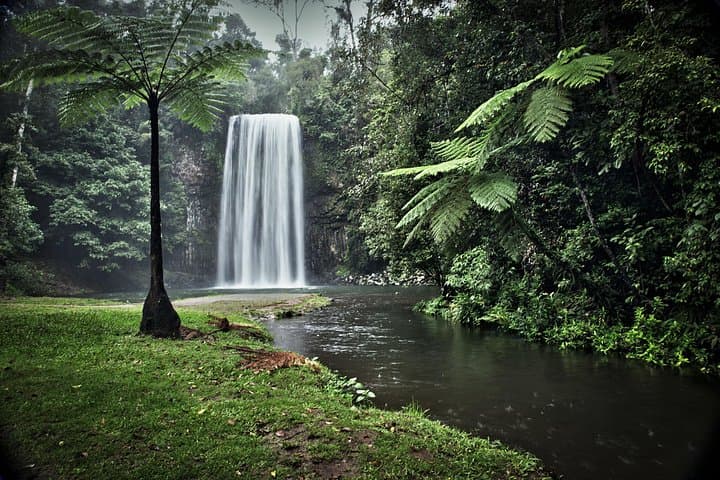
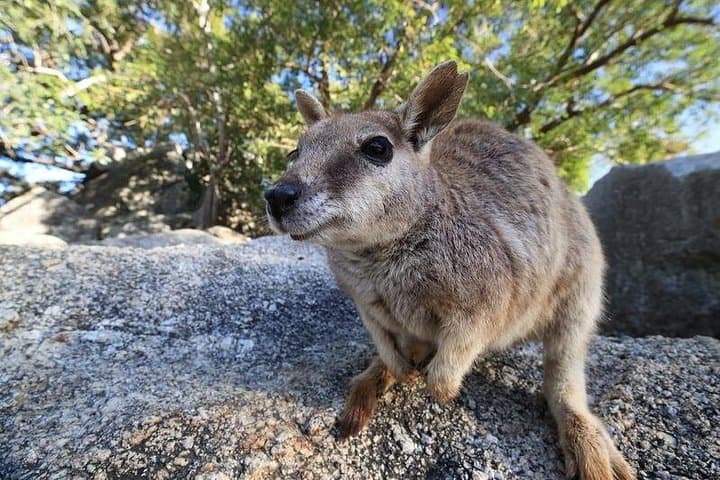
Highlights are kinetic. A short rainforest walk at Barron Gorge opens to a platform view of Barron Falls, where the river slashes through basalt rock and the spray dares you to edge closer for a photograph. Granite Gorge introduces you to the endemic wallabies — curious, small and habituated enough to allow a gentle encounter. At Millaa Millaa, one of Australia’s most photographed cascades, the water invites a cool plunge; Lake Barrine’s boardwalk offers calmer hymnody — birds calling, water lapping, afternoon sun soft on the crater rim.
Practical edge: the itinerary covers ten stops in a modern Toyota Hiace and includes morning and afternoon teas, a farm lunch and several tastings (coffee, papaya, cheeses, chocolate and distilled spirits at Mt Uncle). Walks are short and mostly on boardwalks or well-graded paths, but expect repeated in-and-out of the van and some uneven surfaces. Bring a refillable water bottle, sun protection and insect repellent; pack a swimsuit for Millaa Millaa and a light rain shell — showers are common even on fine days. If you travel between June and September mornings can be cool at 700–1,000 m elevation; summer brings heat and the possibility of heavy tropical downpours.
For travelers who want to compress a week of Far North Queensland into a single, well-curated day, this tour delivers context as well as flavors — a compact crash course in the Tablelands’ geology, ecology and small‑scale agriculture, served up with local pride and readable storytelling.
The tour is approximately 10 hours (600 minutes) and includes hotel pickup, morning and afternoon teas, lunch, tastings at several producers, entry to listed attractions and a guided commentary.
Yes — pickup is provided directly from most Cairns hotels; specify your hotel when booking and be in the lobby 10 minutes before pickup.
Yes, swimming is permitted and many guests choose to take a dip; bring a towel and be cautious on wet rocks.
Walks are short and mostly on boardwalks or well-graded paths, suitable for most fitness levels; inform the operator of mobility needs when booking for accommodations.
Tastings at Mt Uncle Distillery are included; Australian law requires tasters to be 18+, so carry ID if you intend to participate.
A compact binocular, camera with zoom, and patience — early morning and late afternoon stops increase chances of seeing wallabies and birds.
Tropic Tours operates guided outdoor trips and adventures with an emphasis on safety, stewardship, and memorable experiences.


The van eases out of Cairns and the air changes: humidity thins, the road climbs, and low rainforest gives way to open paddocks and volcanic plateaus. On a full-day tour of the Atherton Tablelands you feel the landscape shift under your wheels — mist clinging to gullies, cattle grazing on rich volcanic soils, and a rainforest canopy that still holds last night’s rain. Over the next ten hours a personable local guide stitches together geology, culture and taste, stopping at waterfalls, crater lakes, wildlife pockets and small producers for tastings that make the region legible.
The van eases out of Cairns and the air changes: humidity thins, the road climbs, and low rainforest gives way to open paddocks and volcanic plateaus. On a full-day tour of the Atherton Tablelands you feel the landscape shift under your wheels — mist clinging to gullies, cattle grazing on rich volcanic soils, and a rainforest canopy that still holds last night’s rain. Over the next ten hours a personable local guide stitches together geology, culture and taste, stopping at waterfalls, crater lakes, wildlife pockets and small producers for tastings that make the region legible.
Geology here is obvious and ancient. The Tablelands rise on the western escarpment of the Great Dividing Range, a quilt of extinct volcanoes whose craters now hold Lake Eacham and Lake Barrine. You’ll learn how lava flows and eruptions sculpted the shallow basins that hold clear, cold water, and how erosion fed the fertile soils that support coffee, papaya and dairy farms. Cultural history is threaded through the day: the lands are traditional country of regional Aboriginal groups, including Yidinji and Ngadjon-jii peoples, and your guide will point out sites of historical use and WWII landmarks like Bromfield Swamp.
Highlights are kinetic. A short rainforest walk at Barron Gorge opens to a platform view of Barron Falls, where the river slashes through basalt rock and the spray dares you to edge closer for a photograph. Granite Gorge introduces you to the endemic wallabies — curious, small and habituated enough to allow a gentle encounter. At Millaa Millaa, one of Australia’s most photographed cascades, the water invites a cool plunge; Lake Barrine’s boardwalk offers calmer hymnody — birds calling, water lapping, afternoon sun soft on the crater rim.
Practical edge: the itinerary covers ten stops in a modern Toyota Hiace and includes morning and afternoon teas, a farm lunch and several tastings (coffee, papaya, cheeses, chocolate and distilled spirits at Mt Uncle). Walks are short and mostly on boardwalks or well-graded paths, but expect repeated in-and-out of the van and some uneven surfaces. Bring a refillable water bottle, sun protection and insect repellent; pack a swimsuit for Millaa Millaa and a light rain shell — showers are common even on fine days. If you travel between June and September mornings can be cool at 700–1,000 m elevation; summer brings heat and the possibility of heavy tropical downpours.
For travelers who want to compress a week of Far North Queensland into a single, well-curated day, this tour delivers context as well as flavors — a compact crash course in the Tablelands’ geology, ecology and small‑scale agriculture, served up with local pride and readable storytelling.