THE ADVENTURE COLLECTIVE® · Independent discovery and booking for outdoor travel

Experience the lift of free-fall without an airplane at iFLY Atlanta. This practical guide explains what to expect from a two-flight indoor skydiving session, plus tips on gear, rules, and timing to make your first flight smooth.
Experience the lift of free-fall without an airplane at iFLY Atlanta. This practical guide explains what to expect from a two-flight indoor skydiving session, plus tips on gear, rules, and timing to make your first flight smooth.
The wind comes up from below like a living thing, lifting you into a vertical column of air that holds and hums. Inside iFLY Atlanta, the tunnel feels both scientific and immediate: the roar of the fan, the coach’s hand at your shoulder, the brief, perfect weightlessness of your arms and legs finding balance.
Verified experiences and guided adventures in the surrounding area.
Operated by iFLY Indoor Skydiving · Atlanta, Georgia
The wind comes up from below like a living thing, lifting you into a vertical column of air that holds and hums. Inside iFLY Atlanta, the tunnel feels both scientific and immediate: the roar of the fan, the coach’s hand at your shoulder, the brief, perfect weightlessness of your arms and legs finding balance.
Indoor skydiving strips flight down to its mechanics — vertical wind tunnels were refined in the late 20th century as training and entertainment tools — and places that motion in the heart of Atlanta, a city built on rail, runway and rapid growth. The facility sits within the broader Piedmont region, whose ancient granite underpins the city; above ground, Atlanta’s aviation and motorsport culture helped popularize simulated flight experiences.
Culturally this is accessibility-first: no jump from a plane, stepwise instruction, and a certificate to mark the moment. Expect a mostly urban crowd — families, thrill-seekers, team-builders — and staff trained to guide first-timers through stable body positions and safe exits.
Practical guidance: arrive 15–30 minutes early for gear and briefing; wear snug athletic clothes and lace-up sneakers; long hair should be tied back and jewelry removed. There are weight considerations for safety and a minimum age of three; children need a guardian’s waiver. Sessions run about 75 minutes including training and two tunnel flights, so plan for check-in, a short orientation, and about 5–60 seconds of flight per run depending on coach cues.
Hydrate, listen to your instructor, and treat your first flights like skill practice — small adjustments in head and hip position change everything. The air will push you; let it carry you, not fight it.
Minimum age is typically three years; flyers under 18 need a parent or guardian to sign a waiver.
Most locations screen for safety — many cannot accommodate flyers over 300 lbs and may require evaluation for 260–300 lbs; people with recent injuries, certain heart conditions, or pregnancy should not fly.
Each flight run is usually 30–60 seconds; the full experience includes training and two flights within a roughly 75-minute session.
For safety, personal electronics are not allowed in the flight chamber; staff may offer photo or video packages handled by trained personnel.
iFLY Indoor Skydiving operates guided outdoor trips and adventures with an emphasis on safety, stewardship, and memorable experiences.
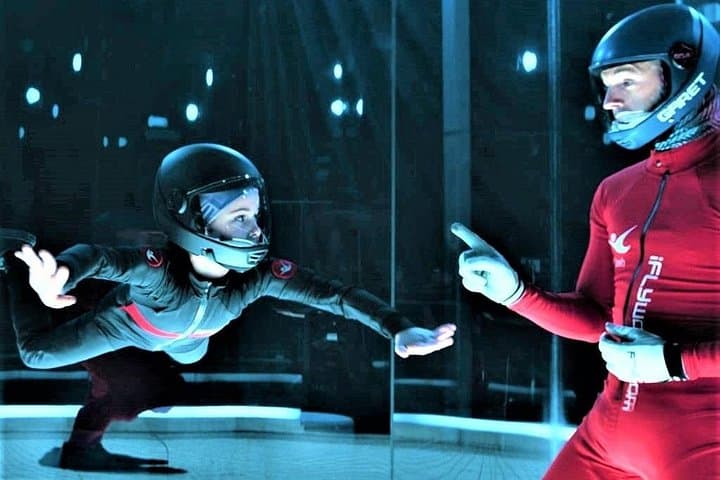
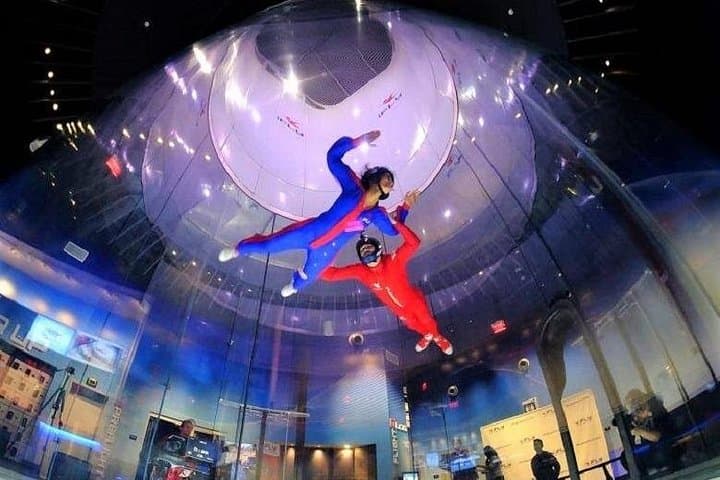
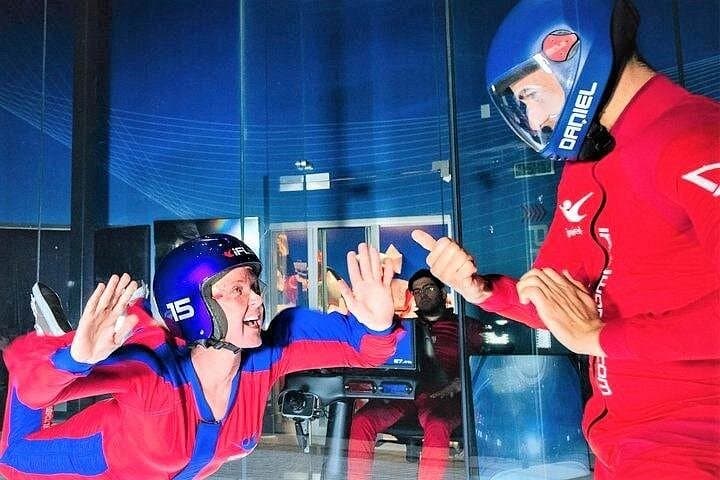
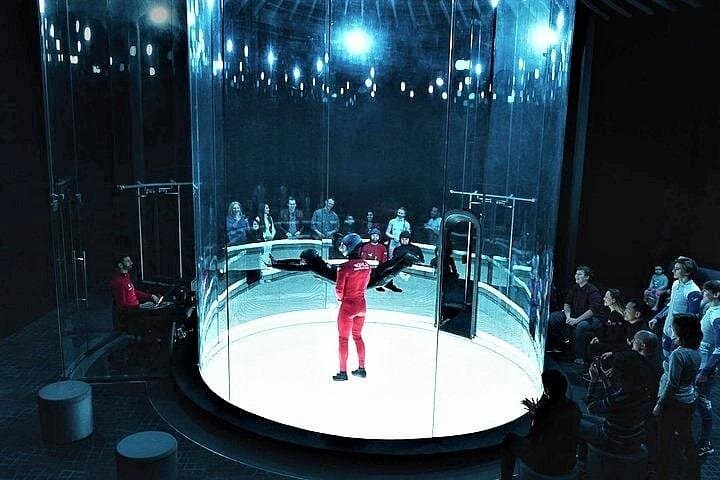
The wind comes up from below like a living thing, lifting you into a vertical column of air that holds and hums. Inside iFLY Atlanta, the tunnel feels both scientific and immediate: the roar of the fan, the coach’s hand at your shoulder, the brief, perfect weightlessness of your arms and legs finding balance.
The wind comes up from below like a living thing, lifting you into a vertical column of air that holds and hums. Inside iFLY Atlanta, the tunnel feels both scientific and immediate: the roar of the fan, the coach’s hand at your shoulder, the brief, perfect weightlessness of your arms and legs finding balance.
Indoor skydiving strips flight down to its mechanics — vertical wind tunnels were refined in the late 20th century as training and entertainment tools — and places that motion in the heart of Atlanta, a city built on rail, runway and rapid growth. The facility sits within the broader Piedmont region, whose ancient granite underpins the city; above ground, Atlanta’s aviation and motorsport culture helped popularize simulated flight experiences.
Culturally this is accessibility-first: no jump from a plane, stepwise instruction, and a certificate to mark the moment. Expect a mostly urban crowd — families, thrill-seekers, team-builders — and staff trained to guide first-timers through stable body positions and safe exits.
Practical guidance: arrive 15–30 minutes early for gear and briefing; wear snug athletic clothes and lace-up sneakers; long hair should be tied back and jewelry removed. There are weight considerations for safety and a minimum age of three; children need a guardian’s waiver. Sessions run about 75 minutes including training and two tunnel flights, so plan for check-in, a short orientation, and about 5–60 seconds of flight per run depending on coach cues.
Hydrate, listen to your instructor, and treat your first flights like skill practice — small adjustments in head and hip position change everything. The air will push you; let it carry you, not fight it.