THE ADVENTURE COLLECTIVE® · Independent discovery and booking for outdoor travel

Drive the Tizi n’Tichka pass from Marrakech to the UNESCO-listed Ait Ben Haddou, then explore Ouarzazate’s film studios and historic kasbahs on a full-day guided tour. Expect long scenic drives, short walks on uneven surfaces, and rich cultural context.
Drive the Tizi n’Tichka pass from Marrakech to the UNESCO-listed Ait Ben Haddou, then explore Ouarzazate’s film studios and historic kasbahs on a full-day guided tour. Expect long scenic drives, short walks on uneven surfaces, and rich cultural context.
You leave Marrakech before dawn, the city’s heat giving way to higher, cooler air as the minivan snakes up Tizi n’Tichka. The pass opens into a craggy spine of the High Atlas—wind-scoured ridges and sudden snow pockets if it’s late season—then you descend toward the ochre clay silhouettes of Ait Ben Haddou.
Verified experiences and guided adventures in the surrounding area.
Operated by Marrakech Outdoor · Ait Ben Haddou, Drâa-Tafilalet
You leave Marrakech before dawn, the city’s heat giving way to higher, cooler air as the minivan snakes up Tizi n’Tichka. The pass opens into a craggy spine of the High Atlas—wind-scoured ridges and sudden snow pockets if it’s late season—then you descend toward the ochre clay silhouettes of Ait Ben Haddou.
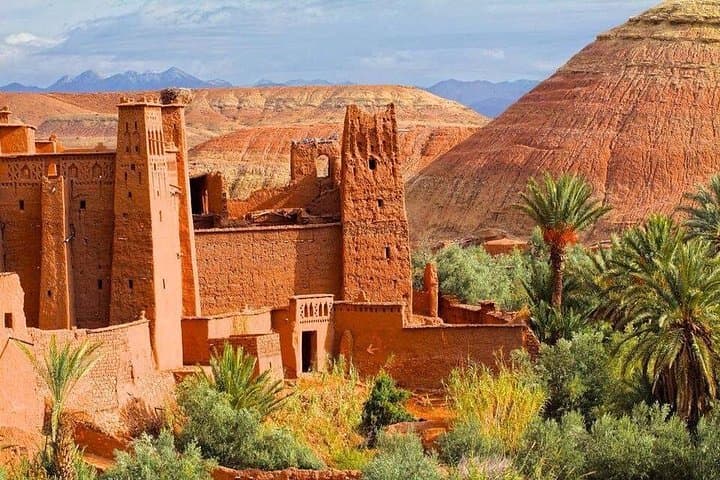
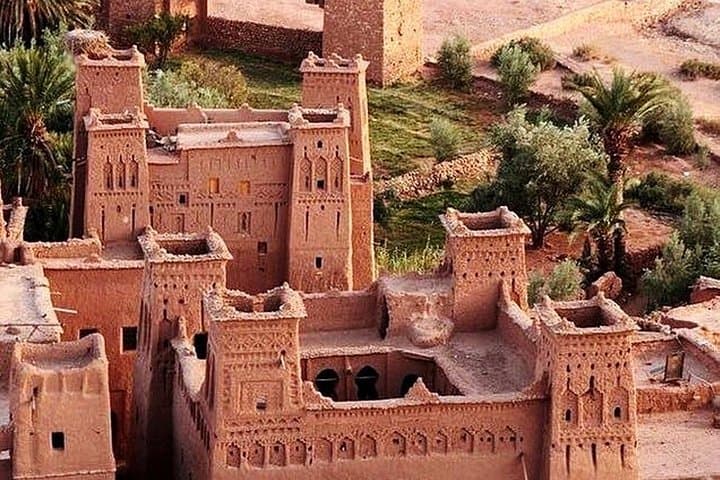
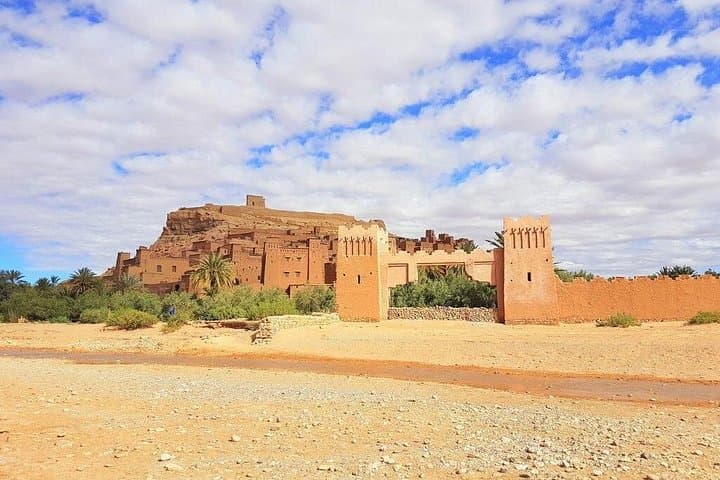
Ait Ben Haddou is a fortified ksar on the old trans-Saharan caravan routes, designated a UNESCO site in 1987. Its compact lanes, earthen towers and mud-brick ramparts reflect centuries of adobe construction tuned to an arid climate: thick walls that hold daytime heat and release it at night. Film crews have repeatedly chosen this place for its cinematic textures—stone staircases and rooftop perches that frame sweeping desert light.
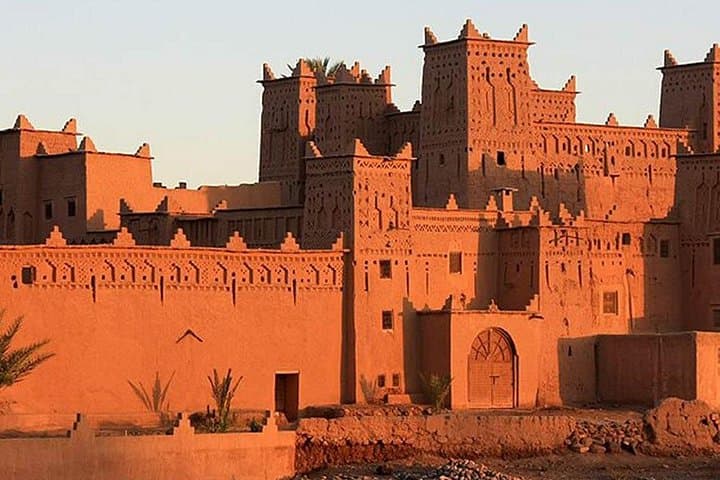
After exploring the alleys and crossing the river for panoramic views, the tour continues to Ouarzazate: Taourirt Kasbah’s layered façades, the Atlas Film Studios where sets from historical epics still linger, and a small cinema museum that catalogs Morocco’s screen history.
Practical guidance: expect an 8–10 hour day with long stretches in the vehicle and short, uneven walks at sites. Wear sturdy shoes for cobbled lanes, sun protection, and a warm layer early or late in the season. Carry cash for small purchases and tip guides locally. Photography is excellent but be mindful when photographing residents—ask first. If you’re prone to motion sensitivity, choose a seat toward the middle of the vehicle and bring water; the road over Tizi n’Tichka rewards early departures with clearer skies.
The tour is approximately 8–10 hours, typically starting around 7:30 a.m. with hotel pickup in Marrakech.
Ait Ben Haddou admission is usually included; confirm studio or museum entry on booking as policies can vary.
Yes—walking is limited and not strenuous, but there is significant time in the vehicle; travelers with mobility issues should notify the operator in advance.
Photography of the ksar and landscapes is welcome; ask permission before photographing people, especially inside private homes.
Marrakech Outdoor operates guided outdoor trips and adventures with an emphasis on safety, stewardship, and memorable experiences.
You leave Marrakech before dawn, the city’s heat giving way to higher, cooler air as the minivan snakes up Tizi n’Tichka. The pass opens into a craggy spine of the High Atlas—wind-scoured ridges and sudden snow pockets if it’s late season—then you descend toward the ochre clay silhouettes of Ait Ben Haddou.
You leave Marrakech before dawn, the city’s heat giving way to higher, cooler air as the minivan snakes up Tizi n’Tichka. The pass opens into a craggy spine of the High Atlas—wind-scoured ridges and sudden snow pockets if it’s late season—then you descend toward the ochre clay silhouettes of Ait Ben Haddou.
Ait Ben Haddou is a fortified ksar on the old trans-Saharan caravan routes, designated a UNESCO site in 1987. Its compact lanes, earthen towers and mud-brick ramparts reflect centuries of adobe construction tuned to an arid climate: thick walls that hold daytime heat and release it at night. Film crews have repeatedly chosen this place for its cinematic textures—stone staircases and rooftop perches that frame sweeping desert light.
After exploring the alleys and crossing the river for panoramic views, the tour continues to Ouarzazate: Taourirt Kasbah’s layered façades, the Atlas Film Studios where sets from historical epics still linger, and a small cinema museum that catalogs Morocco’s screen history.
Practical guidance: expect an 8–10 hour day with long stretches in the vehicle and short, uneven walks at sites. Wear sturdy shoes for cobbled lanes, sun protection, and a warm layer early or late in the season. Carry cash for small purchases and tip guides locally. Photography is excellent but be mindful when photographing residents—ask first. If you’re prone to motion sensitivity, choose a seat toward the middle of the vehicle and bring water; the road over Tizi n’Tichka rewards early departures with clearer skies.