THE ADVENTURE COLLECTIVE® · Independent discovery and booking for outdoor travel

Leave Marrakech for a full-day crossing of the High Atlas to visit the UNESCO-listed Aït Ben Haddou, explore the Glaoui rooms at Telouet, and take a short camel ride near the kasbah. Expect dramatic mountain passes, mud-brick architecture, and brief walks on uneven stone.
Leave Marrakech for a full-day crossing of the High Atlas to visit the UNESCO-listed Aït Ben Haddou, explore the Glaoui rooms at Telouet, and take a short camel ride near the kasbah. Expect dramatic mountain passes, mud-brick architecture, and brief walks on uneven stone.
The road leaves Marrakech in a slow exhale: the city’s bustle fades as the High Atlas rises, rock folding into sharp ridgelines and narrow passes. Tizi n’Tichka climbs and the air cools; olive terraces and dry-stone villages pass like pages of a travel journal. By mid-morning the ochre mass of Aït Ben Haddou appears — a mud-brick kasbah complex perched above the riverbed, its cubic towers catching light and shadow.
Verified experiences and guided adventures in the surrounding area.
Operated by Explore Morocco Travel SARL · Aït Ben Haddou, Marrakech-Safi
The road leaves Marrakech in a slow exhale: the city’s bustle fades as the High Atlas rises, rock folding into sharp ridgelines and narrow passes. Tizi n’Tichka climbs and the air cools; olive terraces and dry-stone villages pass like pages of a travel journal. By mid-morning the ochre mass of Aït Ben Haddou appears — a mud-brick kasbah complex perched above the riverbed, its cubic towers catching light and shadow.
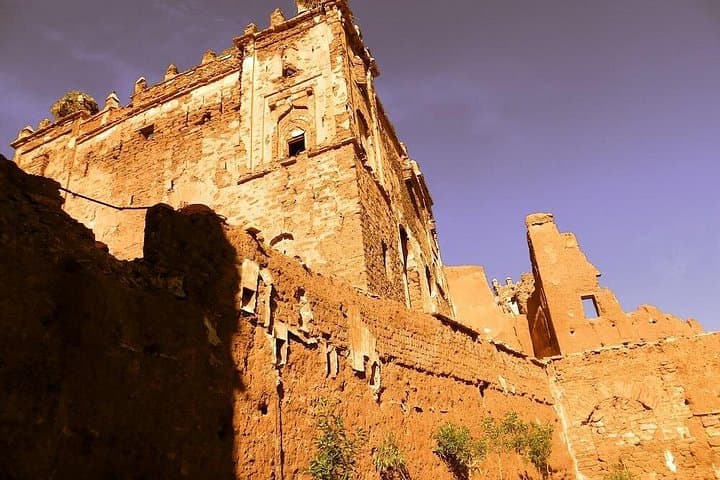
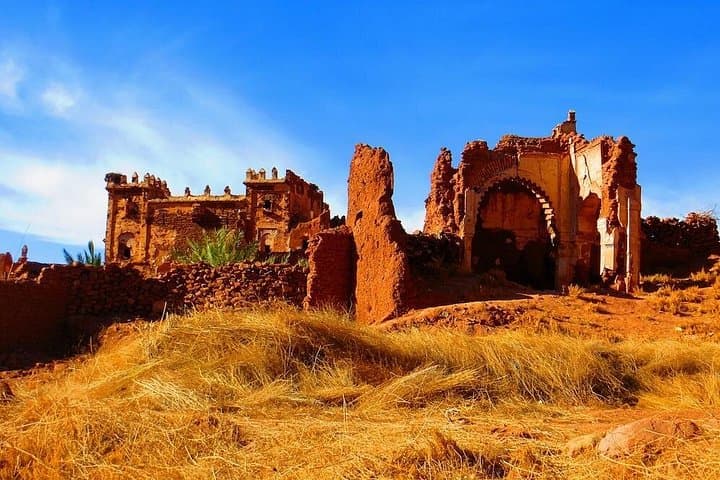
Aït Ben Haddou is a living record of trans-Saharan trade and southern Moroccan life, its alleys and rooftop views used repeatedly by filmmakers. Telouet, further up the valley, reveals a different history: the Glaoui stronghold, once wealthy from caravan routes, now partly crumbling but still showing carved wood and tile work that hint at former opulence. Geologically, the route crosses Mesozoic to Cenozoic formations; the Atlas foothills reveal folded sedimentary layers exposed by tectonic uplift.
Culturally, you’ll meet local guides and may stop at cooperatives producing argan oil — a chance to see traditional techniques and buy directly. A short camel ride near the kasbah is typically offered, giving a desert-adjacent perspective on the dunes and river terraces.
Practical notes: the day is long (about 12 hours total), with several short walks over uneven cobbles and a steep handful of steps at Aït Ben Haddou. Wear sturdy shoes, bring water and sunscreen, and plan for temperature swings between Marrakech and the high passes. Confirm camel-ride details with your operator and carry cash for entrances, tips and small purchases.
Yes — the tour includes hotel pickup and drop-off in Marrakech as part of the private transfer.
Admission to Aït Ben Haddou is listed as included for the guided walking tour portion; confirm with the operator for any changes.
Camel rides are usually short, scenic rides near the kasbah; duration and inclusion can vary, so verify when booking.
The trip is suitable for most ages but involves vehicle time and cobbled, stepped terrain that may challenge limited mobility; contact the operator to discuss accessibility.
Explore Morocco Travel SARL operates guided outdoor trips and adventures with an emphasis on safety, stewardship, and memorable experiences.
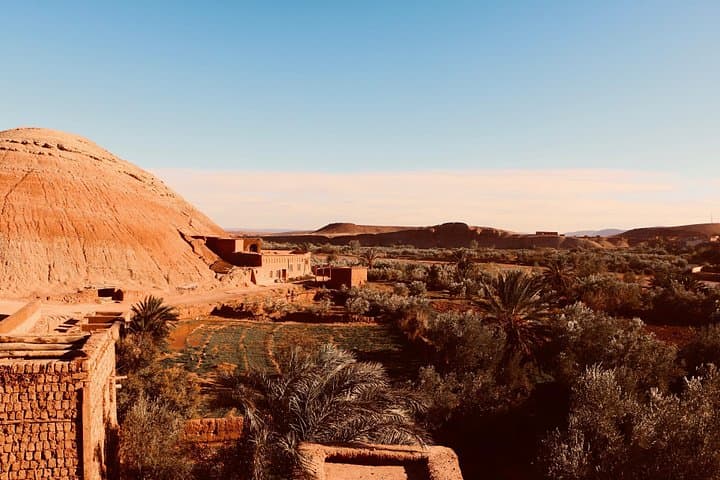
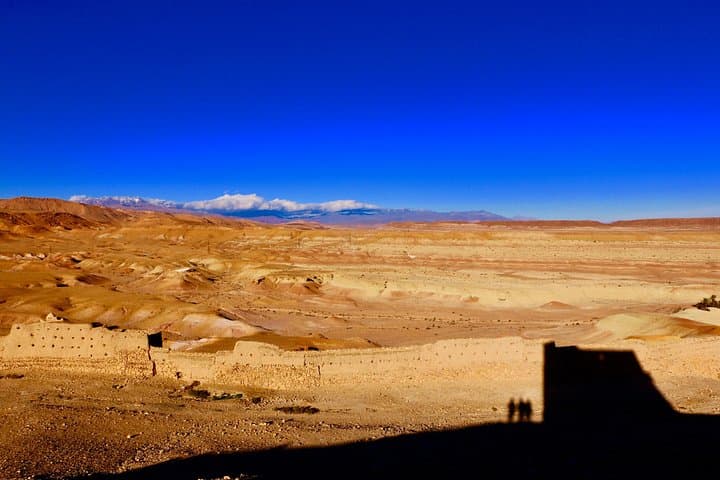
The road leaves Marrakech in a slow exhale: the city’s bustle fades as the High Atlas rises, rock folding into sharp ridgelines and narrow passes. Tizi n’Tichka climbs and the air cools; olive terraces and dry-stone villages pass like pages of a travel journal. By mid-morning the ochre mass of Aït Ben Haddou appears — a mud-brick kasbah complex perched above the riverbed, its cubic towers catching light and shadow.
The road leaves Marrakech in a slow exhale: the city’s bustle fades as the High Atlas rises, rock folding into sharp ridgelines and narrow passes. Tizi n’Tichka climbs and the air cools; olive terraces and dry-stone villages pass like pages of a travel journal. By mid-morning the ochre mass of Aït Ben Haddou appears — a mud-brick kasbah complex perched above the riverbed, its cubic towers catching light and shadow.
Aït Ben Haddou is a living record of trans-Saharan trade and southern Moroccan life, its alleys and rooftop views used repeatedly by filmmakers. Telouet, further up the valley, reveals a different history: the Glaoui stronghold, once wealthy from caravan routes, now partly crumbling but still showing carved wood and tile work that hint at former opulence. Geologically, the route crosses Mesozoic to Cenozoic formations; the Atlas foothills reveal folded sedimentary layers exposed by tectonic uplift.
Culturally, you’ll meet local guides and may stop at cooperatives producing argan oil — a chance to see traditional techniques and buy directly. A short camel ride near the kasbah is typically offered, giving a desert-adjacent perspective on the dunes and river terraces.
Practical notes: the day is long (about 12 hours total), with several short walks over uneven cobbles and a steep handful of steps at Aït Ben Haddou. Wear sturdy shoes, bring water and sunscreen, and plan for temperature swings between Marrakech and the high passes. Confirm camel-ride details with your operator and carry cash for entrances, tips and small purchases.