THE ADVENTURE COLLECTIVE® · Independent discovery and booking for outdoor travel

Leave Marrakech for a full-day 4x4 through the High Atlas where off-road tracks lead to Berber villages, an Imlil lunch with mountain views, and quick hikes across ancient terraces. This trip mixes rugged scenery with authentic cultural stops for a practical, full-day mountain experience.
Leave Marrakech for a full-day 4x4 through the High Atlas where off-road tracks lead to Berber villages, an Imlil lunch with mountain views, and quick hikes across ancient terraces. This trip mixes rugged scenery with authentic cultural stops for a practical, full-day mountain experience.
Dust kicks up as the Jeep threads a rocky track out of Marrakech and into the High Atlas—olive groves give way to stony terraces and the air cools a few degrees with every switchback.
Verified experiences and guided adventures in the surrounding area.
Operated by MTB Morocco · Imlil, Marrakech-Safi
Dust kicks up as the Jeep threads a rocky track out of Marrakech and into the High Atlas—olive groves give way to stony terraces and the air cools a few degrees with every switchback.
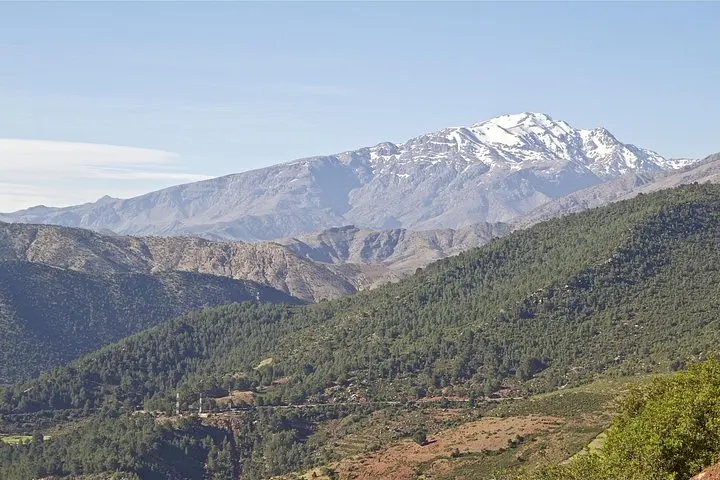
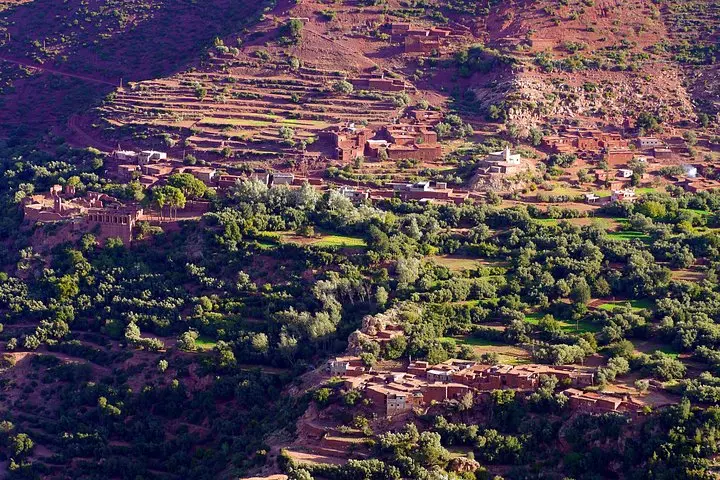
The route recalls centuries of human passage: Amazigh (Berber) communities carved stepped fields into volcanic slopes, and ancient mule paths still link villages. The Atlas itself is young, tectonically uplifted rock—jagged ridgelines of schist and limestone that frame valleys where seasonal streams dare you to follow them downstream.
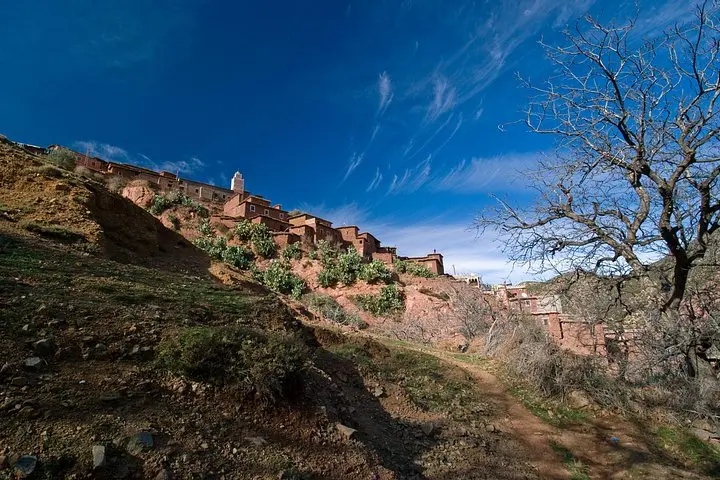
Culturally, the day trip is as much about small encounters as big views. Stops in Ait Ourir, Setti Fadma and Imlil offer a window into Amazigh hospitality—mint tea poured with ceremony, home-cooked tagines, and stone houses whose drying herbs hang like local signage. Guides explain irrigation terraces (agdal) and the region’s role as both trade corridor and remote highland refuge.
Practically, expect a full-day rhythm: three to six hours of on-road and off-road driving with short village walks and a lunch break in Imlil. Trails around Imlil are rocky and can be steep; the Jeep reduces approach time but walking requires steady shoes and attention on loose scree. Bring layered clothing for temperature swings, plenty of water, and small local currency for markets and tips.
This is an accessible, culturally rich introduction to the High Atlas—less a summit bid than an immersive reconnaissance of landscape, geology, and living traditions. Timing your visit for morning light maximizes views and keeps the heat off during summer.
Most tours depart from central Marrakech with hotel pick-up and return the same day to Marrakech by evening.
No technical hikes are required; stops include short village walks and accessible viewpoints—wear sturdy shoes for uneven surfaces.
A traditional Moroccan lunch in Imlil is included; inform the operator of dietary restrictions at booking so hosts can prepare alternatives.
Yes—this activity is family-friendly but infants may need to sit on laps during vehicle transfers; check vehicle capacity and child-seat rules when booking.
MTB Morocco operates guided outdoor trips and adventures with an emphasis on safety, stewardship, and memorable experiences.
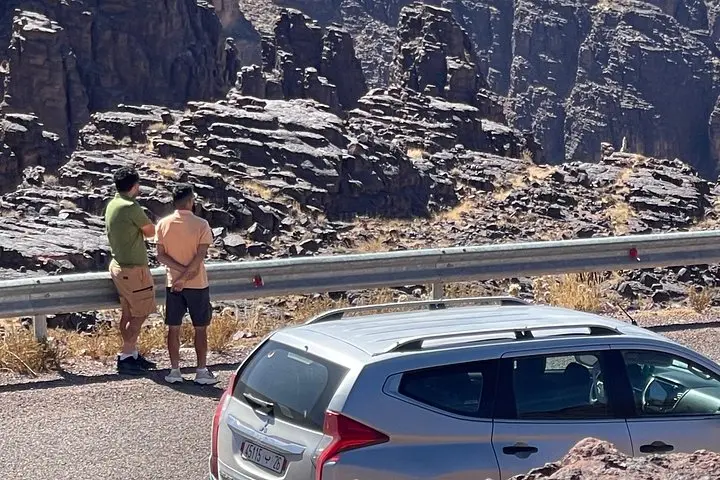
Dust kicks up as the Jeep threads a rocky track out of Marrakech and into the High Atlas—olive groves give way to stony terraces and the air cools a few degrees with every switchback.
Dust kicks up as the Jeep threads a rocky track out of Marrakech and into the High Atlas—olive groves give way to stony terraces and the air cools a few degrees with every switchback.
The route recalls centuries of human passage: Amazigh (Berber) communities carved stepped fields into volcanic slopes, and ancient mule paths still link villages. The Atlas itself is young, tectonically uplifted rock—jagged ridgelines of schist and limestone that frame valleys where seasonal streams dare you to follow them downstream.
Culturally, the day trip is as much about small encounters as big views. Stops in Ait Ourir, Setti Fadma and Imlil offer a window into Amazigh hospitality—mint tea poured with ceremony, home-cooked tagines, and stone houses whose drying herbs hang like local signage. Guides explain irrigation terraces (agdal) and the region’s role as both trade corridor and remote highland refuge.
Practically, expect a full-day rhythm: three to six hours of on-road and off-road driving with short village walks and a lunch break in Imlil. Trails around Imlil are rocky and can be steep; the Jeep reduces approach time but walking requires steady shoes and attention on loose scree. Bring layered clothing for temperature swings, plenty of water, and small local currency for markets and tips.
This is an accessible, culturally rich introduction to the High Atlas—less a summit bid than an immersive reconnaissance of landscape, geology, and living traditions. Timing your visit for morning light maximizes views and keeps the heat off during summer.