THE ADVENTURE COLLECTIVE® · Independent discovery and booking for outdoor travel

Drive from Marrakech into the stony Agafay plain and up to verdant Atlas valleys for a 30-minute camel ride, a home-cooked Berber lunch and a 1–3 hour village walk. This full-day trip blends desert tracks, mountain viewpoints and cultural stops.
Drive from Marrakech into the stony Agafay plain and up to verdant Atlas valleys for a 30-minute camel ride, a home-cooked Berber lunch and a 1–3 hour village walk. This full-day trip blends desert tracks, mountain viewpoints and cultural stops.
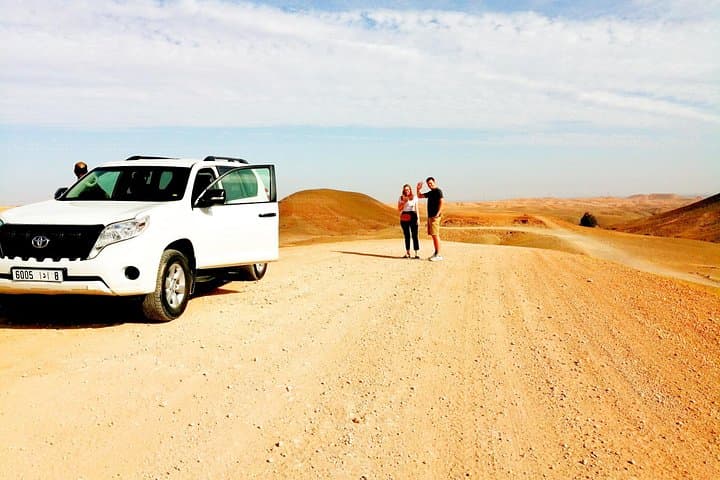
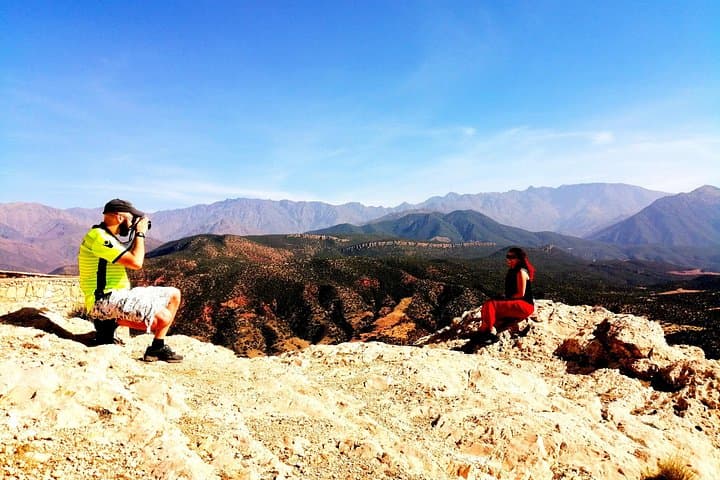
You start the day leaving Marrakech as the city’s heat thins into the raw, stony plain of the Agafay. The road peels away from red city walls into a landscape of flat, scabbed rock and low scrub; camels wait near juniper ridgelines while the High Atlas rises, serrated and snow-splashed in season, to the south.
Verified experiences and guided adventures in the surrounding area.
Operated by astara tours · Marrakech, Marrakech-Safi
You start the day leaving Marrakech as the city’s heat thins into the raw, stony plain of the Agafay. The road peels away from red city walls into a landscape of flat, scabbed rock and low scrub; camels wait near juniper ridgelines while the High Atlas rises, serrated and snow-splashed in season, to the south.
Geology here is stark — metamorphic and sedimentary layers folded into the Atlas during tectonic collision, then washed down into dry alluvial fans. Cultural history threads through the route: argan cooperatives near the road, Moulay Brahim’s small zawiya and berber villages that have farmed walnut terraces and irrigated plots for generations. You’ll pass the broad surface of Lake Takerkoust and the Kik plateau before arriving at the valley where a 30-minute camel ride across juniper scrub meets a home-cooked tagine lunch on a terrace with panoramic valley views.
Expect varied terrain: paved roads, rough 4x4 tracks, short unpaved walking routes and a kicked-up desert track during the Agafay portion. The day includes roughly 60–100 km of driving round-trip, a climb to around 1,200 m near Moulay Brahim (≈700–800 m elevation gain from Marrakech), a 30-minute camel ride and a 1–3 hour guided walk through walnut fields and berber hamlets.
Practical tips: bring layered clothing for cool mountain mornings and warm desert afternoons, sun protection, at least 1–2 liters of water, cash for market stalls and modest hiking shoes for uneven village paths. Respect local customs when visiting homes and markets — ask before photographing people and follow your guide’s lead.
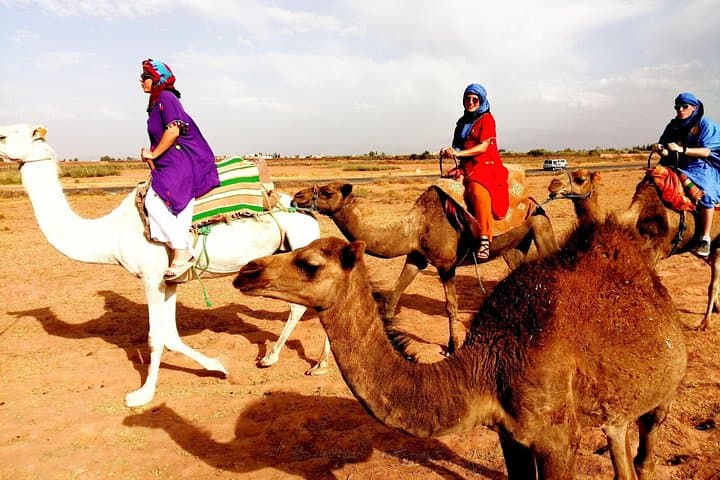
The guided camel ride is about 30 minutes on relatively flat, stony terrain supervised by handlers; it’s gentle but requires basic balance.
Yes — the tour is described as suitable for all fitness levels, but children and seniors should be able to mount camels and manage short walks; notify the operator of special needs.
Yes — the lunch includes local dishes and vegetarian or vegan options are available if requested in advance.
Yes — bring Moroccan dirhams for small purchases, market stalls and tips; major hotels accept cards but village vendors usually do not.
astara tours operates guided outdoor trips and adventures with an emphasis on safety, stewardship, and memorable experiences.
You start the day leaving Marrakech as the city’s heat thins into the raw, stony plain of the Agafay. The road peels away from red city walls into a landscape of flat, scabbed rock and low scrub; camels wait near juniper ridgelines while the High Atlas rises, serrated and snow-splashed in season, to the south.
You start the day leaving Marrakech as the city’s heat thins into the raw, stony plain of the Agafay. The road peels away from red city walls into a landscape of flat, scabbed rock and low scrub; camels wait near juniper ridgelines while the High Atlas rises, serrated and snow-splashed in season, to the south.
Geology here is stark — metamorphic and sedimentary layers folded into the Atlas during tectonic collision, then washed down into dry alluvial fans. Cultural history threads through the route: argan cooperatives near the road, Moulay Brahim’s small zawiya and berber villages that have farmed walnut terraces and irrigated plots for generations. You’ll pass the broad surface of Lake Takerkoust and the Kik plateau before arriving at the valley where a 30-minute camel ride across juniper scrub meets a home-cooked tagine lunch on a terrace with panoramic valley views.
Expect varied terrain: paved roads, rough 4x4 tracks, short unpaved walking routes and a kicked-up desert track during the Agafay portion. The day includes roughly 60–100 km of driving round-trip, a climb to around 1,200 m near Moulay Brahim (≈700–800 m elevation gain from Marrakech), a 30-minute camel ride and a 1–3 hour guided walk through walnut fields and berber hamlets.
Practical tips: bring layered clothing for cool mountain mornings and warm desert afternoons, sun protection, at least 1–2 liters of water, cash for market stalls and modest hiking shoes for uneven village paths. Respect local customs when visiting homes and markets — ask before photographing people and follow your guide’s lead.